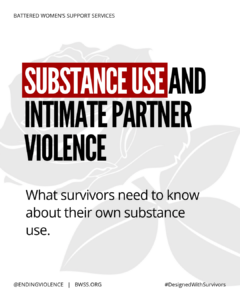
Unmasking the Cycle: Women, Substance Use, and Intimate Partner Violence
Maybe you started using substances to cope with things that happened when you were growing up, and you find yourself using them more often to get through what’s happening in your relationship now. Maybe a drink helps you fall asleep after a frightening night, or you take something to manage the pain of an injury. You may never have thought of your substance use as a problem. It may be something that helps you get through the day, and you may be starting to wonder how it connects to what’s happening at home.
Intimate partner violence takes a physical, emotional, and psychological toll. For some women, alcohol or other substances offer temporary relief from pain, fear, or sleeplessness. An abusive partner can also use substances as a means of control. Understanding both experiences helps make sense of why substance use may change during an abusive relationship and after it ends. pubmed.ncbi.nlm.nih.gov
The overlap between intimate partner violence and substance use
During an abusive relationship, some women use alcohol or other substances to cope with physical pain, fear, guilt, or shame. What brings relief in the moment can become something a woman relies on more often, particularly when her partner has isolated her from friends, family, or other sources of support. pubmed.ncbi.nlm.nih.gov
A partner may also pressure or force a woman to use substances, control her access to medication, or interfere with treatment. A partner might threaten to disclose her substance use to authorities, tell her no one will believe her if she asks for help, or blame their violence on her drinking. These are forms of substance-use coercion. The person choosing to use violence and control is responsible for the abuse. sprc.org
Substance use after leaving
The effects of abuse can continue after a relationship ends. Flashbacks, nightmares, pain, and the feeling of always being on alert can make it hard to sleep or get through the day. Some women continue to use substances to cope with those experiences. Others may start using more often after leaving. pubmed.ncbi.nlm.nih.gov
Isolation can also continue after separation. A woman whose partner cut her off from family and friends may be trying to rebuild those relationships while managing the aftermath of abuse. She may also find herself wondering whether she could have left sooner or done something differently. Talking through those feelings with someone who understands abuse can give her room to look at what happened and what support she wants now.
The health impacts of alcohol on women
Alcohol can be part of how a woman copes, and she may also have questions about its effects on her health. A U.S. study published in The American Journal of Medicine found that alcohol-related mortality more than doubled between 1999 and 2020, rising from 10.7 to 21.6 deaths per 100,000 people. The largest relative increase was among adults aged 25 to 34, with deaths rising faster among women than men in that age group. sciencedirect.com
In Canada, guidance on alcohol and health describes a range of risks that increase with consumption, including risks of breast and colorectal cancer, heart disease, and stroke. Heavy drinking can also contribute to liver disease. For women coping with injuries, trauma, or ongoing violence, a conversation about alcohol and health should also make room for what drinking helps them manage and what other support is available. ccsa.ca
Barriers to seeking help
Women may worry that they will be judged or that disclosing substance use could affect their children. An abusive partner can exploit those fears by threatening to report them or by interfering when they try to get help. Fear of retaliation can continue after separation. sprc.org
It can also be difficult to find services that address abuse and substance use together. A woman may be trying to manage pain or sleeplessness while also dealing with housing insecurity, financial control, childcare, or transportation. Her safety, health, and circumstances all belong in the same conversation. pubmed.ncbi.nlm.nih.gov
Finding support that fits
Support can include harm reduction, medical care, trauma-informed counselling, treatment, or peer support. A woman may want to understand her substance use, make a change, or talk about what is happening in her relationship. She may also want to explore sobriety and have that choice respected in her family or social circles.
At BWSS, you can start that conversation while you’re still in the relationship and while you’re still figuring out whether you want to change anything about your substance use.
BWSS 16 Steps for Discovery and Empowerment
A new 16 Steps for Discovery and Empowerment support group begins Wednesday, November 25, 2026.
The group welcomes self-identified women who have used substances to cope, have questions or concerns about their substance use, or want to explore healthier relationships and have more say in their own lives. Developed by Charlotte Kasl, the 16-step model gives participants room to reflect on their experiences, learn from one another, and make their own choices about what healing looks like. Women are welcome to participate whether or not they are currently using substances.
To learn more or ask about joining, contact the BWSS Crisis & Intake Line at 1-855-687-1868 or email intake@bwss.org.