The Facts on Gender-Based Violence
What is Violence Against Women?
The United Nations defines violence against women as “Any act of gender-based violence that results in, or is likely to result in, physical, sexual or mental harm or suffering to women, including threats of such acts, coercion or arbitrary deprivation of liberty, whether occurring in public or in private life[1].”
A word about statistics.
When it comes to statistics relating to violence against women and children it’s important to know that you don’t have to be a math expert to understand the numbers. You simply have to be willing to recognize that each statistic represents a woman, child, or family — a life — torn apart by violence and abuse.
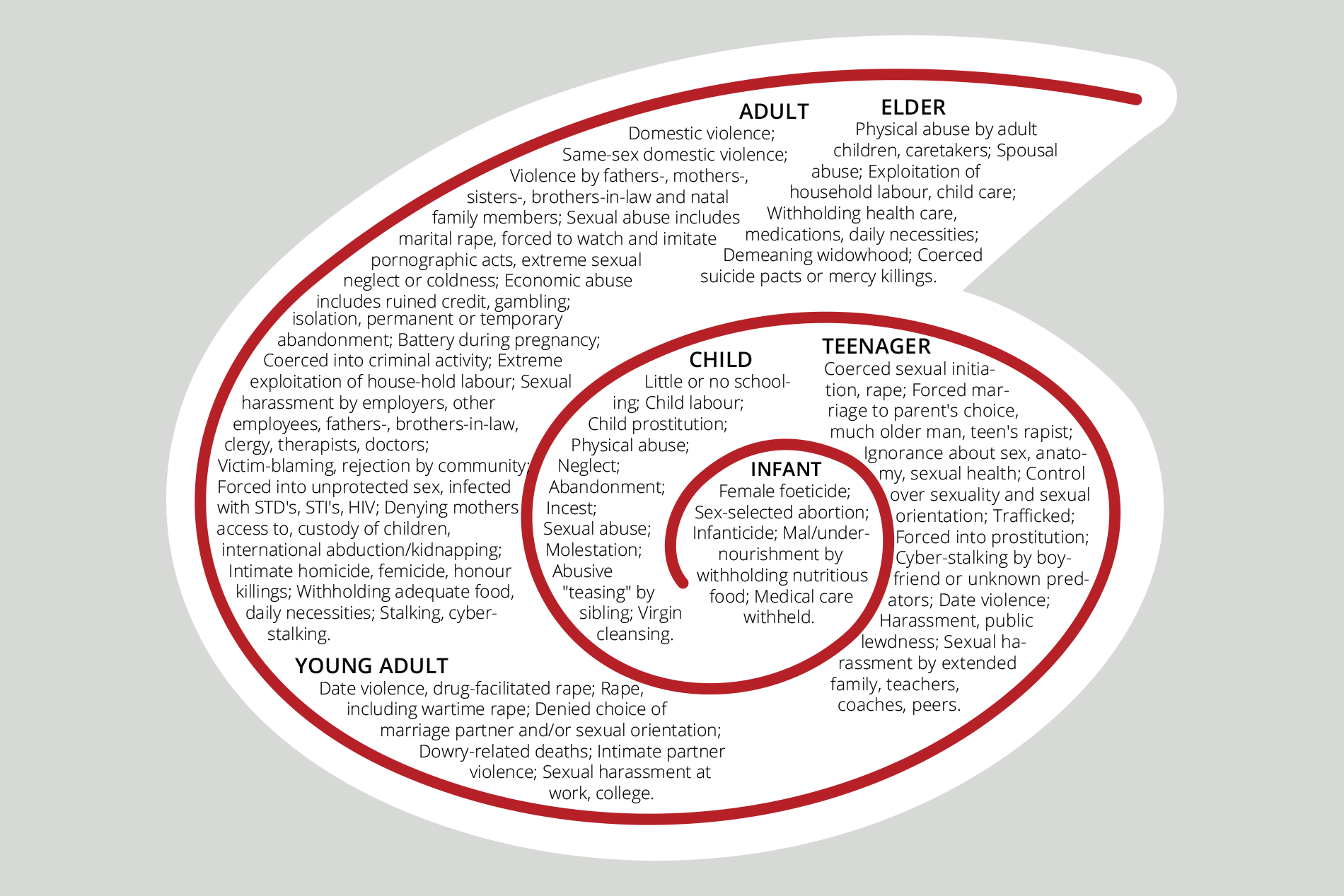
Gender-based violence includes, but is not limited to:
Intimate partner violence
Rape, marital rape, incest, and sexual violence
Forced marriage
Human trafficking including cross-border prostitution rings and bride kidnappings
Verbal Abuse
Female genital mutilation
War crimes including rape as a weapon of war
Murder and assault including dowry-related violence and honour killings
Violence against women is not a private family issue.
It is a community and public health issue affecting not only
the abuser and his victim but everyone around them.
Defining health and unhealthy relationships
No relationship is perfect, but healthy intimate partner relationships make both people feel respected, supported, and safe. Healthy relationships are characterized by mutual respect, trust, equality and honesty. Look below to see some of the characteristics of healthy and unhealthy relationships.
Healthy relationships
Respect
Each person values who the other person is, understands the other person’s boundaries, and values their beliefs and opinions.
Unealthy relationships
Disrespect
Your partner makes fun of your opinions and interests, or purposely destroys something that is important to you.
Trust
Partners trust in each other and are comfortable doing things separately and respecting each other’s privacy online.
Jealousy
Honesty
Being truthful and open with your partner and being able to talk together about what you both want without fearing the response or if you’ll be judged.
Betrayal
Individuality
Control
Equality
Manipulation
Responsibility
Deflecting responsibility
Inclusion
Isolation
Healthy sexual relationship
Sexual violence
Non-Violent relationship
Physical violence
Remember
Abuse is never, ever your fault. Talk to someone you trust like a safe close friend, family member, or mentor, and make a plan for your safety.
Contact us for personalized support to help you deal with emotional abuse.
What are the roots of Violence Against Women?
- Violence against women is rooted in unequal power relationships between men and women in society. In a broader context, structural relationships of inequalities in politics, religion, media and discriminatory cultural norms perpetuate violence against girls and women.
- Violence against women is a global problem and not limited to a specific group of women in society. However, the forms of violence might be shaped differently based on factors such as sexual orientation, religion, ethnicity, class, age, nationality. Significantly, Immigrant and Aboriginal women are further marginalized due to ongoing racism, which contributes to violence and is internalized by marginalized people impeding their social and personal power.Poverty, isolation from family and friends, language difficulties, and homelessness also contribute to the victimization of the most vulnerable women in society.
- In a male-dominant society, male privilege becomes the norm and contributes to the belief and behaviour of men that they have the right to control women.
How big is the problem of Violence Against Women throughout the world?
- Globally the most common form of violence experienced by women is physical violence inflicted by an intimate partner[2]. One in three women have been abused or subjected to gender-based violence in their lives[3].
- In Australia, Canada, Israel, South Africa and the United States, between 40 and 70 percent of female murder victims were killed by their intimate partners[4].
- Up to 70 percent of women experience physical or sexual violence from men in their lifetime — the majority by husbands, intimate partners or someone they know[5].
- Both intimate partner violence and sexual violence against women are major public health problems and violations of women’s human rights[6].
- Worldwide, up to 50 percent of sexual assaults are committed against girls under 16.
- As many as 1 in 4 women experience physical and/or sexual violence during pregnancy which increases the likelihood of having a miscarriage, still birth and abortion[7].
- Every year 5,000 women are murdered by their relatives to protect the “honour” of the family[8].
- Women and girls are still being forced into marriages against their will, particularly in Asia, the Middle East and sub-Saharan Africa. Over 60 million girls worldwide married before the age of 18 primarily in South Asia (31.3 million) and sub-Saharan Africa (14.1 million).
- Women who are beaten by their partners are 48 per cent more likely to be infected with HIV/AIDS[9].
- 2.5 million people are trafficked annually into situations including prostitution, forced labour, slavery or servitude. Women and girls account for about 80 per cent of the detected victims[10].
You don’t have to be a math expert to understand these numbers relating to violence against women. Numbers are people[11]. You simply have to be willing to recognize that each statistic represents a woman, child, or family — a life — torn apart by violence and abuse.
Is Violence Against Women Still A Serious Problem in Canada?
“Violence against women and girls continues unabated in every continent, country and culture. It takes a devastating toll on women’s lives, on their families and on society as a whole. Most societies prohibit such violence – yet the reality is that too often, it is covered up or tacitly condoned[12].”
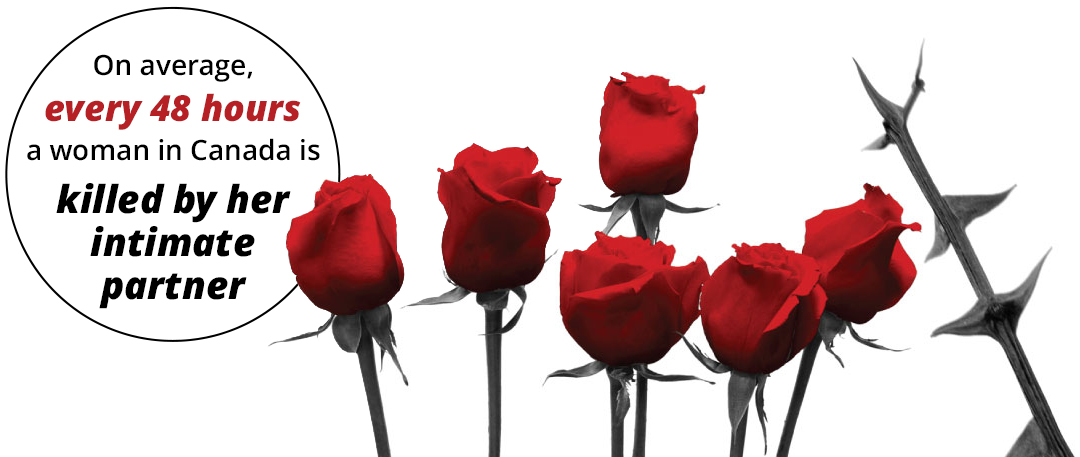
- Every other day a woman in Canada is killed by femicide. In 2021, 173 women and girls were murdered by femicide.
- There has been a 26% increase in femicide from 2019 to 2021.
- 54% of girls between aged 15 and 19 experience “sexual coercion” in a dating relationship[14].
- Indigenous women in Canada are five times more likely than other women of the same age to die as the result of violence[15].
- Women aged 25 to 34 old are three times more likely to be physically or sexually assaulted by their spouse than those aged 45 and older[16].
- Emotional and economic abuse reinforces physical and sexual violence. 1 in 5 Canadian women experience some form of emotional or economic abuse in their intimate relationship[17].
- In almost every province, 9 in 10 victims of spousal-perpetrated criminal harassment are women[18].
- Only in one year, 427,000 women over the age of 15 reported they had been sexually assaulted in Canada[19].Since only one in ten sexual assaults is reported to the police, the actual number is much higher[20].
- Across Canada, over 3,000 women along with their dependent 2,900 children are living in an emergency shelter to escape abuse[21].
- 40,200 incidents of spousal violence, which represents about 12% of all police-reported violent crime in Canada, were reported to police[22].
- The majority of victims of spousal violence continue to be females, accounting for 83% of victims[23].
- In 2010, the Native Women’s Association of Canada (NWAC) confirmed 582 cases over 20 years of missing or murdered Indigenous women and girls.21 In 2013, Maryanne Pearce, writing about missing and murdered women for her doctorate in law, identified 824 who were Indigenous.22 The mounting evidence spurred the Royal Canadian Mounted Police (RCMP) to do their own review, which confirmed 1,181 cases of “police-recorded incidents of Aboriginal female homicides and unresolved missing Aboriginal females” between 1980 and 2012.
- Indigenous women and girls are 12 times more likely to be murdered or missing than any other women in Canada, and 16 times more likely than white women.
- In Canada, the annual costs of direct expenditures related to violence against women have been estimated at 684 million Canadian dollars for the criminal justice system, 187 million for police and 294 million for the cost of counselling and training, totalling more than 1 billion a year[25].
What is the impact of Violence Against Women on children?
- Every year in Canada, estimated 362,000 children witness or experience family violence[26].
- 6 in 10 children and youth victims of family violence were assaulted by their parents. The youngest child victims (under the age of 3 years) were most vulnerable to violence by a parent[27].
- Girls are four times more likely than boys to experience family-related sexual offences. The rate of physical assault was similar for girls and boys[28].
- Only in 2009, nearly 55,000 children and youth were the victims of a sexual offence or physical assault where 3 in 10 were perpetrated by a family member[29].
- Even though parents protect their children to witness family violence at home, children are witness of many of the incidents. “Witnessing family violence is as harmful as experiencing it directly[30]”.
How wide is Violence Against Women in B.C.?
As part of a global feminist anti-violence movement, Battered Women’s Support Services (BWSS) is a feminist voice against violence and oppression. Every day we are actively working with girls and women, who experience any forms of violence/abuse through our support and advocacy programs and services.
Every number has a face.
- BWSS responded to 94,736 requests for services from March 1, 2020 – March 31, 2022
- 6,283 calls answered between March 18 and June 30, 2020
- 40% of callers are reaching out for the first time, indicating a surge of domestic violence escalation
- 3,183 participants took part in our 159 community workshops
- We increased our training sessions from 2 to 3 sessions in 2020.
- In our largest cohorts yet we trained a total of 143 volunteers online.
How you can bring an end to Violence Against Women?
The role of individuals
Each and every individual has the power to eradicate violence against girls and women by supporting and empowering one woman. There is a need for immediate action of individuals in society. It’s time to end this outrage and create a society where our mothers, sisters, aunts, nieces, daughters and partners are valued, safe, and empowered.
- As individuals, being aware of violence against girls and women and exploring how we can use our power to end violence against girls and women can make a lasting difference.
- For decades, the system has been changed by movements and their advocacy work. As individuals, we can be part of a solution by joining and advocating in the anti-violence movement.
- Volunteering and supporting women’s organization allow them to continue their services for women, who experience abuse or violence, and to do more.
- Supporting violence prevention programs especially in high schools increases the ability of youth to recognize violence, transform their knowledge into action against violence, and contributes to changing systems to aid rather than impede an end to violence against girls and women.
The role of society
Violence against women is the most pervasive yet least recognized human rights abuse in the world. Women and girls are victimized in our society in ways that threaten their physical, emotional, psychological and sexual well-being.
- Society has a responsibility to pursue a socio-cultural framework that is rooted in equality and justice for women, which is supported by a legal system that holds perpetrators accountable for their actions.
- From the perspective of our government, our own constitutional philosophy of assumed equality has rejected outright the idea that women are abused simply because they are women[33]. This allows government and judicial systems to openly avoid challenging or addressing underlying social issues and works to conceal their complicity with a socio-cultural system that largely condones and tolerates violence against women. The society has a critical role to stop any political and legal action that contributes to further oppression of women and allow for sanctions against perpetrators that are minimal or simply not enforced.
References and cited works
[1] United Nations Declaration on the Elimination of Violence against Women, 1993
[2] UNITE to End Violence Against Women Fact Sheet
[3] The Violence Stops Here – Violence Against Women Facts
[4] http://www.endvawnow.org/en/articles/299-fast-facts-statistics-on-violence-against-women-and-girls-.html
[5] Facts and Figures on Violence against Women, UN Women, 2011
[6] Fact Sheet No 239 on intimate partner and sexual violence against women, World Health Organization, 2011
[7] ibid
[8] The State of the World’s Population, UNFPA, 2000, chapter 3
[9] UNAIDS, UNFPA and UNIFEM (2004). Women and HIV/AIDS: Confronting the Crisis, chapter 6
[10] Global Report on Trafficking in Persons. Human Trafficking. A Crime That Shames Us All, United Nations Office on Drugs and crime, 2009, p. 11.
[11] A word about statistics by S. Higgins
[12] United Nations Secretary-General Ban Ki-moon
[13] Homicide in Canada, 2009, Sara Beattie and Adam Cotter,Juristat Article, Volume 30, Number 3, Statistics Canada, page 14
[14] In-depth study on all forms of violence against women, Report of the Secretary-General, General Assembly, 2006. A/61/122/Add. 1
[15] ibid
[16] ibid, page 5
[17] Family Violence in Canada: A Statistical Profile 2011 , Canadian Centre for Justice Statistics, Statistics Canada, page 5
[18] Family Violence in Canada: A Statistical Profile 2008 , Canadian Centre for Justice Statistics, Statistics Canada, page 13.
[19] Sexual Assault in Canada 2004 and 2007 , Shannon Brennan and Andrea Taylor-Butts, Canadian Centre for Justice Statistics, Statistics Canada, 2008, p. 6.
[20] ibid page6
[21] Family Violence in Canada: A Statistical Profile 2009 , Canadian Centre for Justice Statistics, Statistics Canada, page 12. 3. Ibid, page 5
[22] ibid, page 5
[23] ibid, page 5
[24] What Their Stories Tell Us: Research findings from the Sisters In Spirit initiative , Native Women’s Association of Canada, 2010, p. 18. Amnesty International, Media Release March 8, 2011. Canada must probe cases of slain, missing aboriginal women: UN, The Canadian Press, CBC News, November 24, 2008. Canada: Missing and murdered Aboriginal women and girls: Families deserve answers – and justice.
[25] ibid
[26] Behind Closed Doors: The Impact of Domestic Violence on Children, Joint report by UNICEF, The Body Shop International, and the Secretariat for the United Nations Secretary-General’s Study on Violence Against Children, 2006
[27] ibid, page 6
[28] ibid, page 6
[29] ibid, page 6
[30] The Effects of Domestic Violence on Children: Where does it Hurt? Royal Canadian Mounted Police.
[31] Data from July 1, 2012 to August 1, 2012 The data includes scheduled appointment.
[33] https://www.loveisrespect.org/
[34] https://www.joinonelove.org/signs-unhealthy-relationship/