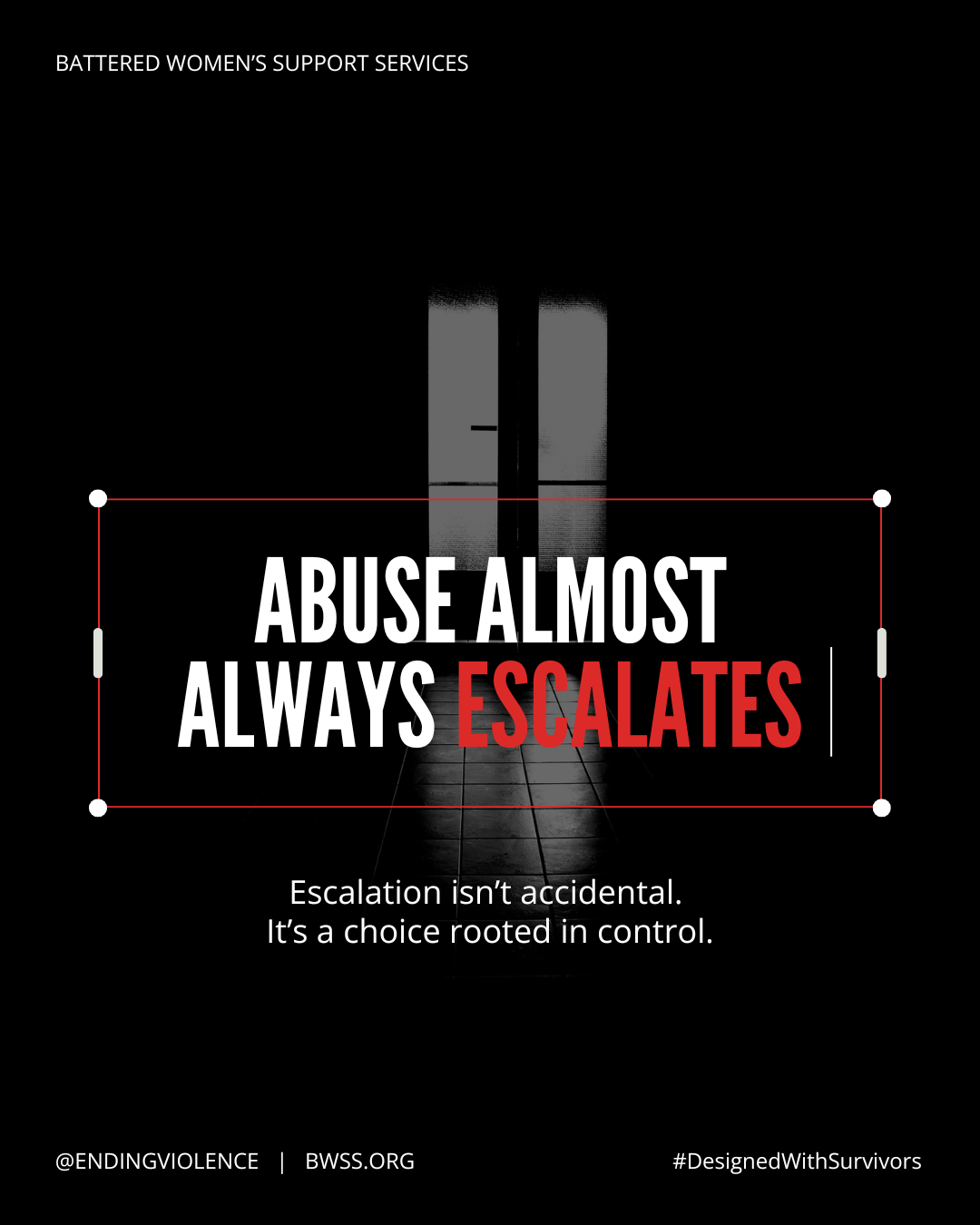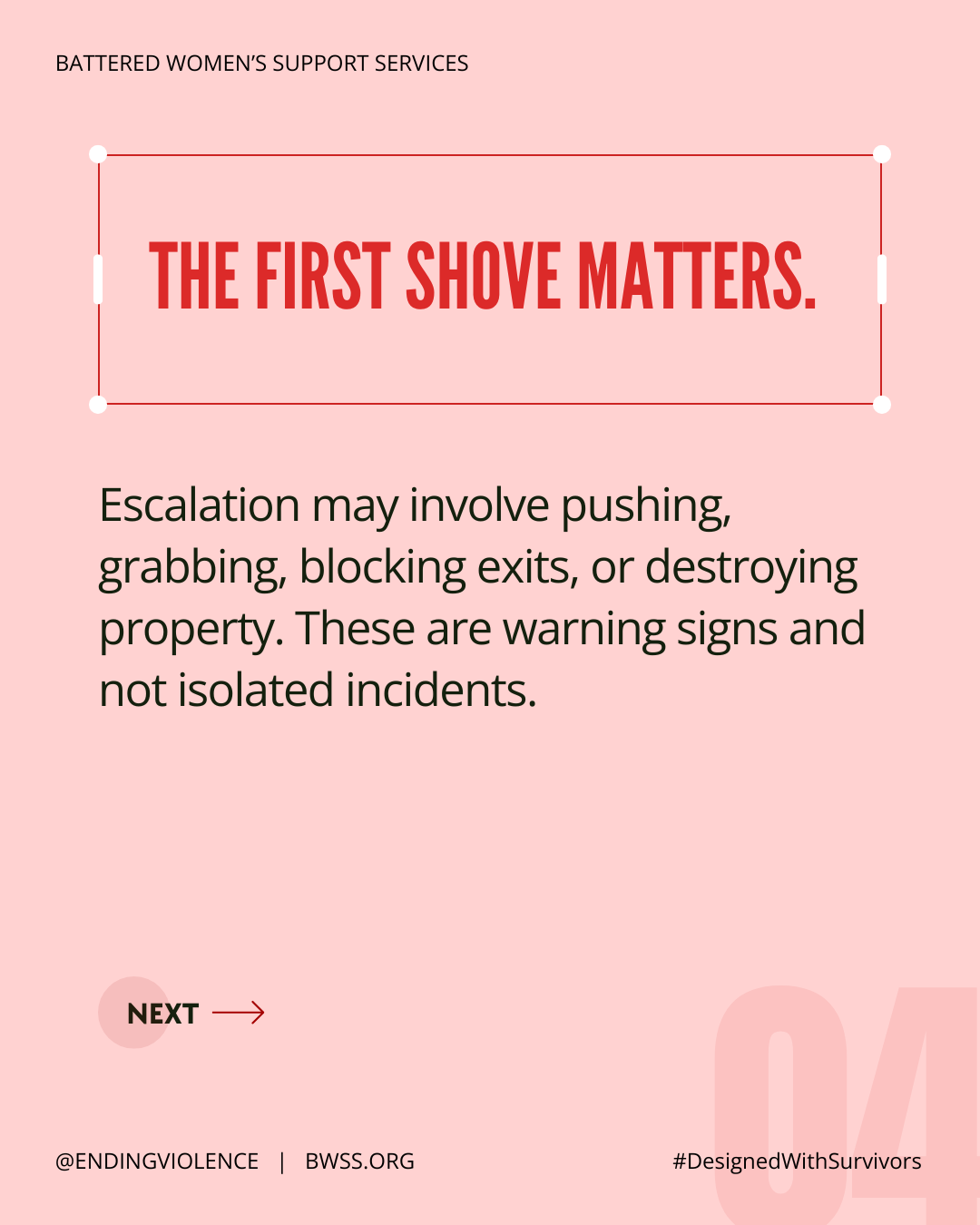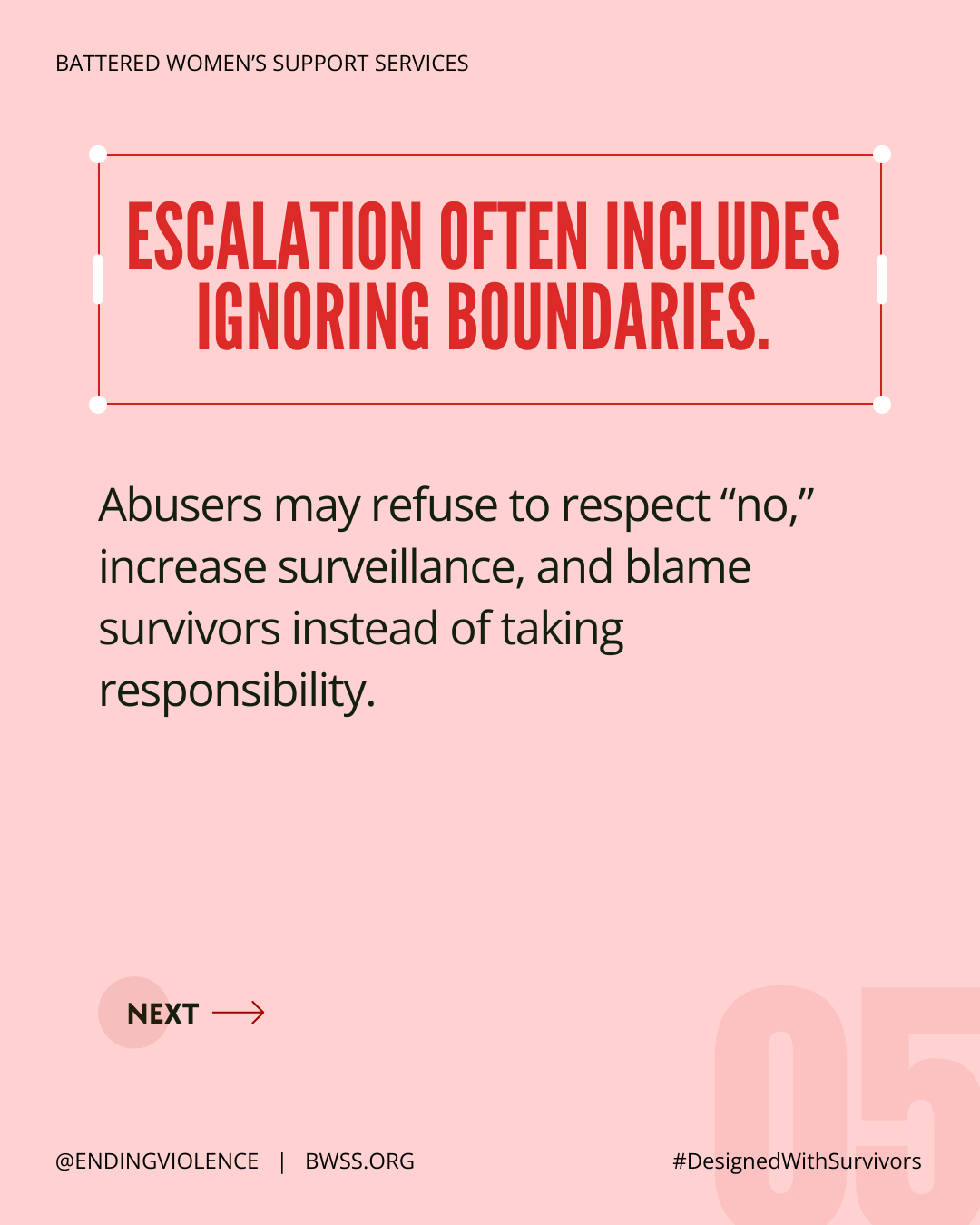
Escalation is not accidental. It is often a pattern rooted in control.
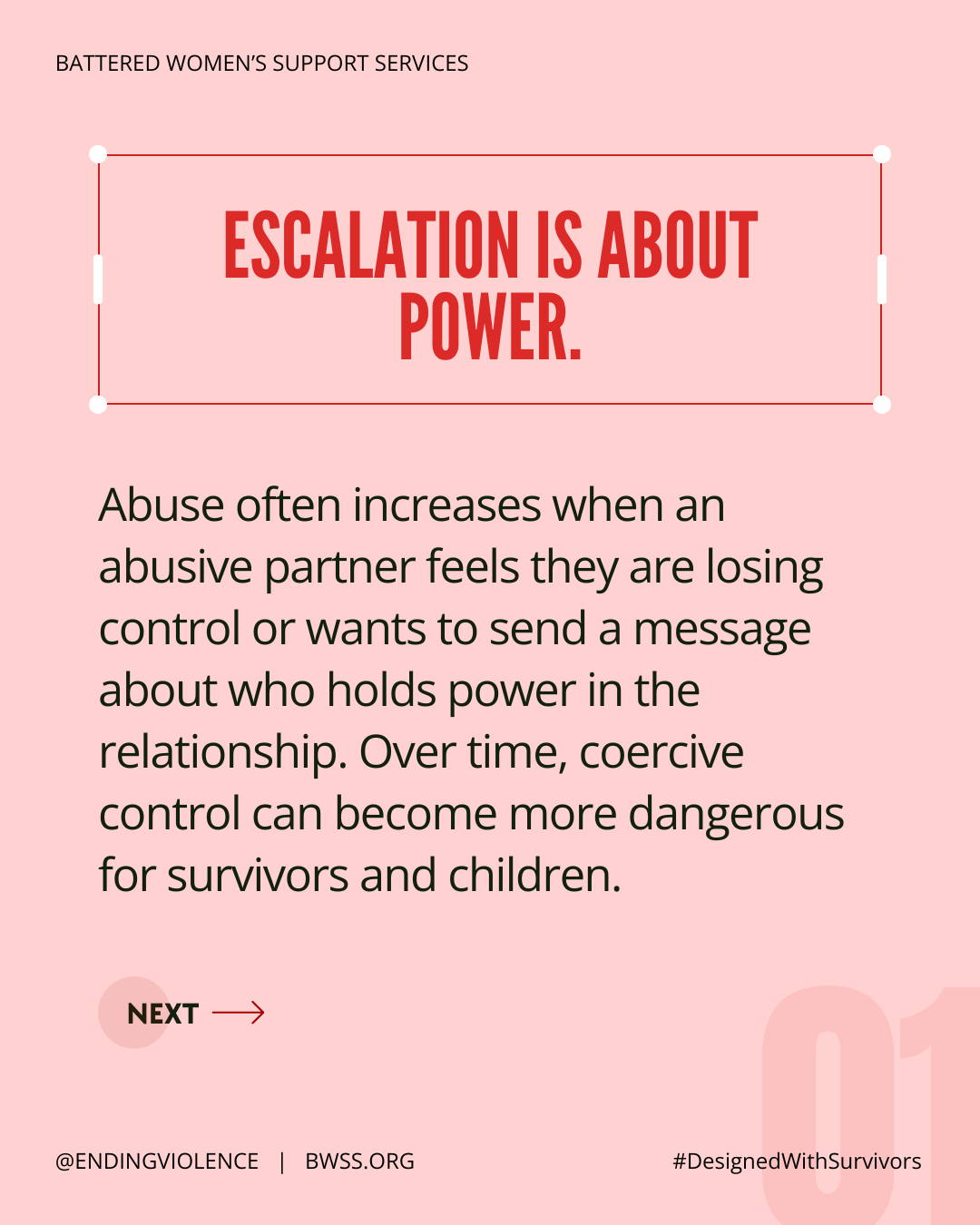
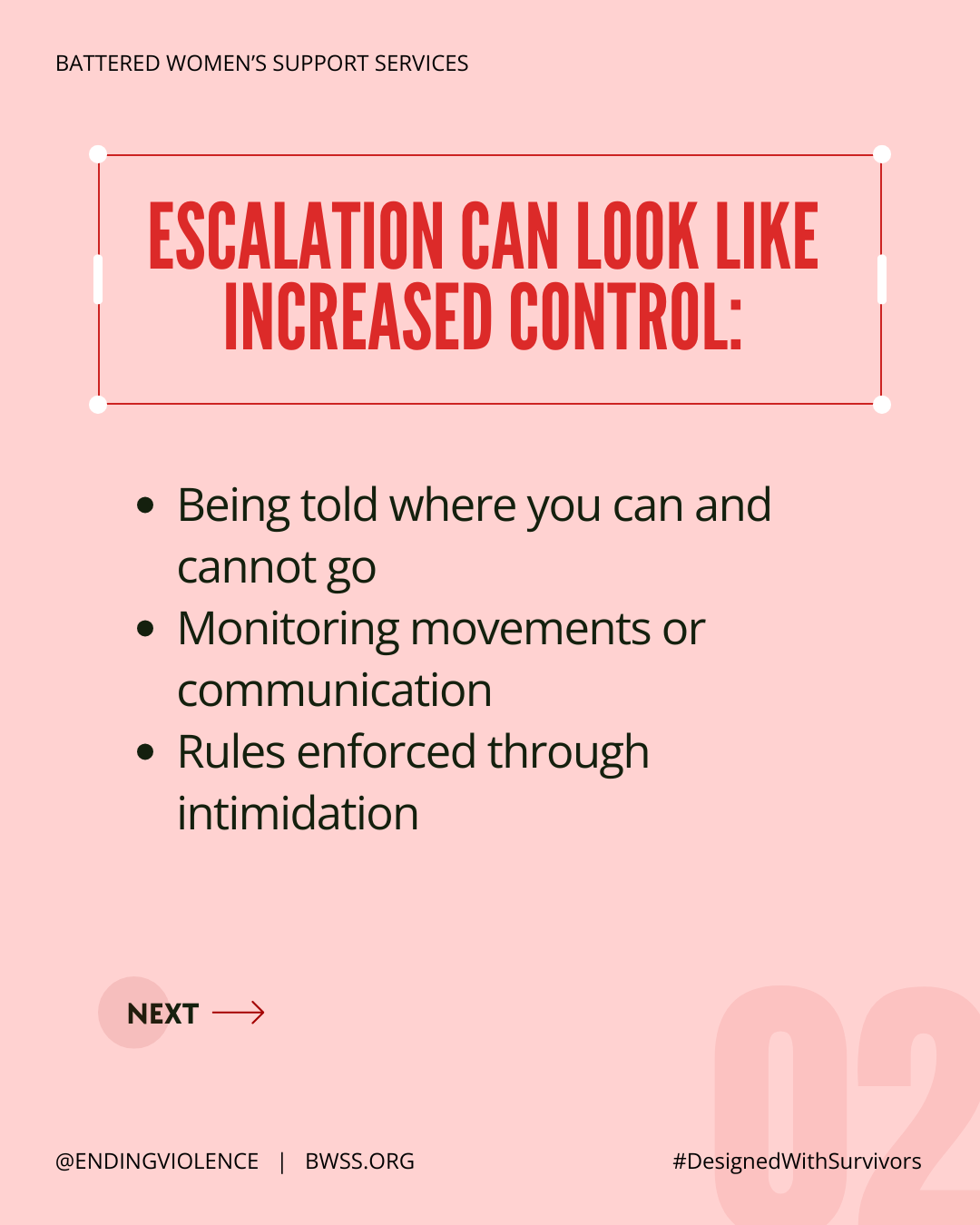
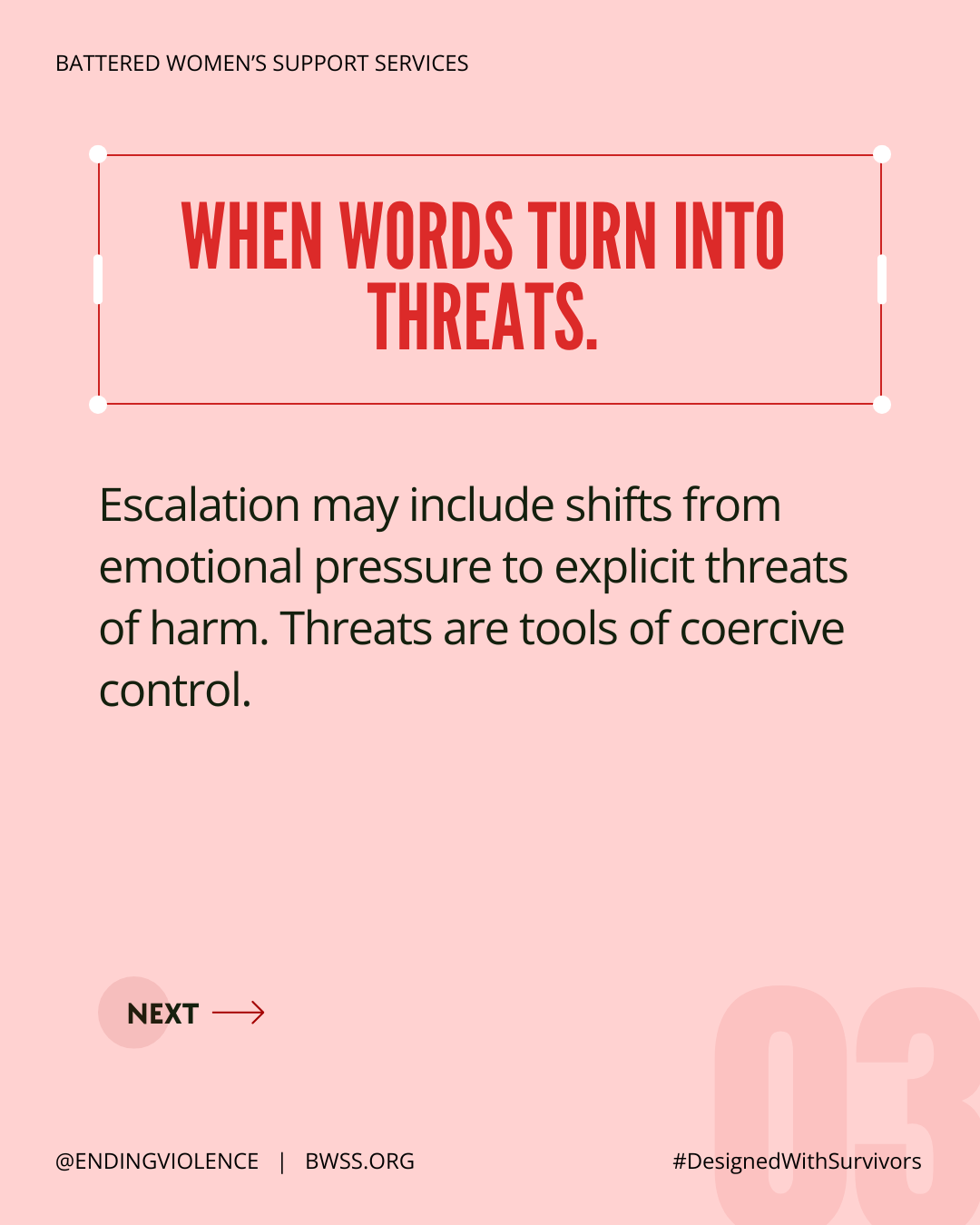
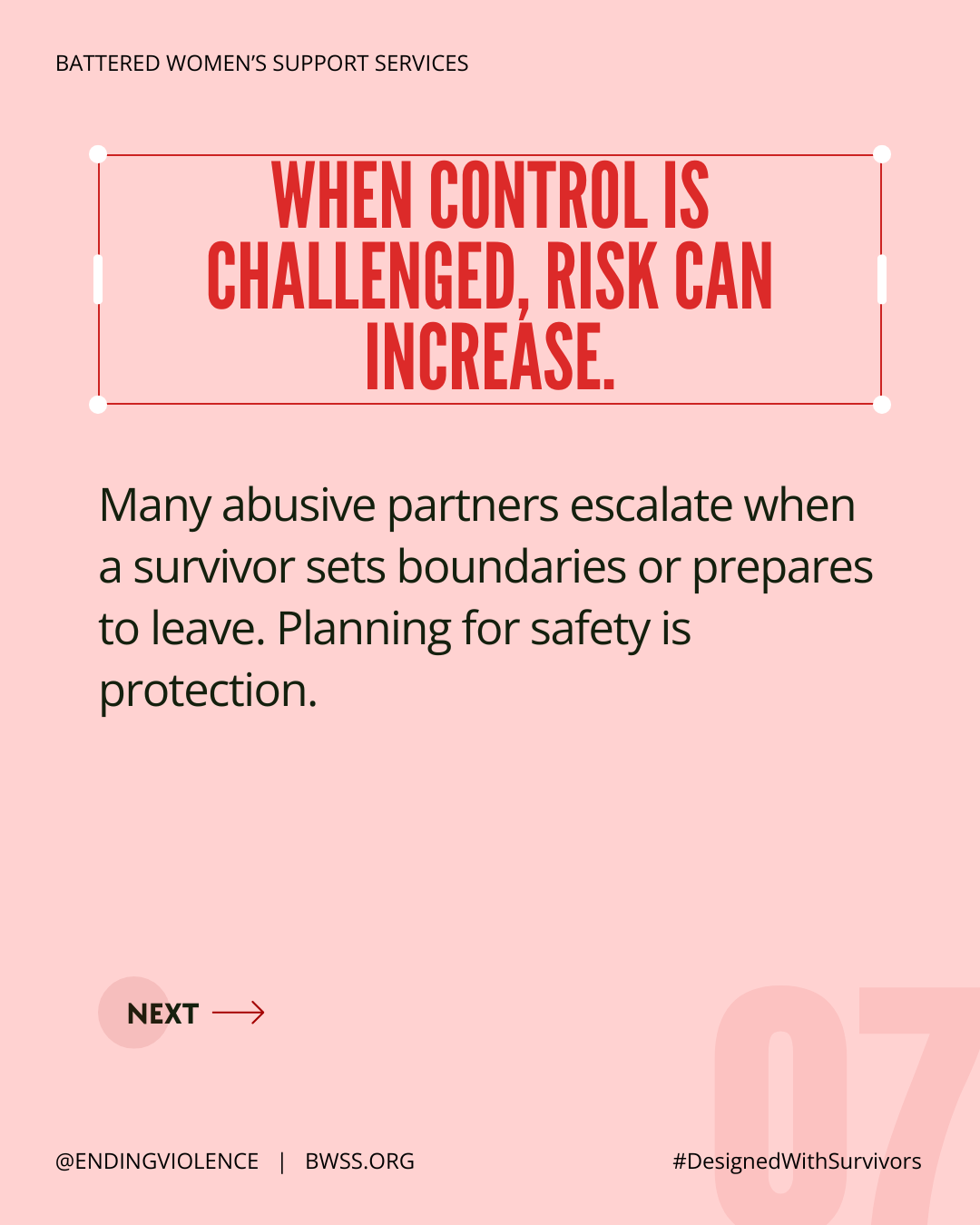
Many survivors describe how abuse changes over time, increased monitoring, stricter rules, threats that grow more explicit, or the first acts of physical violence. These shifts are not isolated moments; they can signal that an abusive partner is trying to reinforce power when they feel control slipping away.
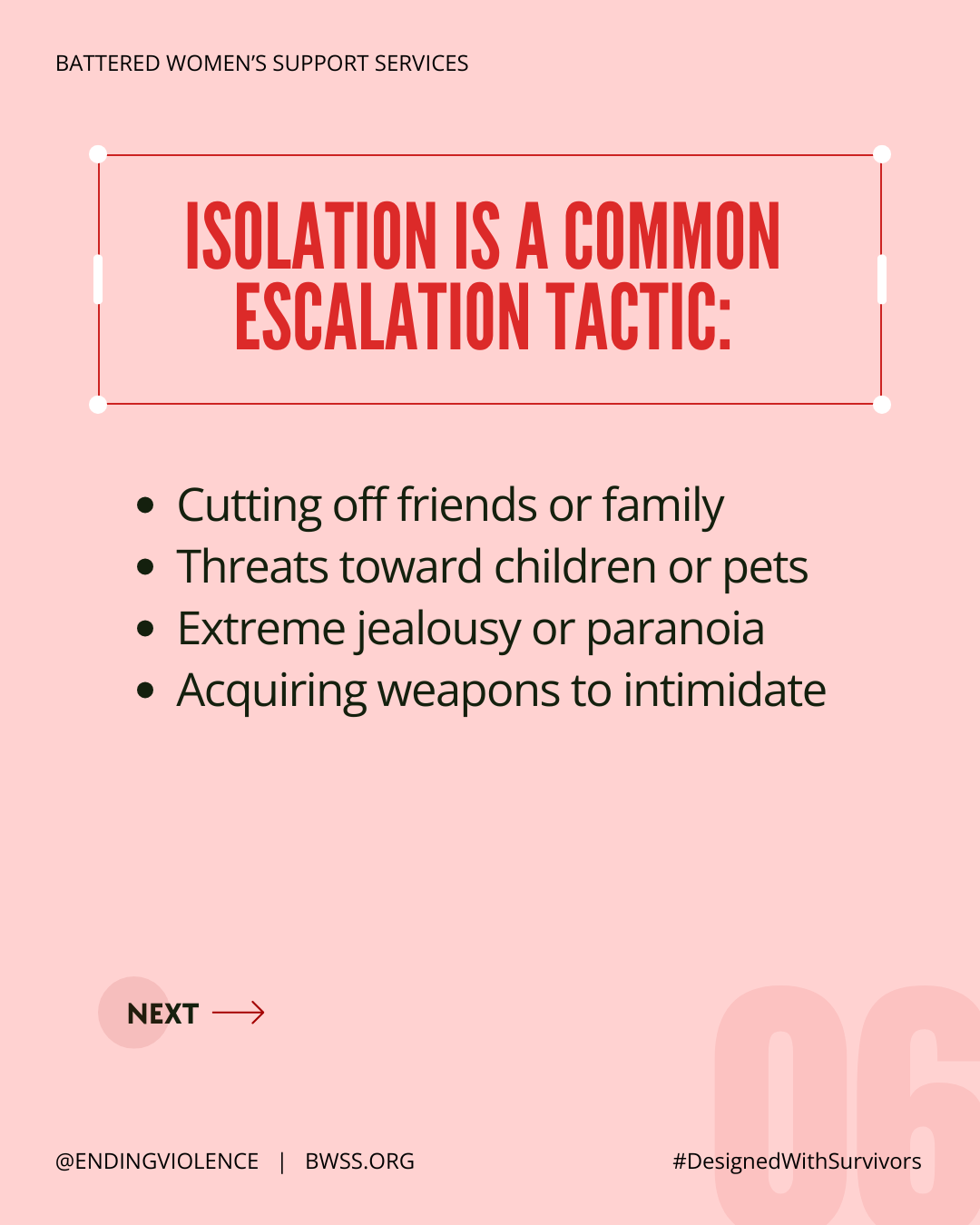
Escalation may look like intimidation, isolation from friends or family, dismissal of boundaries, or threats toward children or pets. What begins as pressure or emotional manipulation can become more dangerous when control is challenged.
Understanding escalation helps us move away from questions like “Why didn’t they leave sooner?” and toward recognizing how coercive control operates in real life. Survivors are not responsible for the choices of an abusive partner, and safety is not a single decision, but a process shaped by many factors.
The good news is that escalation patterns can be recognized. Support, advocacy, and trauma and violence-informed safety planning can make a difference.
If you or someone you know is experiencing escalation or feeling unsafe, BWSS offers confidential support, legal advocacy, safety planning, and support groups.