Image by Marius Arnesen
Over the past week, a stark message has moved across feminist networks:
“The Taliban has legalized domestic violence as long as bones are not broken.”
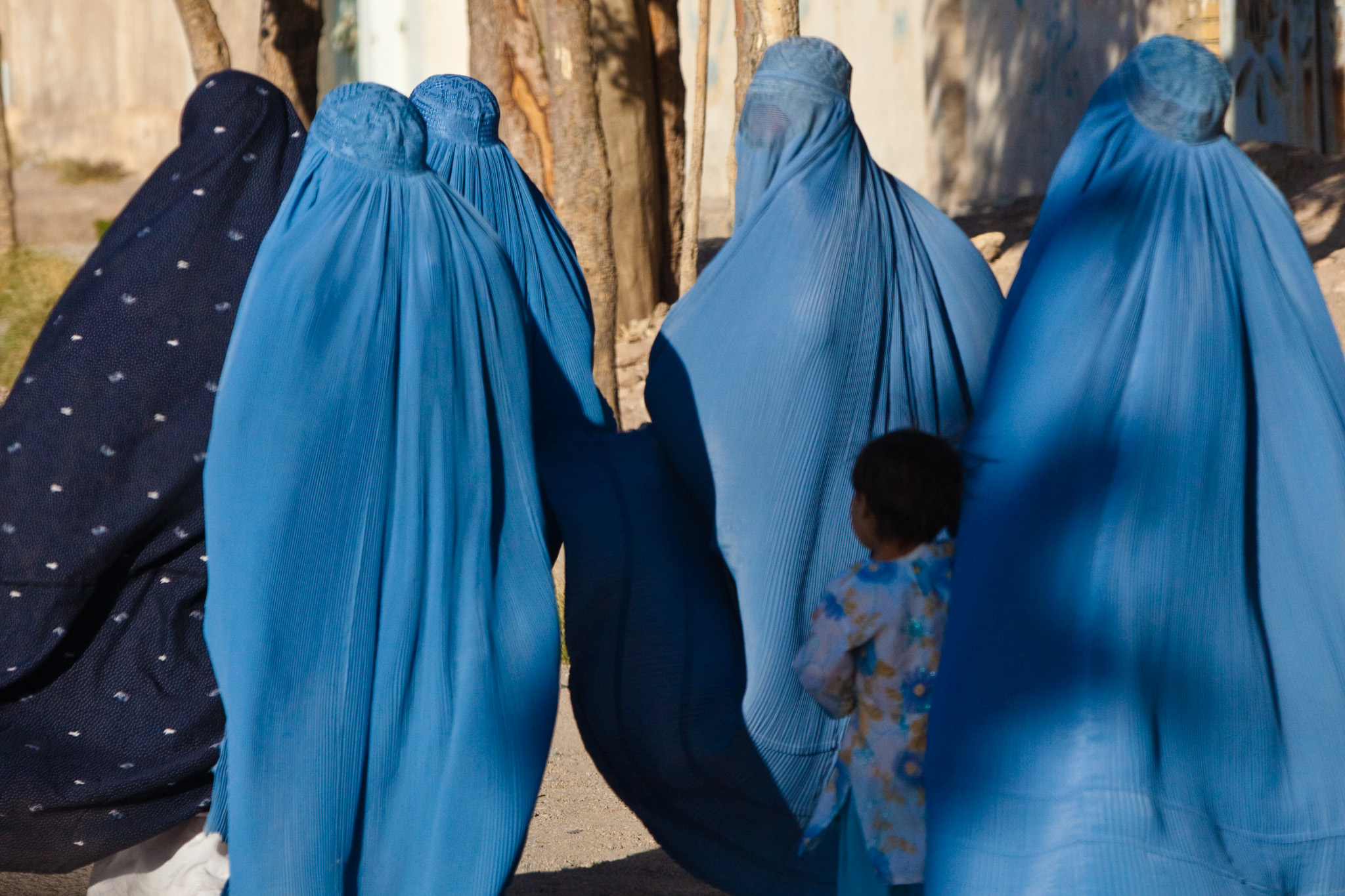
Under Afghanistan’s new penal code, a husband can physically abuse his wife or children as long as there are no broken bones or open wounds. Even when serious injuries occur, the penalty may be as little as fifteen days in prison. Women who report abuse must prove it in court, appear fully covered, and often must attend with a male guardian, even when the abuser is their husband . A married woman who visits her birth family without permission can face jail time herself.
These details are difficult to read and if we stop at shock, we risk misunderstanding what is really happening.
This is not only a legal story about domestic violence because it is also about a spectrum of gender governance that extends from explicit legal control to quieter policy and ideological shifts that shape who is safe, who belongs, and who holds power. What is happening in Afghanistan reveals how power organizes itself through gender and why social and public safety is always political.
The Home as a Site of Governance
The Taliban’s penal code does more than permit harm because it further restructures the relationship between the state, the family, and authority with women and girls as a central place for the expression of all three.
When a husband is legally empowered to physically “discipline” his wife or children, violence is reframed as governance. The home becomes an extension of state power, where obedience is enforced through hierarchy rather than protection. In this framework, violence shifts from being treated as a crime to being treated as a mechanism of obedience under a patriarchal, hierarchal framework.
What may be even more sinister and striking is what happens when a woman seeks refuge. For instance, the new law criminalizes visiting her parents without the husband’s permission. The act of leaving, which is already recognized as often the most dangerous moment in a victim-survivor’s life, is transformed into a legal offence. This is not accidental or random. It is a deliberate use of governance to restrict or reduce movement, virtually eliminating opportunities for safe refuge, and removing the possibility of leaving a husband or family. While the mechanisms differ, the logic is not entirely foreign.
In Afghanistan, leaving is punished through law. Elsewhere, including in Canada, victims-survivors may encounter barriers shaped by housing insecurity, legal thresholds that fail to recognize coercive control, or economic dependence that makes departure dangerous or nearly impossible. In both settings, exits are constrained. The difference lies in how governance structures produce and manage that constraint. Many feminist analysts now describe this as gender apartheid: a coordinated system that reorganizes social authority through legal design, institutional practice, and enforced dependency.
@sahrrraaaa I’m heartbroken by what is going on in Afghanistan 💔 #afghan #freeafghanwoman #persiantiktok #afghantiktok #farsi
♬ original sound - Sahrraaaa
A Difficult Truth: This Is Not Foreign to Legal History
For Canadians, it can be tempting to view this Taliban edict as something entirely separate from our own legal traditions. But historically, Canadian law, rooted in British common law, also treated married women as the legal property of their husbands.
Under the doctrine of coverture, a woman’s legal existence was effectively suspended upon marriage. She could not own property independently, sign contracts, or pursue legal action without her husband. Property she brought into marriage or earned during it was considered legally his.
Reforms began in the late nineteenth century, including provincial Married Women’s Property Acts, passed in Ontario in 1884, Manitoba in 1900, and much later in Quebec where married women did not gain full legal and property rights until 1964. Even then, the shift toward full legal personhood was gradual, shaped by court interpretations that often-framed women as dependents needing protection rather than autonomous individuals.
Milestones such as Canadian federal suffrage in 1918 and the recognition of some women as legal “persons” in 1929 marked significant change, but they did not instantly dismantle the structures that positioned women within male authority, nor did they extend equally to all women. These were governance choices that determined who would be recognized as a full political subject and who would remain regulated by colonial, racialized, and patriarchal law.
First Nations, Inuit, and Métis women continued to be governed under the Indian Act, which restricted status and political participation; Black women and other racialized women faced structural barriers rooted in exclusionary immigration and voting policies; Chinese, Japanese, and South Asian women were denied federal voting rights until the mid-twentieth century; and even within settler society, married women, particularly in Quebec, faced legal incapacity well into the 1960s. These were governance choices that determined whose autonomy would be recognized and whose movement would remain regulated.
This historical context is relevant not necessarily because Canada is comparable to Afghanistan today. There is no direct comparison. However, the trouble for women in Afghanistan reminds us that gender hierarchy has existed within Western legal systems. The rights women hold today were won through struggle and must be defended whenever political forces attempt to narrow autonomy or safety.
Beyond One Law: An Ecosystem of Control
The Taliban’s penal code exists within a broader system of restrictions affecting education, employment, mobility, healthcare, and speech. Each rule may appear administrative on its own. Together, they create an ecosystem where independence becomes nearly impossible. Legal procedure becomes a tool of control from requirements to appear with a male guardian to evidentiary thresholds that render coercive control invisible, as documented by Rawadari and reported by JURIST:
• Physical abuse is effectively permitted unless it results in broken bones or open wounds, and even when severe visible injuries occur, penalties may be limited to short periods of detention, reframing domestic violence as discipline rather than crime.
• Victims and survivors carry the burden of proof, required to present injuries before a judge, remain fully covered, and often appear alongside a husband or male guardian even when the guardian is the alleged abuser.
• Visible injury becomes the threshold for justice, rendering coercive control, psychological violence, and many forms of abuse legally invisible.
• Mobility and refuge are regulated, with married women facing potential imprisonment for visiting family members without a husband’s permission deepening the narrowing the pathways out of domestic violence.
• Public discussion itself becomes risky, as rights groups report that speaking openly about the law may be treated as a criminal act, further isolating victims and survivors and limiting collective response.
Domestic violence is not only legalized, but any resistance to it is also administratively suffocated.
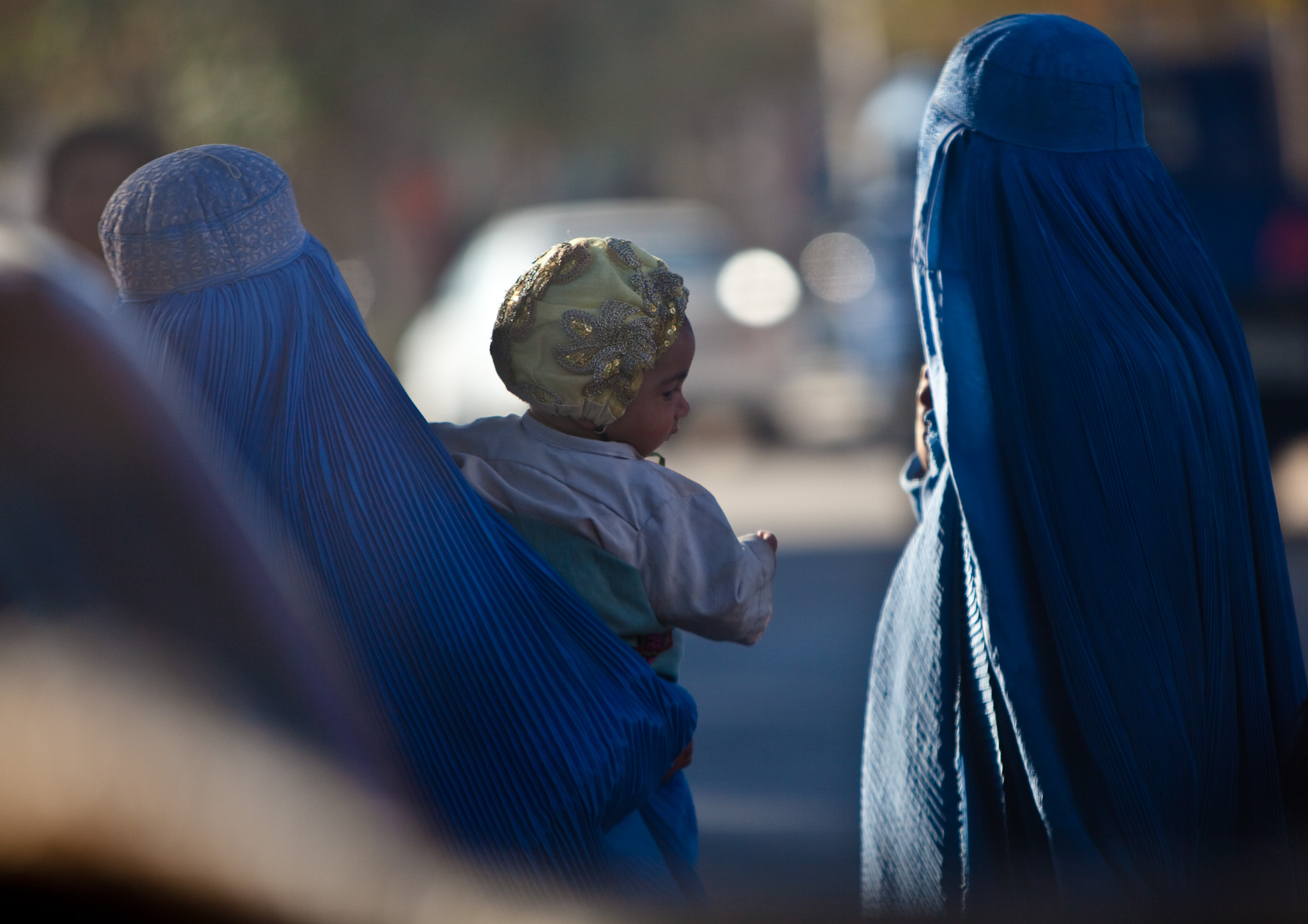
Image by Marius Arnesen
Why This Matters Globally, Including Here in Canada
Canada’s legal and democratic context is profoundly different. Yet across parts of the world, including Western democracies, anti-feminist narratives are gaining traction. Gender equality is increasingly framed as ideological rather than foundational.
In Canada, feminism has historically played a central role in reshaping governance itself, challenging coverture, advancing suffrage, securing legal recognition of women as persons, and pushing for reforms in family law, violence prevention, and human rights protections. These changes were not inevitable; they were the result of sustained feminist organizing that redefined social and public safety as a collective responsibility rather than a private matter confined to the home.
Recently, Canada’s national security conversations have begun to reflect a new shift. The Canadian Security Intelligence Service has identified anti-feminist ideology as part of the broader landscape of ideologically-motivated violent extremism. Misogyny is no longer viewed solely as offensive speech; it is recognized as a factor that materially increases the risk of harm to women and girls.
Seen through this lens, anti-feminist ideology is not separate from governance; it becomes part of the ecosystem through which power is organized, challenging the very gains feminism has worked for generations to establish.
The safety frameworks many Canadians now take for granted exist because feminist movements insisted that violence inside the home was not private it was political.
Public Safety Is Designed
One of the most important lessons from Afghanistan’s penal code is that safety is never neutral. It is shaped and is often constrained by governance choices that determine whose autonomy is recognized and whose risk is normalized. In Afghanistan, the state withdraws protection and authorizes private enforcement. In Canada and other Western democracies, the dynamics are different, yet safety gaps still emerge when housing is inaccessible, prevention programs are underfunded, and victims and survivors must navigate systems that struggle to recognize coercive control or respond to harm without placing the burden back on those at risk.
What matters is not whether systems appear the same, but how governance decisions organize the power that shapes the domestic conditions in which intimate partner violence escalates and, too often, ends in femicide. These decisions determine who can leave safely, who is believed when harm is disclosed, and whose risk is dismissed as private until it becomes a lethal public tragedy.
In Canada and globally, femicide exposes the cumulative consequences of these governance choices. When warning signs are minimized, coercive control goes unrecognized, or safety infrastructure fails to respond in time, the boundary between private harm and public crisis disappears.
Centrally, in Canada, the National Inquiry into Missing and Murdered Indigenous Women and Girls has already named racialized gender-based violence as rooted in colonial governance structures that normalized risk and limited protection of Indigenous women and girls. Its findings remind us that femicide is not only the result of individual acts, but of systems that determine whose safety is prioritized and whose vulnerability is created by legal and social governance.
The Real Warning
Gender apartheid begins not with a single law, it exists in a social context that is shaped by hierarchical domestic dynamics and grows through incremental shifts rooted in restrictions that are framed as tradition, religious doctrine, ideology framed as security, and narratives that portray feminism as a threat. The term gender apartheid has increasingly been advanced by United Nations experts to describe systems of institutionalized gender segregation and domination.
Recent global conversations about elite abuse and impunity, from high-profile trafficking cases to the ongoing scrutiny of powerful networks that enabled exploitation, remind us that gendered power operates not only at the margins of society but within its most protected institutions. The question is not simply whether gender-based violence such as intimate partner violence, domestic violence, or sexual assault or exploitation is condemned, but whether governance structures are willing to confront the systems that shield those who hold gendered, public, social, economic, or political power.
Though it may land as alarmist, recognizing these patterns is historical awareness. The making of Canada as a nation has baked in gender and racial inequality in law, as reflected in doctrines such as coverture and legislation such as the Indian Act, so any legal evolution reveals that rights are neither inevitable nor permanent. Canada’s social, public and legal systems are shaped by political choices and by the willingness of communities to insist that safety be designed with equality at its core.
Designing Safety With Survivors
For those working to end gender-based violence, the task is not to draw easy comparisons across borders. It is to understand how power operates across law and reforms, institutions and bureaucracy. The stories we tell about harm support our demand that social and public safety frameworks reflect the realities victims and survivors face. Feminist movements in Canada have long challenged the idea that violence inside the home is private, including through landmark advocacy that followed the Montreal Massacre and national processes such as the National Inquiry into Missing and Murdered Indigenous Women and Girls.
Today, that work extends to confronting how ideology and institutional loyalty can obscure harm, especially when it implicates those with power. History shows that gender and racial hierarchy does not disappear; instead, it adapts. Social and public safety, in turn, is not a fixed achievement but an ongoing political choice shaped by whose voices are heard and whose risk is taken seriously.
Written by Angela Marie MacDougall
Angela Marie MacDougall is Executive Director of Battered Women’s Support Services (BWSS) and a leading voice in Canada on gender-based violence, social and public safety policy, and intersectional feminist and decolonial governance. For three decades she has worked alongside victims, survivors, advancing policy reform, legal advocacy, defining education and training and prevention strategies that confront systemic violence against women. Her writing examines how social policy, law, ideology, and social institutions shape risk and how communities can design safety grounded in equality and accountability.