Canada is in a different economic and political moment, and I have been thinking a lot about what it means for women.
In his recent address to Canadians, Prime Minister Mark Carney spoke about the breakdown of trade negotiations with the United States and the need for Canada to become less dependent on one country. His government is responding with counter-tariffs, support for affected workers and industries, new trading relationships and an ambitious program of infrastructure and resource development.
There is something important in the Prime Minister’s argument that dependency makes us vulnerable. But before we decide that the answer is simply to build more, export more and find new markets, I think we should ask what dependencies we have already built our economy and our communities upon, who has benefited from them, and who has been carrying their costs.
At Battered Women’s Support Services, that question feels very real coming out of the FIFA World Cup.
Governments put enormous effort into preparing Vancouver for FIFA. Transportation, policing, tourism, crowds and emergency response were all understood as things that could not be allowed to fail. BWSS was asking what preparedness meant for women experiencing intimate partner violence.
We proposed a specialized surge response that the Province did not fund, and we prepared anyway. During the tournament period, BWSS responded to 734 specialized contacts, a 37.2 per cent increase over the comparable period. Ninety-four women disclosed strangulation and 85 reported death threats.
What stayed with us after FIFA was not only the increase in violence that women were reporting. It was the question of how governments decide what is essential enough to prepare for before a crisis arrives, rather than after people are already living with the consequences.
We should be asking the same question now.
When a mill loses orders, the consequences do not end with the company’s balance sheet. Workers lose shifts or employment, household income falls, housing and food still have to be paid for, unpaid care increases and community organizations see greater need. Eventually what begins as an economic shock reaches the home.
Economic insecurity does not cause intimate partner violence, but it absolutely affects the choices available to a woman living with it. An abusive partner may already be controlling money, employment or access to transportation. Losing income or affordable housing can make leaving much harder. A woman can have every legal right to leave and still not have the money for a damage deposit, childcare, transportation or somewhere safe to live.
This is one reason I have been thinking about our recent time in the Okanagan. We were there speaking with municipal candidates and leaders about intimate partner violence, but people also kept talking about water. We heard concerns about Okanagan Lake and Kalamalka Lake, and driving through the region we were struck by how low the water appeared in the Coquihalla River.
Then there have been the wildfires. British Columbians have again lived through evacuations, smoke, road closures and threats to homes and livelihoods. An evacuation order does not make intimate partner violence disappear. A woman may suddenly be displaced alongside the person harming her. She may lose access to identification, medication, transportation or the privacy required to make a safety plan. The transition house or community organization she depends upon may itself be affected.
All of this has made me question how narrowly we have come to understand resilience.
Across B.C., the pressures will look different. Forestry communities may experience mill contraction and job losses. Tourism and agricultural communities may experience reduced or precarious employment alongside drought, wildfire and housing pressures. In Vancouver and the Lower Mainland, the cost of housing means that even a modest loss of income can eliminate an already narrow path out of violence.
In parts of northern B.C., the pressure may come from rapid development instead.
Canada is talking about major new investment in mines, ports, energy corridors, transmission and Pacific trade. We have seen before what can happen when economic infrastructure arrives much faster than the social infrastructure of a community.
Indigenous women have been telling us for years about the safety implications of large, predominantly male and transient workforces associated with some resource projects and work camps, often called “man camps.” These concerns are part of the work on missing and murdered Indigenous women and girls and cannot be separated from the history of resource extraction and colonization in this country.
We should not wait until projects are underway to ask what major changes in population, housing and workforce composition may mean for sexual violence, sexual exploitation, trafficking and intimate partner violence. Women working in resource industries themselves can experience sexual harassment and violence in male-dominated and remote workplaces. Meanwhile, housing shortages and rising rents can increase women’s economic dependency while already stretched sexual assault services, transition houses and community organizations are expected to absorb greater demand.
This does not mean that resource development inevitably produces violence or that men working in these industries should be characterized as violent. It means that women’s safety is foreseeable and should be planned for.
For Indigenous women there is an even more fundamental question about power. If projects considered essential to Canada’s economic future are going to cross Indigenous territories, Indigenous women cannot simply be asked for their views after the important decisions have been made. They must have meaningful power in deciding what gets built, what does not, what benefits remain in their communities and what risks their communities should never be expected to carry.
There is another dependency in all of this that no trade agreement can solve.
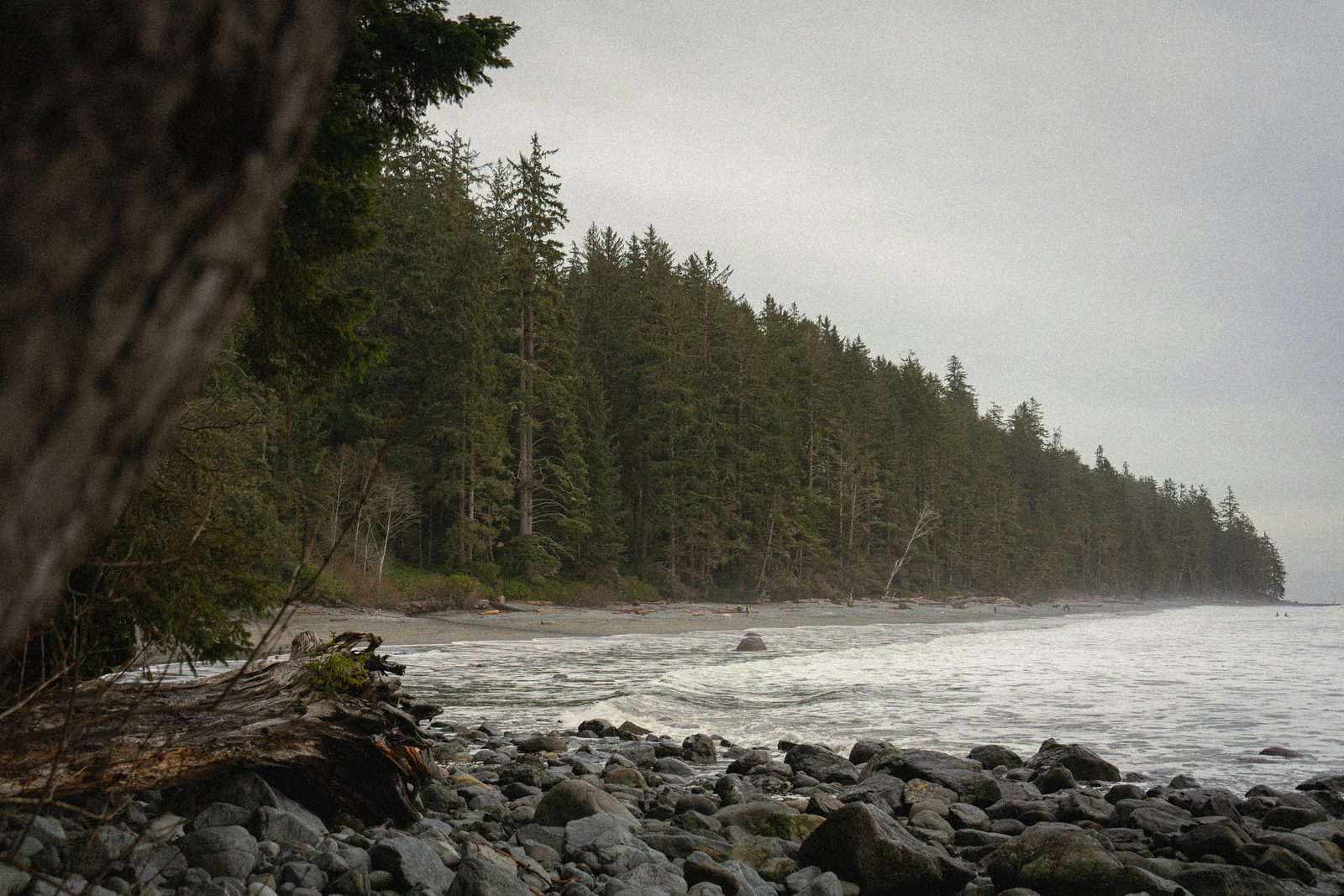
The Pacific coast that Canada increasingly describes as a gateway to global markets is also the home of the endangered Southern Resident killer whales, whose survival is already affected by vessel disturbance, reduced prey and contaminants. The Okanagan is not simply agricultural and tourism capacity, just as a forest is not simply timber inventory and the Salish Sea is not simply a route to another market.
Our economy exists because the living world exists, not the other way around.
That matters when we talk about building our way out of economic vulnerability. We have to be willing to ask whether an economic model that continually requires more extraction, more movement and more consumption can actually become resilient within ecological limits. Canada can diversify its trading partners, but a community cannot diversify away from the water it depends upon, and British Columbia cannot build another Salish Sea.
The same questioning needs to apply to women and the economy. Women’s liberation cannot be reduced to making sure women get a share of the jobs created by the next round of development. Employment, income and ownership matter enormously, but so do freedom from violence, housing, care, time, land and power over the decisions that shape our lives and communities.
Our economy also depends on an enormous amount of care that is still disproportionately performed by women and is often unpaid or underpaid. When public systems or households come under pressure, that work expands. An economy can therefore appear remarkably resilient while the actual cost of keeping families and communities functioning is quietly transferred into women’s time, bodies and lives.
This is why women’s safety cannot remain the responsibility of the anti-violence sector alone. It belongs in how governments, municipalities, Indigenous Nations, employers, unions, resource companies and emergency planners think about the future they are building.
The Prime Minister is right that dependency can make us vulnerable. I would take that argument further. We need to ask what kinds of dependency we are trying to end, which ones our economy continues to create, who has the power to choose, and who is expected to live with the consequences.
If resilience simply means that the economy survives while workers, women, Indigenous peoples, communities and the environment absorb the cost, then we have not become more resilient. We have simply moved the damage around.
The question for Canada is not only whether we can withstand the next shock. It is whether we can build a society that stops requiring the same people, communities and living systems to absorb it.
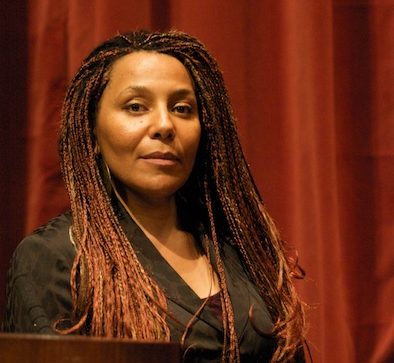
By Angela Marie MacDougall
Executive Director, BWSS Battered Women’s Support Services
I’m curious to see how Canada’s approach to resilience will impact vulnerable communities. It’s critical that we consider who bears the brunt of these initiatives. this one