
Day of Action for Ashley Machisknic
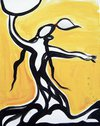
DAY OF ACTION FOR ASHLEY will be held on Monday, October 4, 2010 from 5:00 pm-8:00 pm.
We will meet in front of the Regent Hotel which is just down the street from the Carnegie Centre. We will then march from the Regent to the alley way where Ashley lost her life. There will be drumming, singing, speakers. An elder will do a ceremony for her. From there, we will then march to the police station. (More info within the next few… days)
*Please bring your hearts, drums, your voices and wear your regalia*
“ASHLEY MACHISKNIC was a beautiful First Nations woman whose young life came crashing to the ground Sept. 15 in a sordid lane behind the Regent Hotel in Vancouver’s Downtown Eastside.
Area residents and community leaders are convinced that Machiskinic, despite her off and on battles with drug addiction, did not take her own life.
They say Machiskinic, just 22, was the latest of several women to be killed or punished in a highly public way by drug dealers who want to send a message to women about what will happen to them if they don’t pay off their drug debts.
“Women get their heads shaved for a $30 drug debt, they’re killed for $50,” said Carol Martin of the Downtown Eastside Women’s Centre.
Martin and others familiar with the area say drug dealers are doing a booming business on the eastside, and that women, predominantly First Nations women, are still the primary victims of violence.
“Our women are the mules, they are sex-trade workers, they’re drug-addicted, they’re holding or selling drugs for dealers and they’re paying with their lives, now more than ever,” said Martin.
Drug dealers, doing a brisk trade Thursday just after “welfare Wednesday,” boast of profits as high as $15,000 a month.
Their collection methods, if they front a woman drugs that she uses or loses, can be brutal.
“There’s been a few women lately thrown out of windows, at the Balmoral, the Regent, women missing fingers, wearing wigs because their heads have been shaved,” said Gladys Radek, organizer of the annual Walk 4 Justice in support of missing and murdered women in Vancouver and along the Highway of Tears.
“Whoever threw Ashley out chose the busiest time when the alley was full of people buying drugs, to make a point — don’t rip us off.”
Martin was one of the first to the scene after Machiskinic’s death.
“I ran over to her right after she fell and she was staring straight up, just gasping her last breaths — I was totally traumatized and I’ve worked down here for 15 years,” she said.
Eastside leaders charge that drug dealers are able to kill or maim with impunity, because Vancouver police, short of witnesses willing to come forward, write off the women’s deaths as drug overdoses or suicides.
“Violence against women down here … is worse than ever — it’s at an all-time high,” said Dave Dickson, a former Vancouver cop who worked in the eastside and is now a well-respected outreach worker.
“I’ve known Ashley since she was 15. She was an attractive, quiet young woman and there is absolutely no way on earth that she committed suicide by jumping out of a fifth-floor window of the Regent Hotel,” said Dickson.
Standing in the alley in front of a memorial poster put up by Machiskinic’s grieving mother, Cheryl Strongarm, Dickson is approached by people who trust him enough to talk, even with a reporter present.
“Ashley was a beautiful, good-spirited person and she didn’t deserve what those assholes did to her, throwing her out in the alley like a bag of garbage,” said an angry young native man, hiding his face from nearby dealers.
“I was right here when her body hit the street with a sound I’ll never forget. “Are we intelligent people? Give me a break — Ashley didn’t commit suicide by jumping out of the Regent Hotel. She was thrown out to send a message to pay up your drug debts, or else.”
Hiding his face behind an umbrella, he added: “Those dealers are just laughing. They know the police can’t prove nothing down here.”
Marlene George of the Carnegie Centre, who will lead the Oct. 4 Sisters in Spirit March to the spot where Machiskinic perished, agreed: “There’s a code of silence down here. The worst thing you can be is a rat.
“It is very difficult to get the police to speak about this and to acknowledge the drug dealers are behind these events.”
Vancouver police spokesman Const. Lindsey Houghton called Machiskinic’s death “a tragic rumour that has not been corroborated … a case of what appears, after investigation, to be someone taking their own life.”
Houghton, who also knew Machiskinic, urged anyone with information to come forward to police, saying that her death is still an “ongoing investigation.”
* In the rain-sodden lane Thursday, a rose and a sheet of paper posted by the dead woman’s mother paid tribute to “Ashley Nicole Lori Machiskinic. You are sadly missed and never forgotten … Rest in Peace, you’re in a better place. Love Mommy.”
sfournier@theprovince.com
© Copyright (c) The Province
Read more: http://www.theprovince.com/news/Women+being+pushed+their+deaths+drug+dealers+Downtown+Eastside+advocates/3572655/story.html#ixzz10TsITDmA