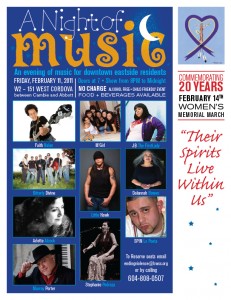
Their Spirits Live Within Us – A Night of Music Commemorating 20 Years

An evening of music for downtown eastside residents

Thank you, February 14th Women’s Memorial March Committee, for this vision and the steadfast leadership of women of Vancouver’s Downtown Eastside, bringing courage and commitment to remember and honour the missing and murdered women of the downtown eastside. Now in its 20th year, the February 14th Women’s Memorial March is an immensely powerful women’s action that anchors the tenacious fight for remembrance and justice to end violence against women.

Friday, February 11, 2011
Doors at 7 • Show from 8PM to Midnight
W2 – 151 West Cordova

No charge • Alcohol free • Child friendly event
Food + Beverages available

Their Spirits Live Within Us final line up has been confirmed:

Whyte Feather
Murray Porter
SPIN EL Poeta
Little Hawk
Bitterly Divine
Dalannah Bowen
JB The First Lady
Arlette Alcock
Stephanie Pedraza
M’Girl
Faith Nolan

To Reserve seats email endingviolence@bwss.org

RCMP report finds few problems with Pickton investigation

The RCMP released a 27 page report on their internal review of the Pickton case yesterday; in it the RCMP do not admit that mistakes were made and state that if this investigation were to take place today, very little would change.

Read the full article by Lindsay Kines at TimesColonist.com

Beverley Jacobs Presentation to the HOC Standing Committee on the Status of Women

Presentation to the House of Commons

Standing Committee on the Status of Women

Violence Against Aboriginal Women

By Beverley Jacobs

January 18, 2011

This presentation is dedicated to my cousin Tashina General, her unborn child, Tucker and to all of the missing and murdered Aboriginal women, their unborn children, their children and their mothers, fathers and families.  I have come to know so many families across Canada and I pray that justice is served for those families who are still waiting for their missing loved ones to come home and for those families who have had to bury their loved ones as a result of the horrific violence of murder.  I am a family member who is well aware of violence; as a child, as a young girl, as a young woman.  I am a survivor of violence.  I devote the rest of my life to end violence of all forms.

There are many concerns being raised by many Aboriginal women and families who were part of the SIS initiative, who I still continue to advocate for, about this Committee’s “study” on violence against Aboriginal women.  What is your mandate?  What is it that you are trying to find out that is any different than the many studies that have been done already (ie. RCAP, AHF, Aboriginal organizations, women’s organizations, Inquiry Reports, Research Studies, Stolen Sisters report, SIS report?)  There has already been millions of dollars poured into these research studies and thousands of recommendations that need to be implemented.  How much did it costs for this Committee’s study?  We don’t need another study.  We need action. I believe that the HOC “Study” and its process are creating more silencing for Aboriginal women…and this is violence!

Let me explain…many families of the missing and murdered were and are unaware of this process.  When they did find out, they were unaware of the process to present.  They did attend some of your sessions already but were not able to present.  They continue to be frustrated, not only about the continued injustices that they face.  They are frustrated and angry that a study is being done without their input….well-needed input, as they have the direct experience to present to this committee.  So, I would respectfully, request that this Committee meet specifically with families of the missing and murdered.

As I said in my speech in response to the government’s residential school apology, respect is needed for Aboriginal women.  Action by government is needed to show that the apology is genuine.  The impacts of residential school have created a cycle of violence that continues to this day.  There are all types of violence…physical, emotional, mental, spiritual, sexual, racialized and sexualized (direct targets of violence against Aboriginal women).  All of these issues of violence have been studied with tonnes of recommendations…we need government to act on these recommendations!!  We need to look at the resources that are being used right now…what is working…what is not working…this is the type of study that has to be done?  If there are resources being put towards violence against women, why is here still so much violence?  Why are there still so many women going missing and found murdered?  Where are the prevention resources?  Where are the educational resources?

Although I respect that this committee is doing this study, and hearing from people in 10 cities, there is no political will to put the resources where they are needed…to actually end violence against Aboriginal women.  The resources are needed to revitalize traditional teachings about respect for women as the life-givers, to revitalize the language where those teachings originate from, to provide needed counselling and healing services for both men and women to heal from the violence.

We are dealing with violence internally in our own communities… with our own men are doing the violating!!

We are dealing with violence externally from white men….impacts of racism and sexism…racialized violence (ie. Helen Betty Osborne/Pamela George)!!

Today, there is momentum growing in the grassroots community without government resources.  Families of the missing and murdered and individual Aboriginal women are healing and leading the charge to end this violence.  But in order for there to be redress and reconciliation, with government actually taking some responsibility for the root of that cycle of violence (ie residential schools), government must provide those needed resources.

There are needs for those families…real needs…and they are different for families of the missing and for families of the murdered:

Needs for Families of the Missing.  Resources are needed for:

  1. Searches
  2. Rewards
  3. Travel when families receive tips
  4. Publicity
  5. Healing services (loss and grief counselling, access to elders)
  6. Family gatherings

Needs for Families of the Murdered.  Resources are needed for:

  1. Assistance in court (knowledge of the process)
  2. Victims services trained with cultural knowledge (services must be culturally relevant ie family, healers, elders, community)
  3. Healing services (loss and grief counselling, access to elders)
  4. Resources (time off from work to attend court, travel to court)
  5. Family Gatherings

One final recommendation that this government can do:

Enact Legislation that deals with ending violence against Aboriginal women

Despite everything, healing is occurring in our communities without government involvement.  It is our responsibility as women to heal, to learn the teachings of our ancestors about our responsibilities,  and to be role models to empower our young girls and other women in our communities…and to protect the elderly in our communities.  Healing needs to happen so­­ that our women (and our men ) know their worth, to know their beauty and to know their rights!  We as a people are resilient people despite all of the violence.  We continue to walk with our heads held high.  We will continue to equip our men, women, young people with the tools to stand up and respect themselves.

Finally, all of us need to make the connection of violence of women to the violence that is occurring to our Mother, the Earth.  Until this is recognised by all human beings, we will continue down this road of destruction of all life.  I know that I have made the commitment to end this violence for my future generations.  Are you thinking 7 generations ahead?

BEVERLEY JACOBS,  LL.B., LL.M., PhD Student

Mohawk Nation of Haudenosaunee (Iroquois) Confederacy, Bear Clan
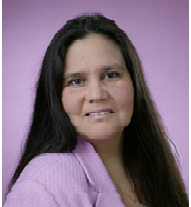
Beverley’s Mohawk name is Gowehgyuseh.  It means; “She is visiting.”  Her home community is Six Nations of the Grand River Territory in Southern Ontario, where she is currently practicing law.  She is also currently working on an interdisciplinary PhD in Law, Sociology and History at the University of Calgary, Calgary, Alberta.

She has earned a Bachelor of Law Degree from the University of Windsor in 1994 and a Masters of Law Degree from the University of Saskatchewan in 2000.  Beverley Jacobs has been a Professor at various educational institutions in Ontario and Saskatchewan, and now Alberta, where she is teaching a course, Indigenous Governance, and coaching law students to prepare for the 2011 Kawaskimhon Moot (Aboriginal Law).  She teaches courses on Self-Determination, Canadian Indian policies, Canadian Law and Aboriginal People, First Nations Women and the Law, and Indigenous Law, just to name a few. She is also a public speaker and has made numerous presentations across the globe on various issues affecting Indigenous people and specifically, Indigenous women. She is a former President of the Native Women’s Association of Canada.  In her five year term (2004-2009), she raised awareness about the missing and murdered Aboriginal women, the issues of violence against women and girls, matrimonial real property rights and impacts of colonization on Aboriginal women. The highlight was responding to the federal government’s Residential School apology at the House of Commons parliamentary floor.  In addition, Beverley participated and made numerous interventions at various international fora and traveled to many communities, locally, regionally, nationally and internationally.

Amidst her impeccable professional portfolio is Amnesty International, a human rights organization that contracted Beverley to research, advise and write the first draft of the Stolen Sisters…, a sobering report, released in 2004, that brought international attention to the issue of missing and murdered Aboriginal women in Canada.  In October 2008, Beverley was one of fifty women recognized by several Canadian peace organizations for her work and dedication to further a culture of peace in Canada.  In November, 2008, she became a recipient of the Governor General’s Award in Commemoration of the Persons Case, in recognition of her contribution to the advancement of Aboriginal women’s equality.  In May, 2010, she received a Circle of Honour Esquao Award from the Institute for the Advancement of Aboriginal Women in Edmonton, Alberta.

She is mother of Ashley and grandmother of Nicholas (9), Tessa (7), Bryson (2) and Kenna (8 months) who live at her home at Six Nations Grand River Territory.  She is partner to Patrick Sandy, Mohawk Nation, Turtle Clan.
Downtown Eastside Women’s Centre Speaks at Missing Women’s Commission

Jan 19 VANCOUVER, Coast Salish Territories – The Downtown Eastside Women’s Centre will be making submissions and giving input to Wally Oppal and the Missing Women Commission of Inquiry today at the Japanese Language Hall.

The Downtown Eastside Women’s Centre, established in 1978, exists to support and empower women and children living in extreme poverty in the Downtown Eastside of Vancouver. The Centre is unique, in that it is one of the only safe spaces within the Downtown Eastside specifically and exclusively for women and their children. The Centre provides practical support to over 300 women and children on a daily basis by providing a safe drop-in centre, operating an emergency shelter, providing basic necessities, cultural and recreational programs, long-term skills development, and support for victim Assistance, counseling, and advocacy.

According to Alice Kendall, Coordinator of the Downtown Eastside Women’s Centre, “High levels of violence, homelessness, addictions, poverty, and childhood and residential school trauma characterize the Downtown Eastside. Women and children are particularly vulnerable to exploitation, injustice and injury.  Many of the women who were murdered frequented the Downtown Eastside Womens’ Centre. We knew them and remember their lives and struggles.”

Kendall has worked at the Downtown Eastside Women’s Centre since 1996 and in her experience: “Over the years, we were witness to the system’s gross negligence as well as racism and sexism in investigating these disappearances and murders. The inaction of the VPD and RCMP, the criminal justice branch’s decision not to pursue charges against Pickton in 1998, the Crown’s decision not to pursue the 20 additional murders charges, and the coroner’s office still holding the remains of the women are all horrific examples of lack of accountability.”

“The inquiry must focus only on the missing and murdered women of the Downtown Eastside of Vancouver. This inquiry has a responsibility to spot light those systemic injustices that allowed the unimaginable deaths of so many women who should never have gone missing or been murdered. We know that if women in any other neighbourhood were going missing at such a rate, there would absolutely have been a notable response,” further states Kendall.

The Downtown Eastside Women’s’ Centre is also adamant that, in their experience working with women, to date very little has changed in the conduct of the VPD and RCMP.

Status of Women Canada – Lisa Yellow-Quill

Hello, they call me Blue Thunderbird Woman/ Strong Medicine Woman Standing. I am Nekaway with Cree, Dakota, and Anishinabae blood from the Lynx Clan located in Long Plain Manitoba. My colonial name is Lisa Yellow-Quill; and I am the Aboriginal Women’s Program Co- Manager for Battered Women’s Support Services (BWSS).

Battered Women’s Support Services (BWSS) is a Feminist non –profit organization that employs women from around the world, reflecting our value for balance, inclusivity and wholeness. We have been in existence for thirty-two years providing education, advocacy, and support services including system advocacy and law reform to women experiencing violence, with a priority to end violence against women in all it insidious forms.

I will be speaking to the root causes of violence against women that have resulted in more than 500 missing and murdered Aboriginal Women across Turtle Island together with the need for socio-political accountability for the healing of women, their families, and their communities. This oration is a concerted position BWSS has taken to stand with our sisters who speak today, and who have spoken before us. Our position is straight: We believe inaction maintains the status quo of Violence against women; we want action.

I ask creator and the grandmothers to come and speak through me, so that these words I speak are felt in your core of being, and reverberate to the cores of those ones in authority to take serious the issue of Violence against Aboriginal Women.

We, Battered Women’s Support Services, acknowledge we are on unceded Coast Salish Territory, and ask the grandmothers to bless our work today with the courage, the clarity and the words that will lead to actions that end violence against Aboriginal Women.

We know that continued state research on Aboriginal Women without action is further causing violence in our lives. We, further acknowledge that by participating in this research initiative, delivered by Status of Women Canada, we could possibly be implicated as co-conspirators or perpetrators in the on-going objectification and co-optation of Aboriginal Women, and their experiences, for financial gain and political masturbation if this research results in mere band-aid solutions.

We know that continued research initiatives without action are false promises. There is a wealth of research material from government, academia to grassroots’ Front Line Workers that has provided documentation naming the root causes and various forms of Violence against Aboriginal Women. They are Imperialism, Patriarchy, Sexism, Colonization, and now Globalization

In addition, in Vancouver women demonstrate the enormity of this issue by raising consciousness via the BWSS’s initiative the Violence Stops Here Campaign, which is training developed to invites men’s accountability in ending violence against women, the Walk for Justice, the DTES Smudge Ceremony and the February 14th Women’s Memorial March, which promote individual and community healing to name a few.

At a National level in 1996 there was a Royal Commission on Aboriginal Peoples (RCAP), which  gave a whole account, in volumes, of root causes resulting in violence against Aboriginal Women; the report by Amnesty International called Stolen Sisters: Discrimination and Violence against Indigenous Women in Canada is another, and in Black Eyes all The Time (2004), Anne McGillivray and Brenda Comaskey address root causes and provide recommendations in a clear and concise way on issues of intimate violence, Aboriginal Women, and the justice system.

Resultantly, we know the Canadian State is familiar with the issues relating to violence against Aboriginal Women, as it is the patriarchal state that initiates, maintains and perpetuates the objectification, stratification, normalization, racialization, invisibalization, sexualization, marginalization, criminalization institutionalization, hospitalization, and colonization which in the end  may result in the cremation of women in this country, because they are so badly beaten by their partners and/or the systems in society

To us, it is overtly exemplified in the Eurocentric feeling of land entitlement demonstrated by the public and private spheres of economic and political entities. I am speaking to the rape of our Mother the Earth.

Our main concerns at this time are the issue of paternalistic racism inherent in socio-political institutions and legislation; lack of education and resources for urban and rural Aboriginal Women; and gaps in the Justice System together with jurisdictional barriers.

Action Items:

  • We want Action: Because women make up 52% of the Canadian population we want the Ministry of Women and Equality reinstated in British Colombia and in place in all provinces. For the record, there is no longer any ministry that says women in their name.
  • We want Action: we want Women named on every agenda, and their voices included in all of Canada and its provinces planning and decision making process.
  • We want Action: we are asking for socio-political attitudinal change.
  • We want Action: We want the focus of Women’s experience of violence placed on the perpetrator, and not the woman. Too often women are blamed and pathologized for the violence they experience.
  • We want Action: We want structural change in government, law enforcement, and other institutions maintain the status quo of gender inequality.
  • We want Action: Battered Women’s Support Services calls for anti-violence services rooted in historical understandings of colonial violence and informed by Aboriginal women.
  • We want Action: We support Native Women’s Association of Canada’s call for Reduction of Violence, Reduction of Poverty, Reduction of Homelessness and Access to Housing, Improved Access to Justice and the 2006 Highway of Tears Symposium’s call for Victim Prevention, Community Development and Support, Emergency Planning and Response, Victim Family and Counseling Support.

Status of Women Canada and the House of Commons have been relatively silent; notwithstanding this meeting. Violence against women has to be a national priority in ending violence on every level of society with all institutions mobilizing the efforts that are on the ground right now. We have been doing this support without support.

Finally, I will repeat the words of Chief Robert Pasco from Merritt, British Columbia “whatever the words of your final report and recommendations may be, they will mean little if they are not met with the political will, the knowledge and the ability to achieve their intent”. Furthermore, in the section How to Begin in the highlights taken from the Royal Commission on Aboriginal People (1996) it is said “Change of this magnitude cannot be achieved by piecemeal reform of existing programs and services – however helpful any one of these reforms might be. It will take an act of national intention – a major, symbolic statement of intent, accompanied by the laws necessary to turn intentions into action” (RCAP, 1996. How to Begin).

Forums | Missing Women Commission of Inquiry

Battered Women’s Support Services will be in Prince George and Vancouver addressing these community engagement forums on Missing Women.  We are members of February 14th Women’s Memorial March Committee for Missing and Murdered Women and the committee has applied to the commission for standing in the missing women’s inquiry.

VANCOUVER:

Wednesday, January 19, 2011, 4:00pm – 7:00pm

Vancouver Japanese Language School – 487 Alexander Street

PRINCE GEORGE:

Friday, January 21, 2011, 4:00pm – 7:00pm

Prince George Civic Centre – 808 Civic Plaza

For more information, click here.