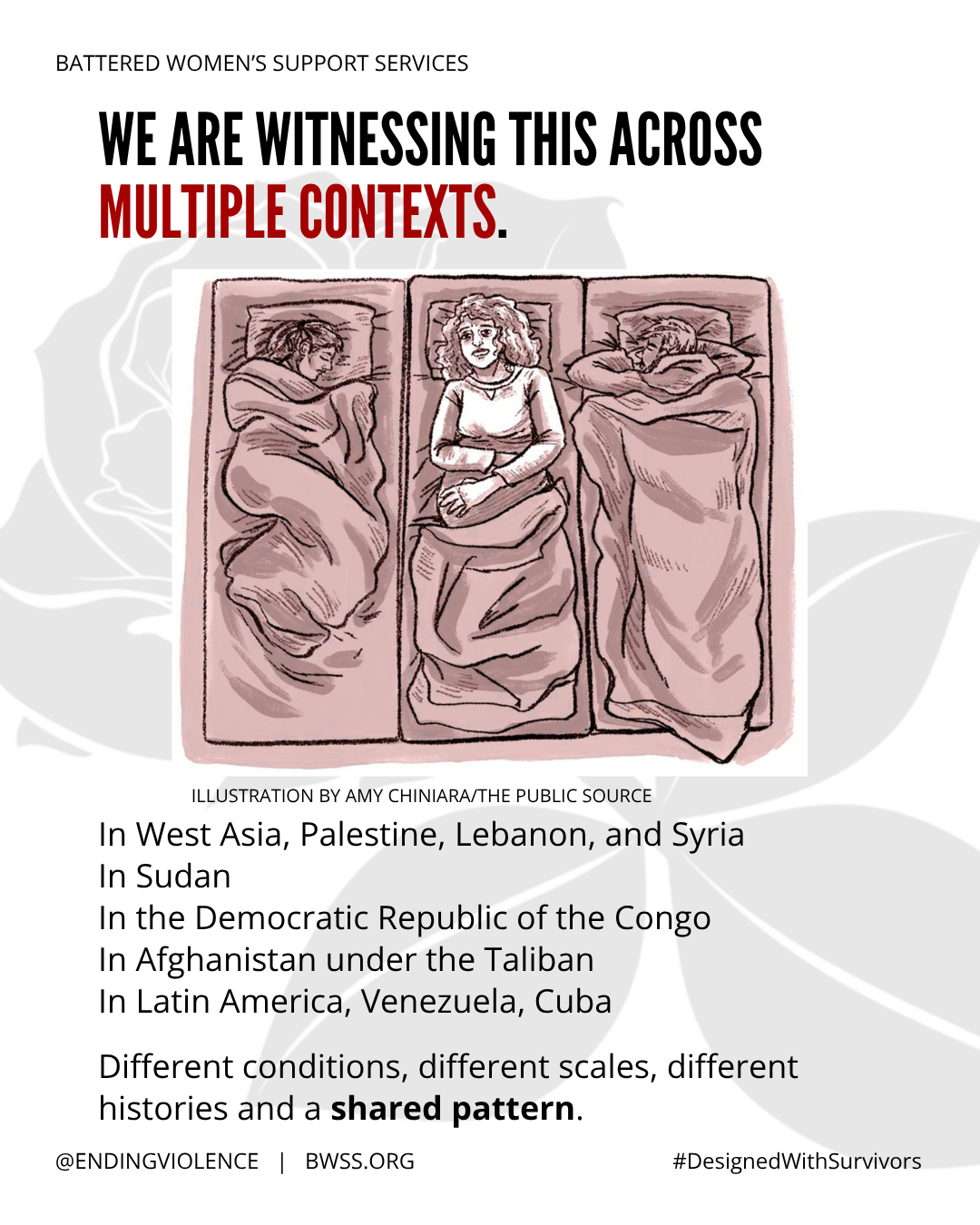
War reorganizes gender-based violence and violence against women.
When we read Labor Amid Displacement: How Lebanon’s Midwives are Carrying Expecting Mothers Through War, we cried. We connected deeply and profoundly with the realities being described, and with the broader struggle facing women and girls in regions living under bombardment, genocide, sanctions, and militarized violence.
We know how hard it is for women and girls under patriarchy. What we are witnessing now is that reality intensified under deep violations of international law and a growing lawlessness permeating the globe, where women and girls face unique and compounding harms.
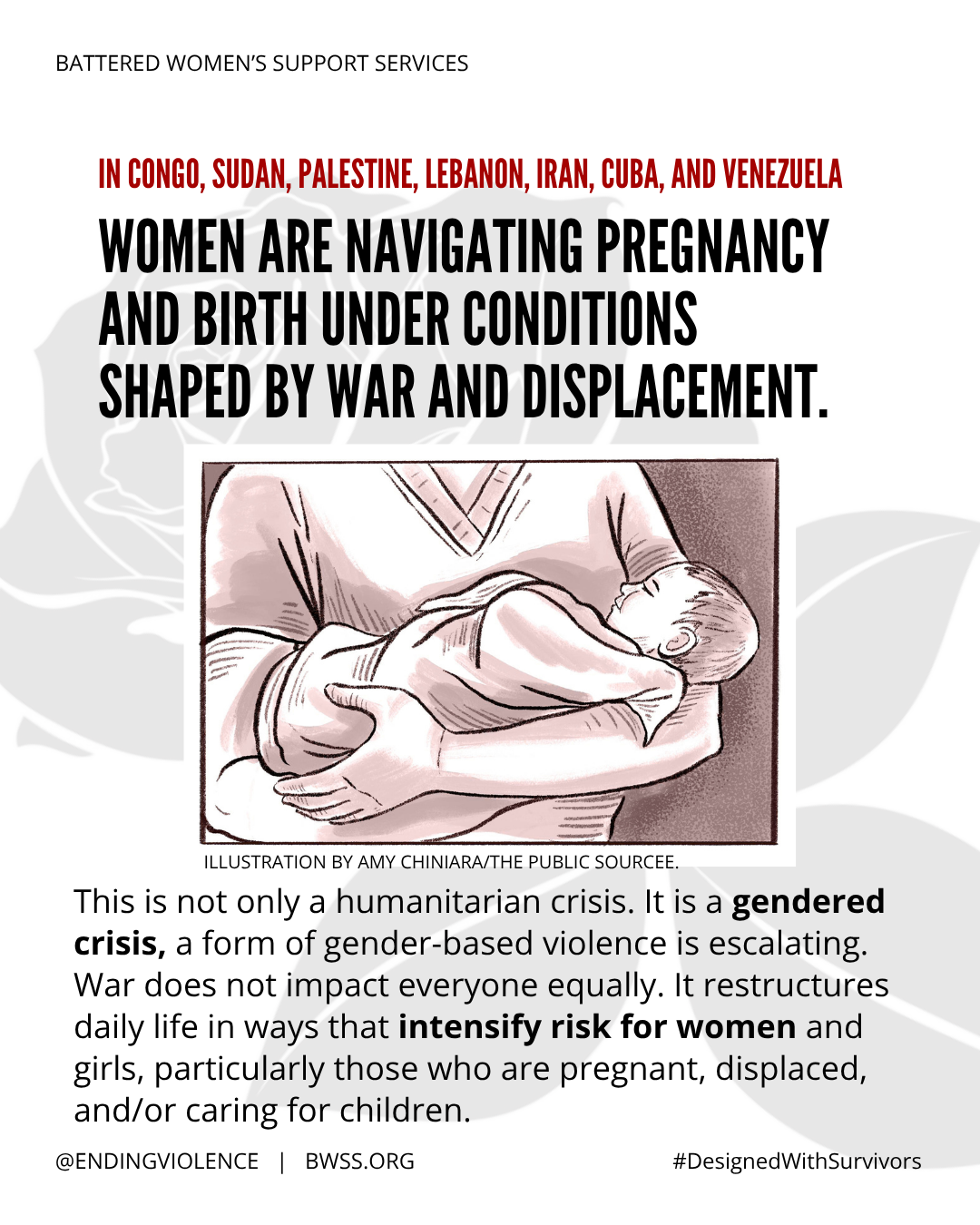
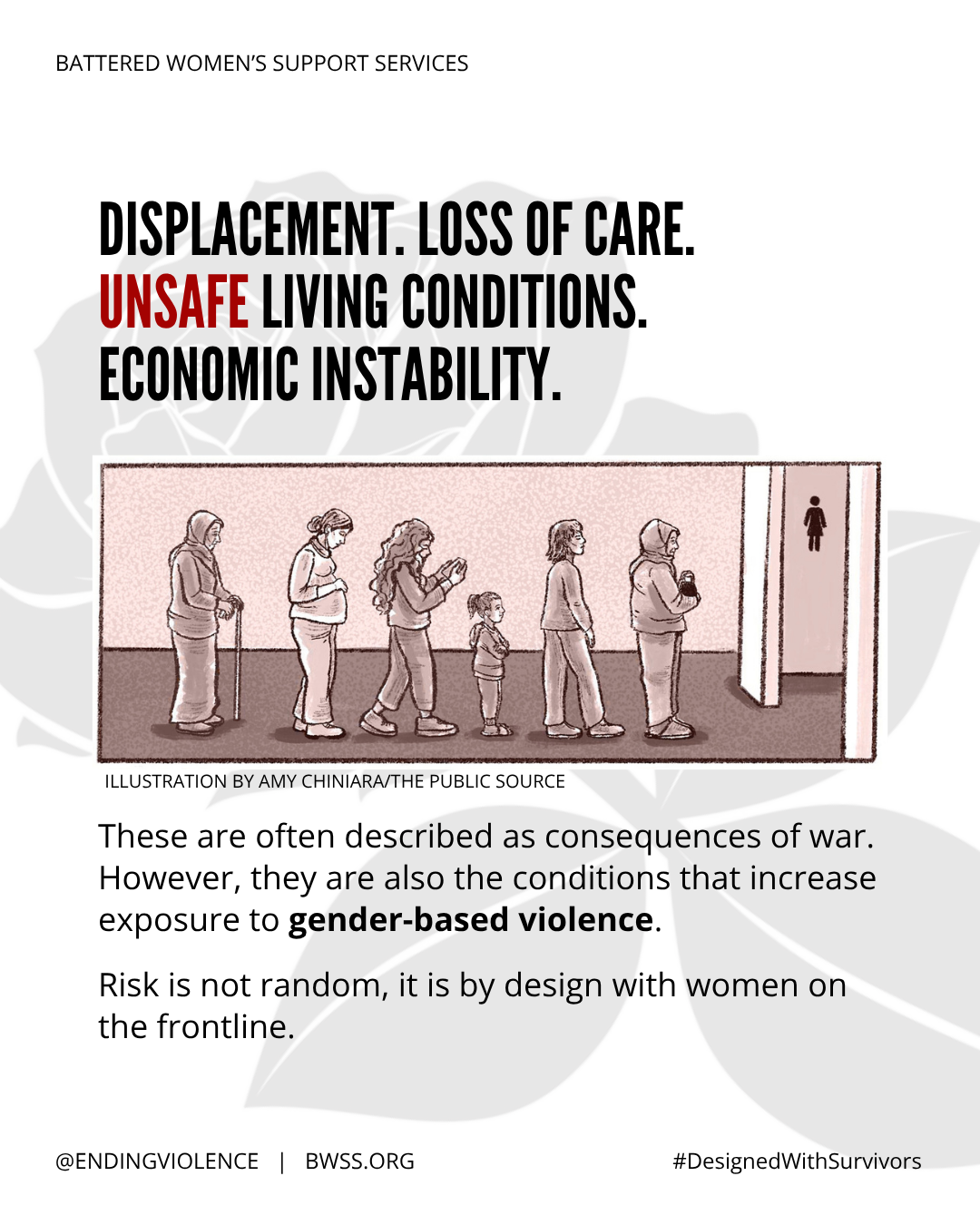
The article discusses Lebanon, and it could speak to many region, Sudan, the Democratic Republic of the Congo, Palestine, Afghanistan under the Taliban, Venezuela, and Cuba, as we see how militarized violence, state policies, and structural conditions reshape risk for women and girls, including those carrying pregnancies through displacement, disrupted care, and conditions shaped by war and militarized violence.
Midwives are stepping in as systems fracture, providing care to thousands of displaced pregnant women as access to healthcare collapses and births happen on the move.
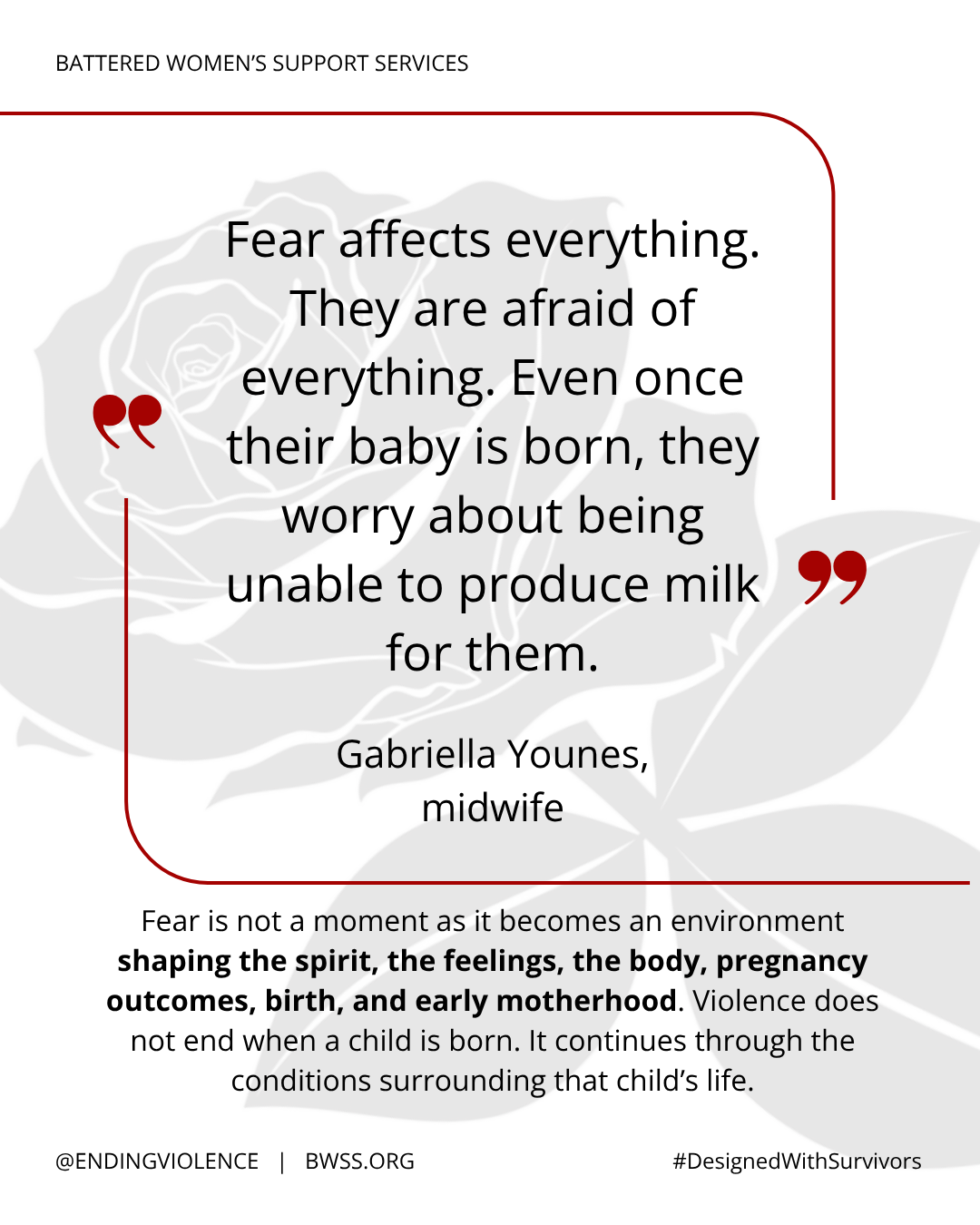
What should be a time of support becomes a negotiation with fear, uncertainty, bombardment, and survival. Women are expected to manage stress that is known to harm their babies while living through conditions that make that impossible.
Care does not disappear.
Instead, it is pushed onto those with the least resources to carry it.
The work of holding life continues, often carried by women themselves.
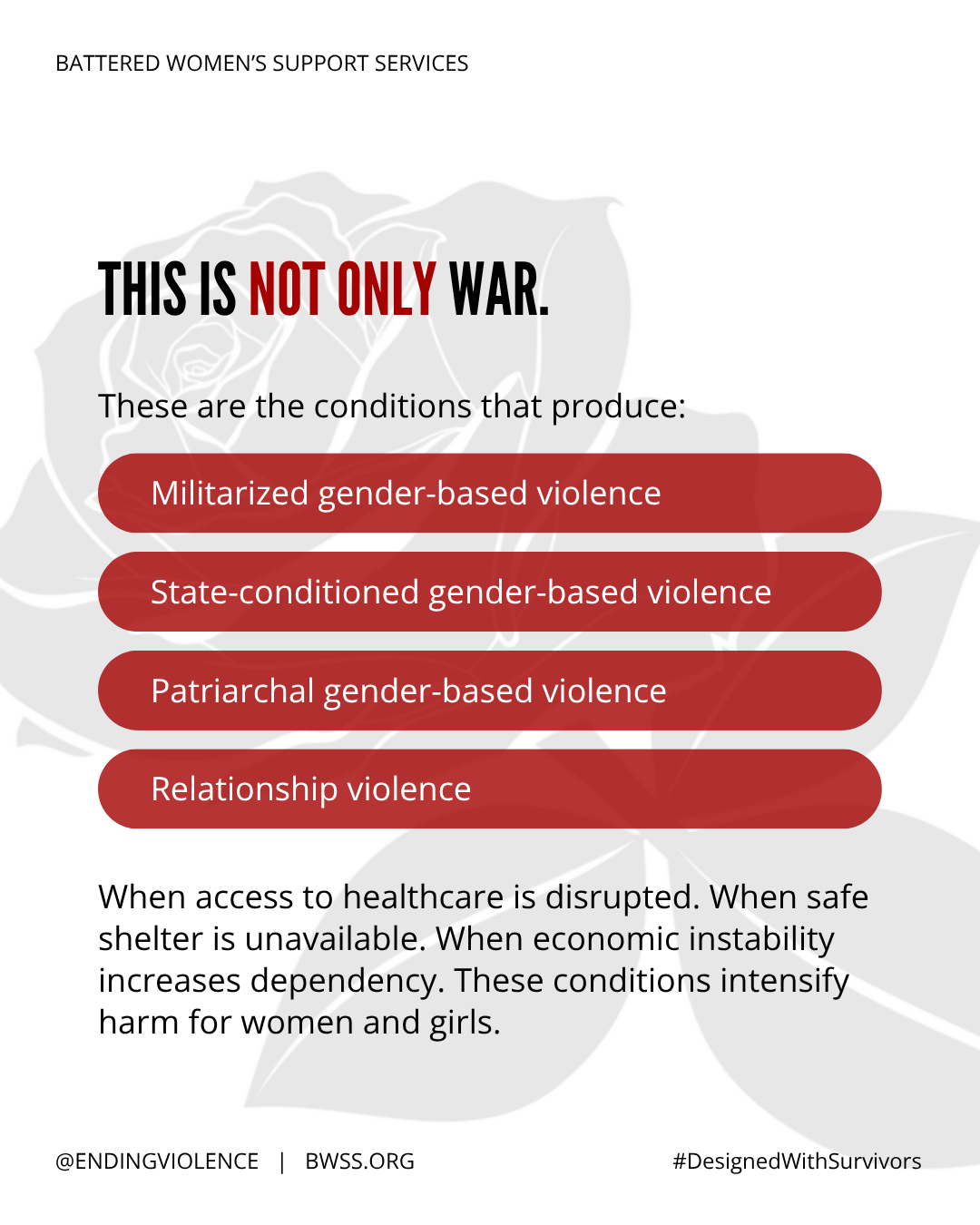
This is one of the conditions that produces gender-based violence.
The forms are different as is the scale and the histories/herstories are unique to each region also. However, the pattern is clear.
At BWSS, we work in a different context, here in Canada and we see this pattern in another form. When women attempt to leave violence, they encounter systems that are out of reach or not built for their safety. Housing, healthcare, income, and legal protection determine whether safety is possible, the impacts of racism, misogyny, experiences of powerlessness to change the material conditions of their lives and the lives of their children.
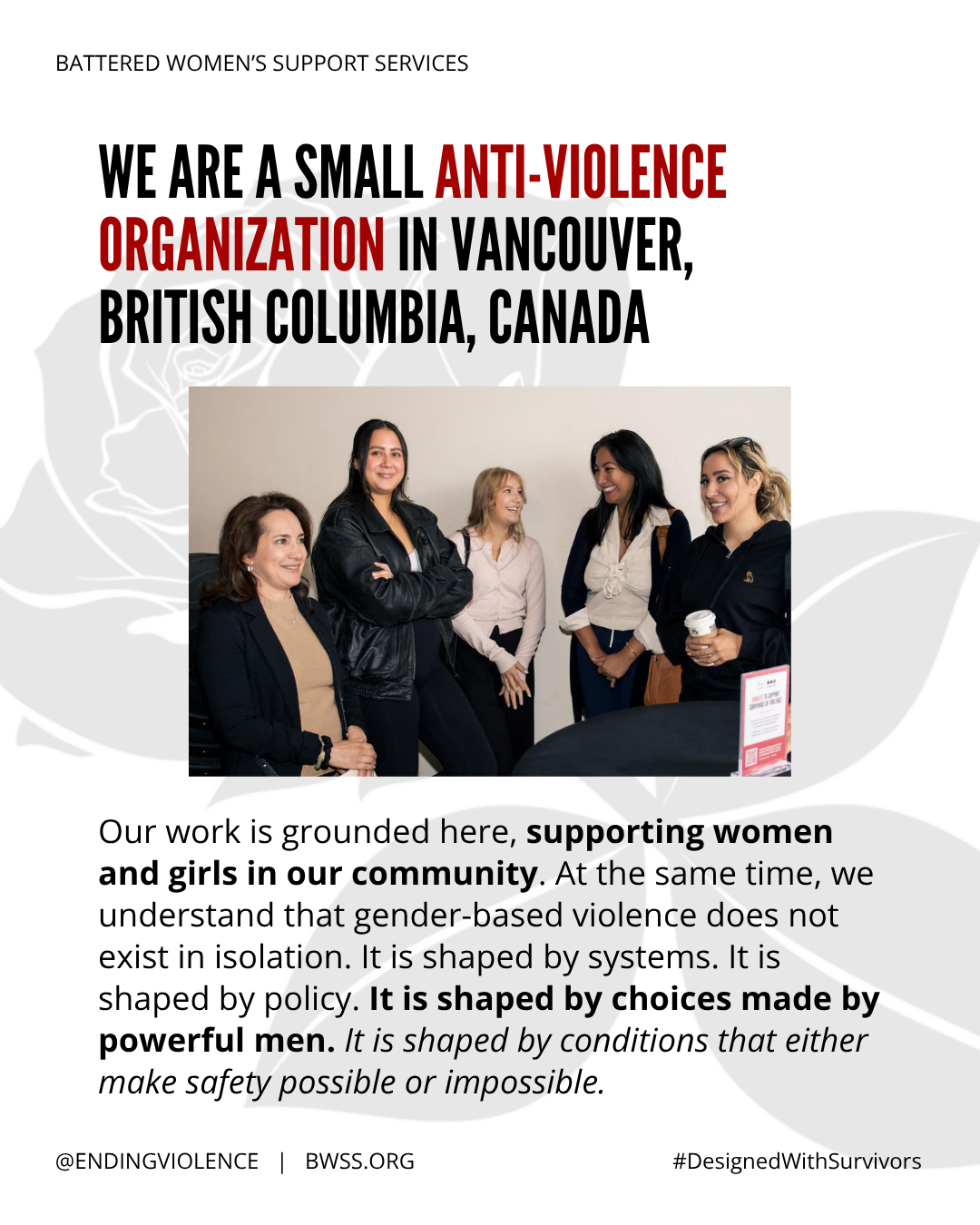
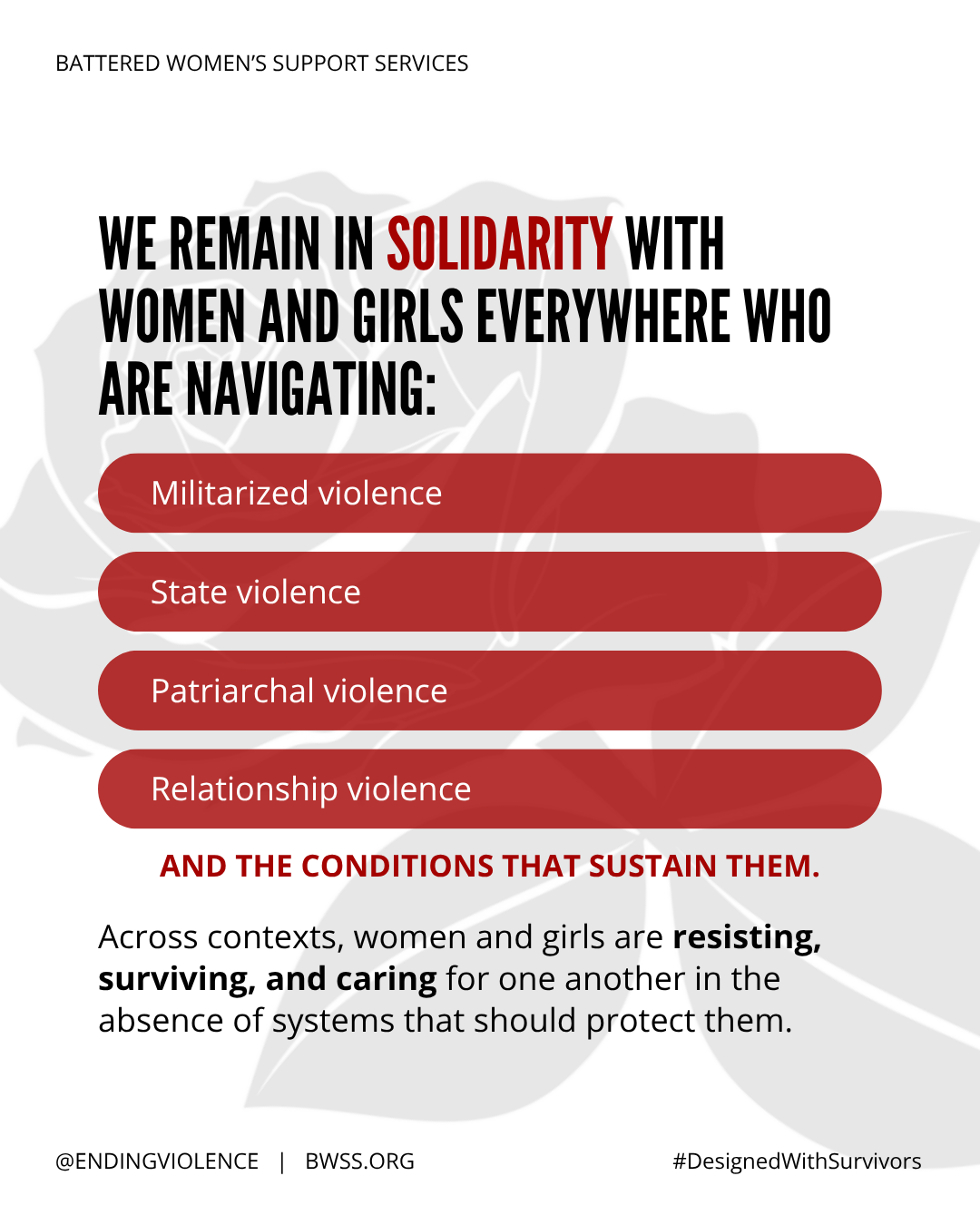
We are a small anti-violence organization in Vancouver, doing our work here and we remain in solidarity with women and girls everywhere navigating militarized, state conditioned violence, genocide, patriarchal violence, relationship violence.
Safety is not what remains when violence stops.
It is what exists when the conditions for life are in place.