Equal Pay Day in BC: Why the Wage Gap Is Real—and a Matter of Survival

April 16 marks Equal Pay Day in Canada—the symbolic date that shows how far into 2025 women must work to earn what men made by the end of 2024. For women, girls, and gender-diverse people across British Columbia, this day is more than symbolic. It’s a reminder that economic injustice is not a theory—it’s a daily reality. And for survivors of gender-based violence, unequal pay is not just unfair. It’s dangerous.

The Pay Gap Is Not a Myth

Critics often claim there’s no such thing as a pay gap or that it’s simply “woke ideology.” But the numbers don’t lie:

  • Women in BC earn 87 cents for every dollar earned by men.
  • Indigenous women earn about 67 cents, and racialized and immigrant women earn between 67–75 cents.
  • Women with disabilities experience the largest gap, earning just 54 cents on the dollar.

These statistics come from Statistics Canada, not political commentary. And they don’t even account for unpaid labour or the growing number of women working in precarious and informal jobs with no benefits or protections.

Survivors Are Economically Punished

Survivors of GBV face unique economic barriers:

  • Many are forced to leave jobs due to stalking, violence, or harassment.
  • Others are navigating the courts, childcare, and trauma.
  • Survivors often experience employment discrimination and are pushed into unstable work arrangements that leave them vulnerable to further harm.

But the most insidious form of financial control is economic abuse—a tactic where abusers manipulate access to money, employment, credit, and financial information to isolate and entrap their partners. Survivors report having bank accounts emptied, credit ruined, and income stolen or monitored by abusers. And when they try to leave, their economic dependency becomes a barrier to safety.

The Fight for Equal Pay Is a Fight for Freedom

For survivors, closing the pay gap is not about luxury—it’s about survival. Without access to income, housing, and employment, women are forced to stay with their abusers or risk poverty, homelessness, and losing custody of their children.

That’s why programs like AWARE at BWSS are so critical.

AWARE at BWSS: Advancing Women’s Awareness Regarding Employment

The AWARE program at Battered Women’s Support Services (BWSS) helps women move beyond the cycle of trauma and violence by building economic independence through employment. AWARE is grounded in a trauma- and violence-informed approach that honours survivors’ experiences and resilience.

At BWSS’s office in Vancouver, AWARE offers women a safe space to identify their skills, define their personal and career goals, and build community. It’s flexible and responsive—recognizing that women are often balancing child care, legal systems, housing instability, and healing from violence.

AWARE’s holistic approach includes:

  • Understanding and overcoming the impacts of abuse, with a focus on values, boundaries, conflict resolution, and safety planning.
  • Counselling and coaching, with up to 10 hours of individual and group support.
  • Academic development including basic computer skills, First Aid, Food Safe, and Serving It Right.
  • Clothing and accessories through My Sister’s Closet, BWSS’s social enterprise, which provides outfits and accessories for job interviews.
  • Career and individual exploration, including resume building, interview skills, and action planning.
  • Employment skills training, such as teamwork, communication, and understanding workplace dynamics.

Women can self-refer and join AWARE through a continuous intake process, making it accessible and adaptive to each woman’s situation.

To apply or learn more, call AWARE at 778-628-1867 or email Claudia@bwss.org.

Let’s Be Clear: Equal Pay Is Not Just a Women’s Issue

Equal Pay Day is not just about cents on the dollar. It’s about dismantling the systems that keep survivors poor and dependent. It’s about valuing care work. It’s about refusing to normalize economic abuse. And it’s about demanding political and policy changes that prioritize safety, equity, and justice.

At BWSS, we know from decades of front-line experience that economic justice is safety. And until the wage gap is closed, survivors will remain at risk—not just of poverty, but of violence.

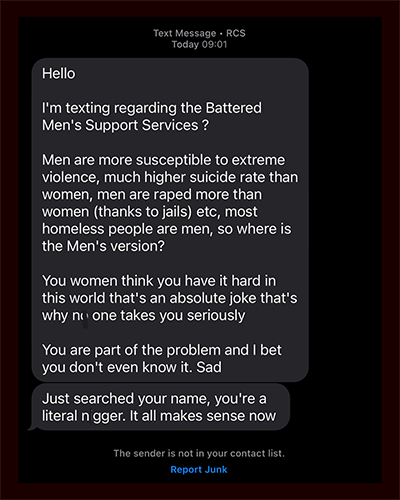
This Equal Pay Day don’t be distracted by the backlash. The pay gap is real. It’s measurable. And it’s a matter of life and death.

“She Belongs to Him”: Gender-Based Violence and the Canadian Legal System

For women leaving intimate partner and domestic violence, the legal system in Canada is often not a pathway to justice, but another source of trauma. Despite decades of feminist advocacy and efforts to reform the law, Canada’s legal systems continue to reflect colonial and patriarchal foundations, failing to meet the complex needs of women experiencing gender-based violence.

From Property to Personhood: A Legal Legacy of Control

Canadian law, rooted in British common law traditions, historically treated women as the legal property of their husbands or fathers. Under the now-obsolete doctrine of coverture, a married woman had no legal identity separate from her husband. She could not own property, sign contracts, or seek redress in court.

While these laws have been repealed, the legacy of this gendered legal framework persists. Today, women who experience violence continue to face systemic barriers, disbelief, and inequity as they navigate family, immigration, child protection, and criminal legal systems. In many cases, the very structures meant to protect survivors are used to further marginalize and control them.

Historically, under British common law—imported and upheld in Canada through colonial legal systems—children were considered the property of their fathers, not their mothers. Fathers had near-total legal authority, including control over custody, education, and discipline. Mothers had no custodial rights and could be denied access to their own children upon separation or divorce.

Children born outside of marriage were labelled “illegitimate” or “bastards”, a legal status that excluded them from inheritance, legitimacy, and social recognition. This doctrine of legitimacy reinforced patriarchal control over family structures and punished women for sexual and reproductive autonomy.

This legal legacy continues to influence family law today, where custody decisions and parenting arrangements often prioritize parental rights over children’s and survivors’ safety.

The Murdoch Case: A Wake-Up Call

A defining moment in the history of feminist legal advocacy in Canada was the Murdoch v. Murdoch decision in 1975. Irene Murdoch, an Alberta woman, had experienced years of violence from her husband while working full-time on their ranch. When she applied for divorce and requested a share of the ranch she had helped build, the Supreme Court of Canada denied her claim, ruling that her contributions were not sufficient to establish a legal interest in the property.

The ruling sparked national outrage. It became clear that women’s unpaid labour in marriages—and the abuse they endured—was not recognized or valued by the legal system. The Murdoch case became a flashpoint for reform, fuelling a movement to change matrimonial property laws and bring attention to the economic dimensions of domestic violence.

Mediation and the Illusion of Equality

Today, a major concern for advocates is the growing emphasis on Alternative Dispute Resolution in family law—particularly mediation. While promoted as a faster and less adversarial process, mediation assumes equal power between parties, ignoring the dynamics of coercive control, fear, and ongoing abuse that often continue after separation.

BWSS has long critiqued this shift, noting how abusive partners weaponize legal systems—especially family court—to maintain power and control. Survivors are forced into unsafe negotiations, discouraged from seeking court orders, and pressured to agree to shared parenting arrangements that compromise their safety and that of their children.

Systemic Failures and Legal Gaps

Recent legal developments continue to expose the system’s failures:

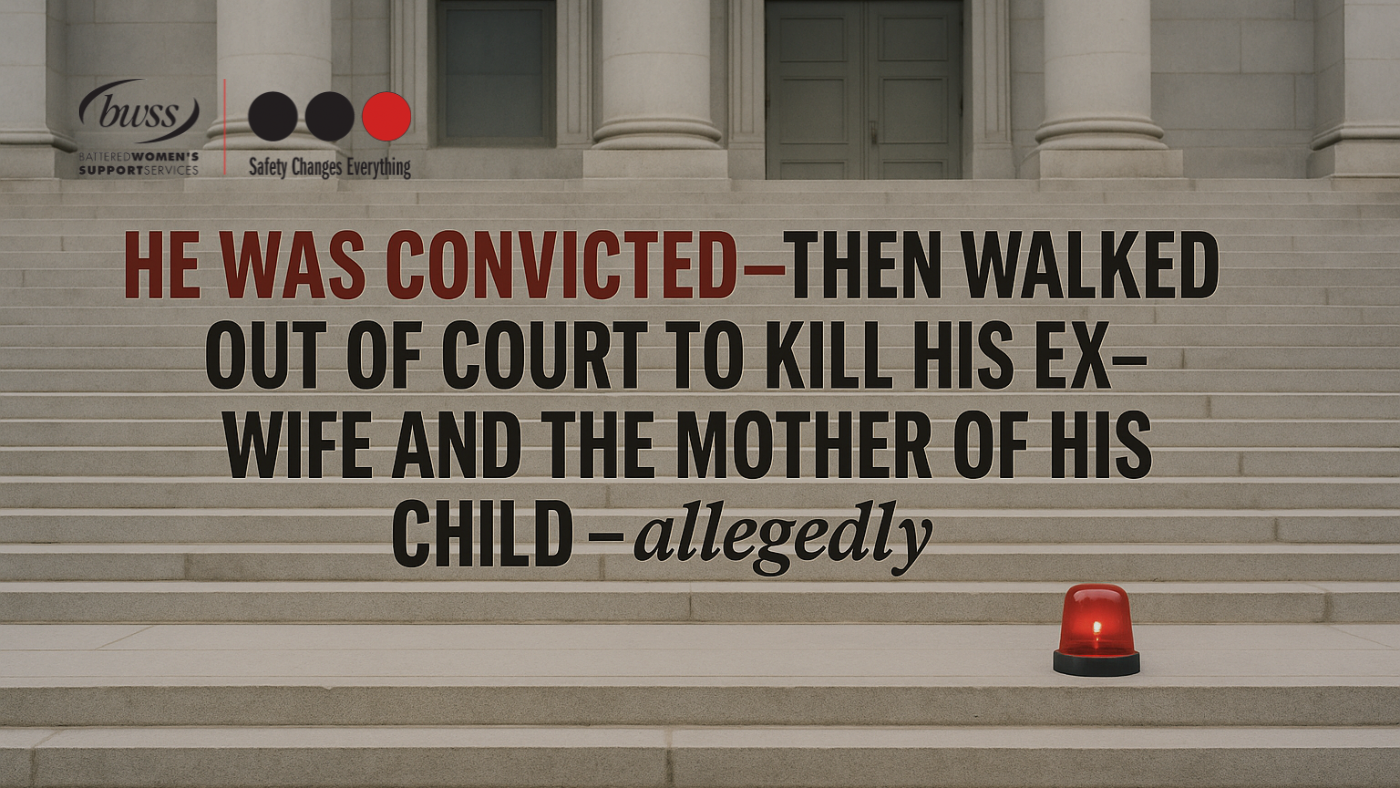
  • The R v. Jordan decision (2016) set strict time limits for criminal trials, intended to address court delays. However, the result has been a significant number of cases—including domestic violence charges—being stayed due to procedural delays. Survivors are left without justice, while perpetrators avoid accountability.
  • In Ahluwalia v. Ahluwalia (2022), an Ontario Superior Court recognized coercive control as a form of family violence in a tort claim under family law. While groundbreaking, the case also highlighted how rarely courts understand or address the full scope of abuse survivors face. Legal definitions remain narrow, and responses are inconsistent across jurisdictions.

These cases illustrate how women experiencing violence continue to be let down by a system that remains adversarial, complex, and largely indifferent to lived experience.

The Work of the BWSS and the Justice Centre

For more than 30 years, Battered Women’s Support Services has provided legal advocacy and support for women impacted by intimate partner and domestic violence. Now through our Justice Centre at BWSS, we assist survivors in navigating family, immigration, child protection, and criminal legal systems.

Our legal advocates do not provide legal advice but offer:

  • Legal information and education
  • Assistance with orders and self-representation for survivors
  • Advocating with Legal Aid BC
  • Safety-focused support in understanding court processes
  • Accompaniment and advocacy in legal settings
  • Referrals to lawyers and legal aid resources

We also work to change the system itself—advocating for law reform, challenging discriminatory practices, and naming the ways legal systems continue to uphold power imbalances and state violence.

Moving Forward: Justice on Survivors’ Terms

Justice for survivors is not found in quick fixes, mediation mandates, or time limits on trials. True justice requires deep systemic change—grounded in an understanding of how gender, race, class, migration status, and colonialism shape women’s experiences of violence and their interactions with the law.

At BWSS, we will continue to support survivors as they navigate these systems—and we will continue to fight for a legal system that centres safety, accountability, and human dignity.

Justice Centre at BWSS is hosting a new series of legal advocacy workshops for both survivors navigating the legal system and frontline workers who support them. Here is more information about Supporting Survivors Through The Legal System workshops.

As an organization dedicated to ending violence in all its forms, BWSS stands in solidarity with victims and survivors. For resources on safety, accessing support, and taking action against gender-based violence, visit our website.

You are not alone.

If you or someone you love is in need of support, please contact the Battered Women’s Support Services Crisis Line:

Call toll-free: 1-855-687-1868 Metro Vancouver: 604-687-1867 Email: EndingViolence@bwss.org

The Reality at Home: What’s at Stake for Survivors in Canada’s Federal Election

The Reality at Home: What’s at Stake for Survivors in Canada’s Federal Election

As Canada prepares for a federal election on April 28, 2025, the political conversation will turn to taxes, trade, and economic recovery — but for millions of women, girls, and gender-diverse people, the most important question is far more personal: Will I be safe in my own home?

Because for many, home is not a place of safety. It’s where violence happens.

The Hidden Crisis in Canada’s Homes

More than 44% of women and girls in Canada who have ever been in an intimate relationship — about 6.2 million people — have experienced abuse. From psychological and emotional abuse to physical and sexual violence, the impact is devastating. And it doesn’t end with women.

Children are not just bystanders. In homes where spousal violence occurs, 70% of the time, children witness their mothers being assaulted. These assaults tend to be more serious, and the effects on children’s mental health, development, and safety are long-term.

These are not isolated incidents. These are systemic, widespread, and deeply connected to the political and economic decisions made by our leaders.

When the Economy Hurts, So Do Families

Too often, domestic and intimate partner violence is treated as a private matter — something removed from the broader economic and political landscape. But the truth is, economic policy is gendered policy.

When inflation rises and rents skyrocket, when wages stagnate and jobs disappear, when affordable housing and childcare are slashed — violence increases. Financial stress exacerbates abusive relationships. Women lose options. Survivors have fewer ways to leave. Shelters fill up, waitlists grow, and survivors are forced to choose between staying with an abuser or facing poverty and homelessness.

This is especially true in rural, northern, and remote communities where services are scarce and distances are vast. For Indigenous, Black, immigrant, disabled, and 2SLGBTQ+ survivors, the barriers are even higher.

Add to that the impacts of trade wars and tariffs, which make essentials like food and clothing more expensive. When the economy breaks under the weight of global uncertainty, it’s women and children who fall through the cracks first.

Election 2025: Time to Demand Better

That’s why feminist organizations across Canada, including Action Canada for Sexual Health and Rights, have come together under the #DemandBetter campaign. Their message is clear: we need candidates who are willing to take bold action for gender equity and economic justice — not just empty promises.

As Action Canada states:

“It’s time to push candidates to build an equitable economy — one that doesn’t leave women, racialized communities, and survivors behind. Our future depends on it.”

This includes calls for universal child care, livable income supports, access to abortion and reproductive health, and measures to end gender-based violence. These are not fringe issues — they are foundational to a thriving society.

We Already Have a Plan — But It’s Being Ignored

In 2022, Canada introduced the National Action Plan to End Gender-Based Violence, the result of years of advocacy by survivors, frontline organizations, and communities across the country. It promised a coordinated federal, provincial, and territorial response to address prevention, protection, and support for those experiencing violence.

But the plan is now at risk.

Since the current Prime Minister eliminated the Ministry for Women and Gender Equality, there has been no national leadership to carry the plan forward. Funding commitments are unclear. Progress is slow. Survivors and service providers are being left in the dark.

Without a federal champion, the plan becomes a document with no direction. And survivors can’t wait.

A Call for Accountability at the Ballot Box

This federal election is a critical opportunity to change course. We need to elect leaders who understand that ending gender-based violence is not a side issue — it’s core to our national safety, our economy, and our humanity.

Voters should ask every candidate:
  • Do you support full funding and implementation of the National Action Plan on GBV?
  • Will you commit to restoring a national ministry dedicated to women, gender equity, and safety?
  • What will you do to ensure survivors in rural and underserved areas have access to services?
  • How will your economic policies reduce, not worsen, conditions that fuel violence?

We must hold all parties accountable — and ensure that their platforms address the realities of survivors, not just the interests of the powerful.

Hope Is Not Lost — But It Depends on Us

The good news is: we know what works. We’ve seen progress before. We’ve built shelters, developed legal supports, trained police and healthcare workers, and launched national campaigns. We’ve created plans that centre survivors and invest in community solutions.

But now we need action. We need investment. We need courage from our leaders — and from each other.

If we want a country where home truly means safety, we have to vote like it. We have to organize, speak out, donate, volunteer, and demand better.

Because change is possible — if we make it impossible to ignore

Nearly half of women and girls in canada over 6 million have experienced abuse in their intimate relationships that's not a private problem that is a national crisis

Justice for Noelle, Chelsea, and Tatyanna: A March for the Lives They Were Denied

Justice for Noelle, Chelsea, and Tatyanna: A March for the Lives They Were Denied

On April 21, 2025, families, advocates, and communities will gather in Vancouver to march in memory and in rage. We are marching for Noelle O’Soup, Chelsea Poorman, and Tatyanna Harrison—three Indigenous girls and young women whose disappearances and deaths were not only preventable but foreseeable, rooted in colonial systems that continue to treat Indigenous lives as disposable.

The Justice for Noelle, Chelsea, and Tatyanna March begins at 2:00 PM at 1536 West 36th Avenue—the Shaughnessy mansion where Chelsea’s body was found—and proceeds to Granville and Davie Streets. The march is an urgent public demand: for justice, for answers, and for the transformation of the systems that failed them.

The March is occurring during Prevention of Violence Against Women Week 2025 – a week dedicated to highlighting ways to end violence against women and gender-based violence.

They Should Still Be With Us

Noelle O’Soup (14 years old)

Noelle was a 14-year-old Nēhiyaw girl who went missing from a Port Coquitlam group home in May 2021. Over a year later, her body was found in a locked room of a single-room occupancy (SRO) building in Vancouver’s Downtown Eastside—alongside another deceased woman and a third person found alive. The apartment was rented by Anh-Tuan Pham, a man with a lengthy criminal history, including weapons and drug charges, and who was wanted on a Canada-wide warrant at the time.

The Vancouver Police Department (VPD) was aware of Pham’s criminal record and had received multiple complaints about his suite. Yet no action was taken until after his death. As Global News reported, a VPD officer was under investigation for neglect of duty in Noelle’s case. And as CBC revealed, Pham was known to offer drugs to young girls, and his unit had been flagged repeatedly—but there was no coordinated response, no intervention, and no urgency.

Why did VPD not act sooner to enter that suite?
Why wasn’t Noelle found earlier—when she might have still been alive?
Why was a child under state care living and dying in such horrific conditions?

The Ministry of Children and Family Development (MCFD), responsible for Noelle’s care, has offered no accountability. How many more Indigenous children must die before this ministry is overhauled?
And where are the consequences for those who were supposed to protect her?

Chelsea Poorman (24 years old)

Chelsea, a 24-year-old Cree woman from Kawacatoose First Nation, went missing in September 2020. Her body was found in April 2022, in the backyard of a mansion in Vancouver’s wealthy Shaughnessy neighbourhood—just steps away from the starting point of this march. Her body was so decomposed that police could not determine a cause of death. They declared the case not suspicious and closed it within days, to the shock of her family and community.

A 2023 CBC investigation revealed that the VPD did not canvas neighbours, did not identify or interview the property owner until a year after her body was discovered, and did not search the home until prompted by media inquiries. Key evidence was overlooked or ignored. Chelsea’s sister described her as a vulnerable person, still healing from a traumatic brain injury. But she was treated as just another missing person—not as a young Indigenous woman at elevated risk.

Why did police conclude so quickly that there was no foul play—despite her remains being incomplete and the home being unoccupied?
Why was her death deprioritized?
How many other cases have been dismissed this way?

This is a textbook example of what Indigenous families have long described: a justice system that neither investigates nor protects our people with the seriousness and dignity we deserve.

Tatyanna Harrison (20 years old)

Tatyanna was a Métis woman who had been reaching out for help in the weeks before her disappearance in April 2022. Her body was found in a Richmond boatyard in May—but it took authorities more than a month to identify her, even though her mother had been actively searching. It was only after public pressure that the VPD acknowledged the delays and mishandling of her case.

She had sought help from hospitals, housing providers, and crisis services, but like so many Indigenous girls and women, she was treated as a problem to be managed—not a person to be protected. Her death, like Noelle’s and Chelsea’s, is not isolated—it is systemic.

Most MMIWG Are Not Women—They Are Girls in State Care

It is essential to understand that many of those who make up the crisis of Missing and Murdered Indigenous Women and Girls are not adults—they are teenagers and children, often in the care of provincial ministries like MCFD. These girls are vulnerable not by accident but by design. The so-called “child welfare system” is a pipeline to homelessness, exploitation, overdose, and death.

Why is there no public inquiry into the role of MCFD in the deaths of Indigenous girls like Noelle?
Where is the accountability for social workers, group home operators, and ministry officials who disappear behind bureaucratic silence?

A March That Demands More Than Grief

This march is more than an act of mourning—it is a movement for justice. It demands:

  • Transparent investigations into the deaths of Noelle, Chelsea, and Tatyanna
  • Accountability for police, social workers, and ministry staff who failed them
  • Immediate transformation of child protection and policing in BC

Join the March: April 21, 2025

📍 Start: 2:00 PM at 1536 West 36th Avenue
📍 End: Granville and Davie Streets

Bring your signs, your voices, your drums, and your love for our stolen sisters.

We march because they mattered.
We march because they were failed.
We march because this must never happen again.

Justice MMIWG March Honouring Noelle O'Soup, Chelsea Poorman, Tatyanna Harrison

Curtis Sagmoen Is Dead: But the System Was Never Designed to Stop Him

Curtis Sagmoen Is Dead: But the System Was Never Designed to Stop Him

On April 8, 2025, the RCMP announced the death of Curtis Sagmoen—a man long associated with violence against women, particularly sex workers and Indigenous women in the North Okanagan region. His death will not bring closure for the women he harmed or for the families still searching for answers. And while some will view this as the end of a chapter, the truth is more complex: the system that failed to stop him is still very much intact.

At BWSS, we’ve followed this case closely, documenting each development in our Curtis Sagmoen timeline. It reveals a troubling pattern—not just of individual violence, but of institutional limitations in addressing a known, serially violent man whose actions targeted some of the most marginalized women in this country.

Curtis Sagmoen was convicted of threatening a woman with a firearm in 2020. He had previous charges for violent offences against women he lured to the family property. The remains of Traci Genereaux were found nearby, yet no charges were laid in relation to her death or other missing women.

These are not just failures—they are symptoms of a system never built to deal with gendered, patterned violence like this. Police and courts rely on reactive, incident-based responses. But serial offenders like Sagmoen operate over time, targeting vulnerability and exploiting the gaps between jurisdictions, the mistrust between survivors and law enforcement, and the invisibility of women pushed to the margins.

The criminal legal system in Canada struggles to respond effectively to violence that is coercive, cumulative, and often silences its victims. Survivors are expected to navigate a complex and retraumatizing system, often without support or safety. And when they do come forward, they’re frequently met with disbelief, delays, or dismissal.

This is the reality. The system, as it stands, is not equipped to stop men like Curtis Sagmoen—until it’s far too late.

At BWSS, we continue to push for systemic transformation—not tweaks or reforms, but a fundamental shift in how we understand and respond to gender-based violence. We believe in centring survivors, investing in prevention, resourcing community-based responses, and building systems rooted in safety and justice—not surveillance and control.

Curtis Sagmoen is dead. But the women who lived in fear of him—and those still targeted by violence like his—deserve more than an obituary for a man who was never truly held to account.

They deserve action.

Explore our timeline of the case: Systemic Mistrust and the Continued Inadequacy of the Legal and Policing Systems

Support survivor-centred solutions. Join us in building something better


And Still We Rise Podcast Relaunch – April 25, 2025

And Still We Rise Podcast

Relaunch April 25 during Prevention of Violence against Women Week 2025

After six years of silence, And Still We Rise returns on April 25, 2025, with weekly episodes on gender justice, economic power, and the politics of survival.

This isn’t commentary from the sidelines—it’s insight from the frontlines

Each episode connects the dots between gender justice, racial and economic equity, and global power—through analysis, storytelling, and the voices of those doing the work on the ground.

Episode 1 drops during Prevention of Violence against Women Week on Friday, April 25 – watch the livestream starting at 9 am
Podcast is Available on: Spotify, Apple Podcasts ,  YouTube, Twitter/X, and  https://www.bwss.org/and-still-we-rise/

Hosted by Angela Marie MacDougall.
Streaming every Friday on Spotify, Apple Podcasts, YouTube, and at bwss.org.

Watch the teaser below and subscribe to be part of the conversation!