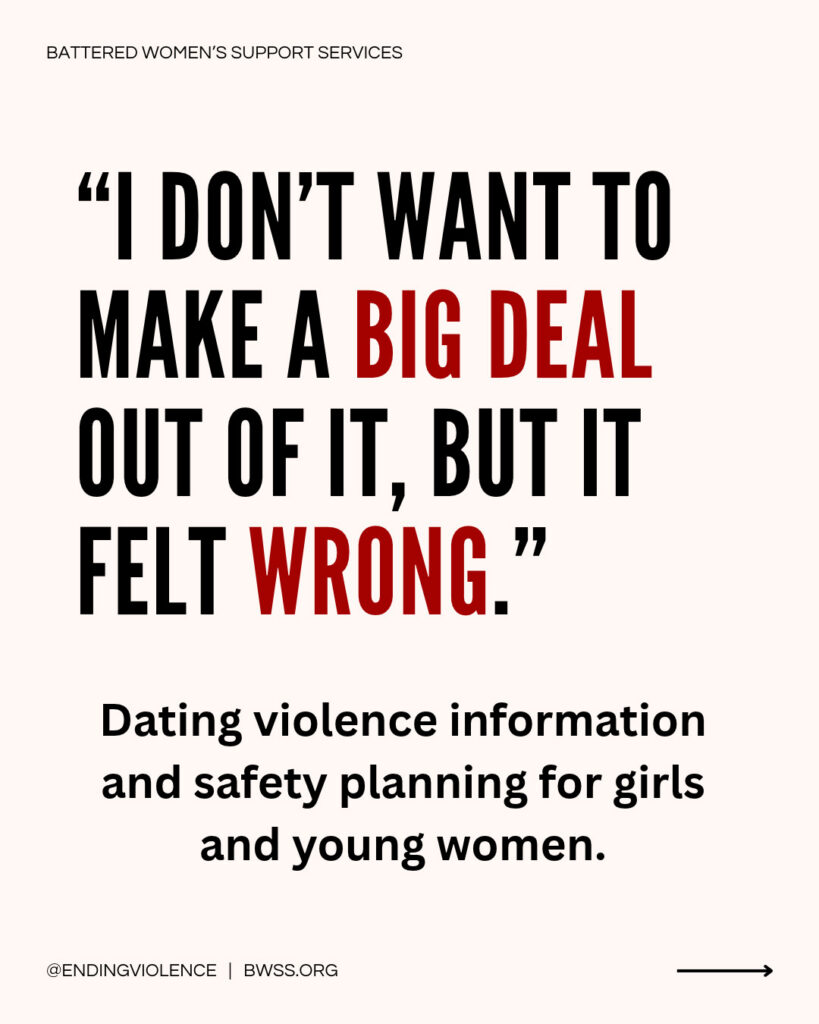
Dating violence and planning for safety when you’re young.
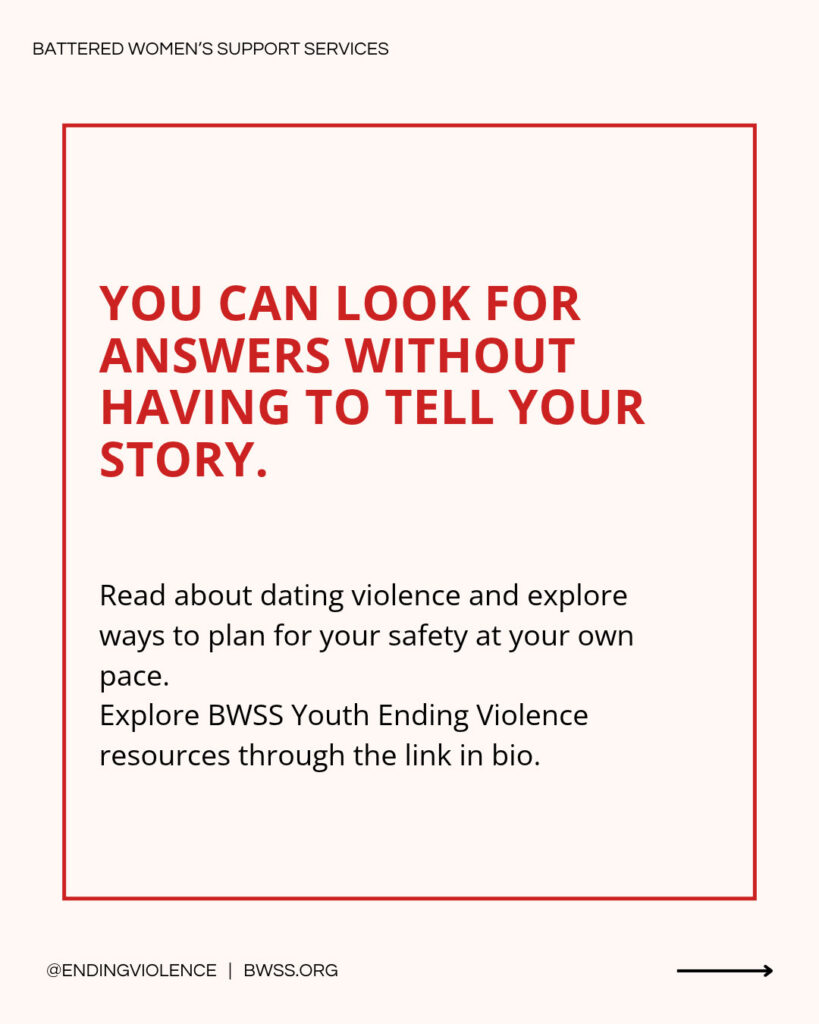
One in four survivors who access Battered Women’s Support Services (BWSS) are under 25. If something in your relationship felt wrong and you’re still thinking about it, you can start there. We’ve updated our Youth Ending Violence resources so you can read about dating violence and explore ways to plan for your safety at your own pace, without having to tell your story.
Explore BWSS Youth Ending Violence
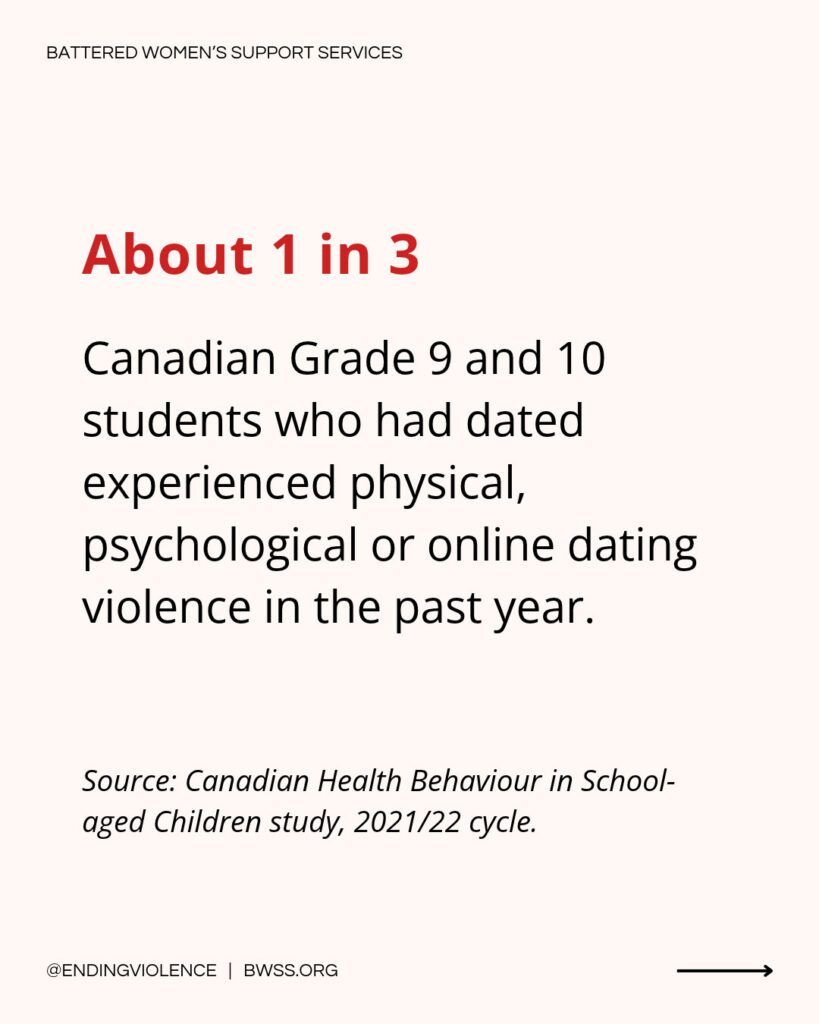
About one in three Canadian Grade 9 and 10 students who had dated experienced physical, psychological or online dating violence in the previous year. When it’s happening to you, safety can come down to ordinary parts of your day. Can you walk into class without worrying about seeing them? Can you still go to practice? If you ask for help, who else will find out?
Source: Canadian Health Behaviour in School-aged Children study, 2021/22 cycle
Ten things that can shape your safety when you’re dating
01First relationships shape what you come to expect
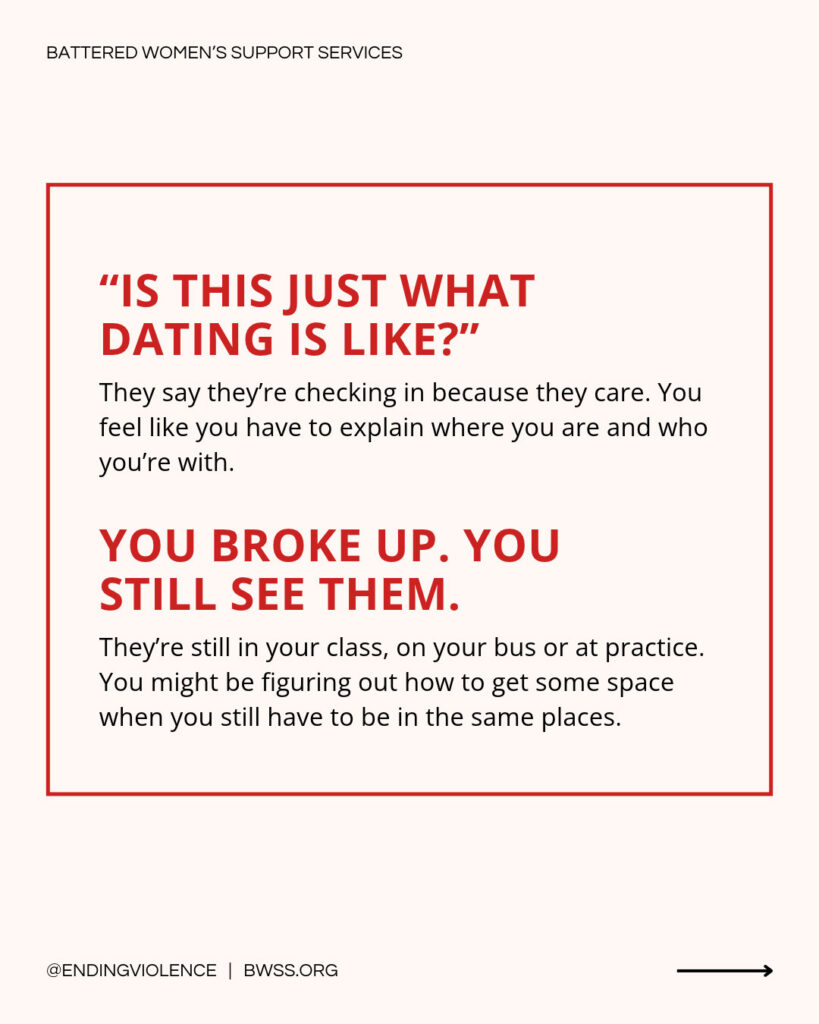
They say they keep asking where you are because they care. You might start answering right away or changing your plans because you’re worried about their reaction. You’re allowed to have privacy, spend time with friends and make plans of your own.
02School can make contact hard to avoid
You may break up on Sunday and still sit beside your ex on Monday. You might ride the same bus, pass them in the hallway or see them at practice. It makes sense if you’re already thinking about when and where you’ll see them next.
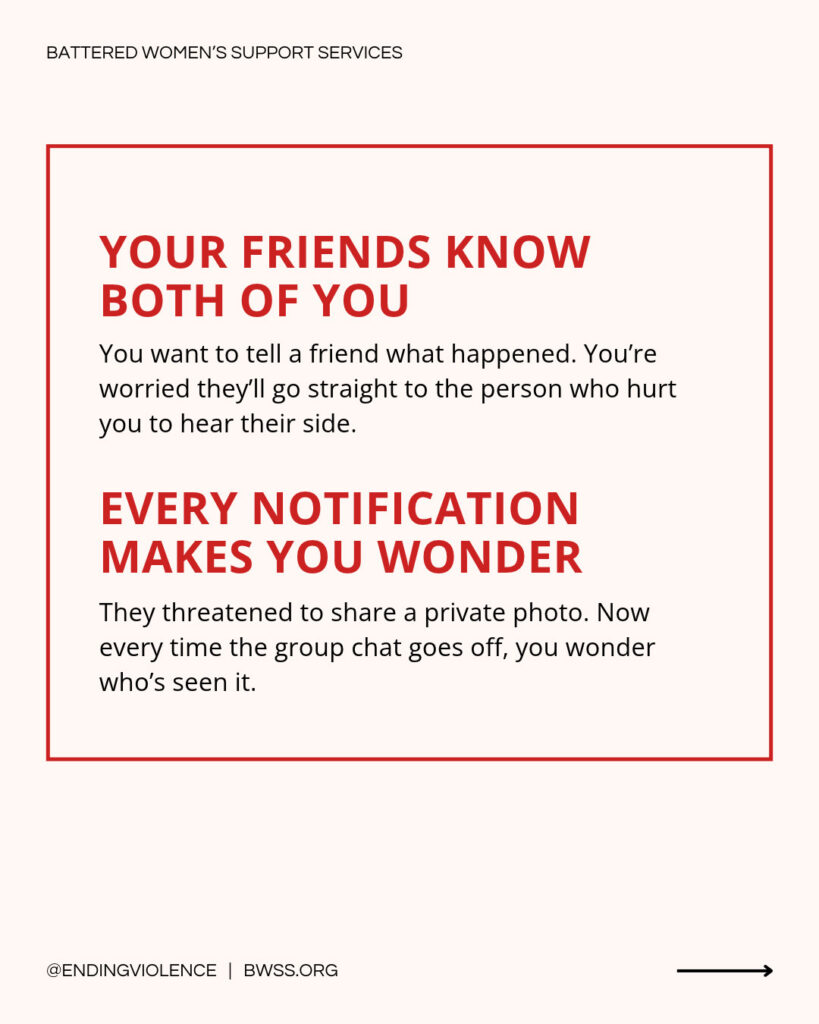
03Your friends may know both of you
You might want to tell a friend and worry they’ll go straight to the other person, bring it up in the group chat or try to get you both together to talk. If you choose to tell them, you can start with what you need from them. “I need you to listen. Please don’t contact them about this.”
04What happens online can follow you into school
A rumour, threat or intimate image can reach classmates through a group chat before the next bell. If someone threatens to share a private image, you can look up your options while it’s still a threat, even if you originally chose to send it.
Resource: B.C. Intimate Images Protection Service
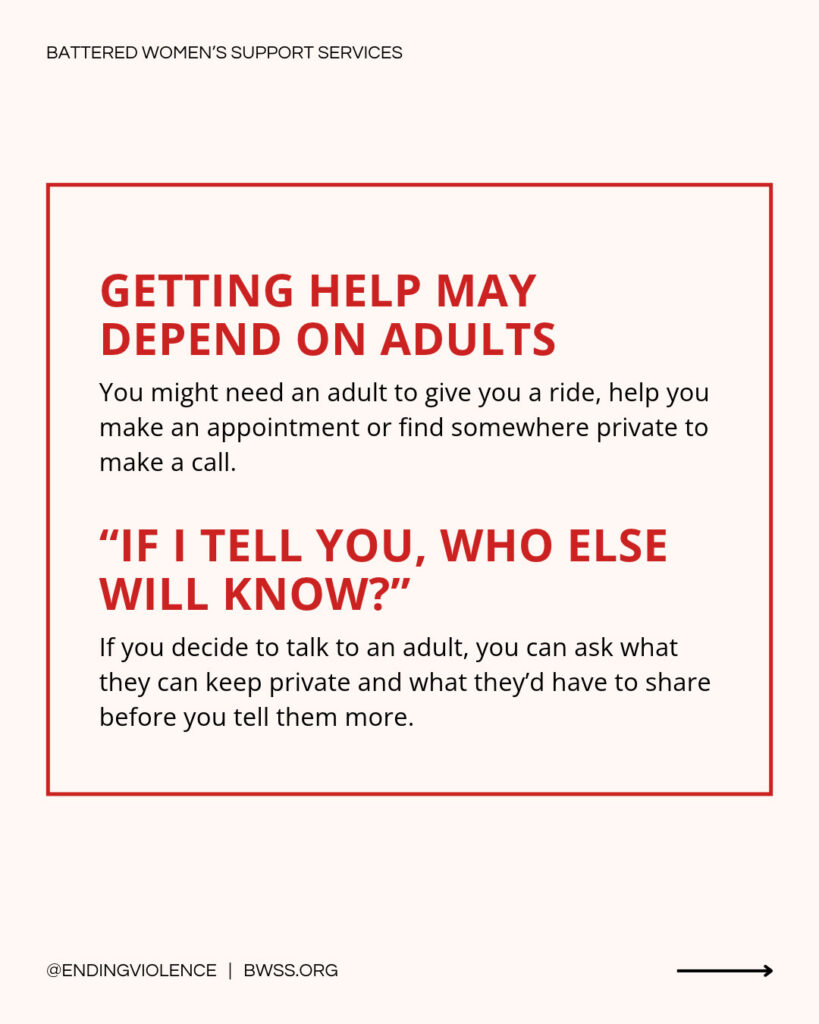
05Getting help may depend on adults
You might need an adult to give you a ride, help you make an appointment or find somewhere private to make a call. If there’s someone you trust, you can start by asking for the practical help you need.
06Telling an adult can feel like losing control
You might worry they’ll call home, take away your phone or make decisions before they’ve heard what you want. Before you share more, you can ask, “What can you keep private and what would you have to share?”
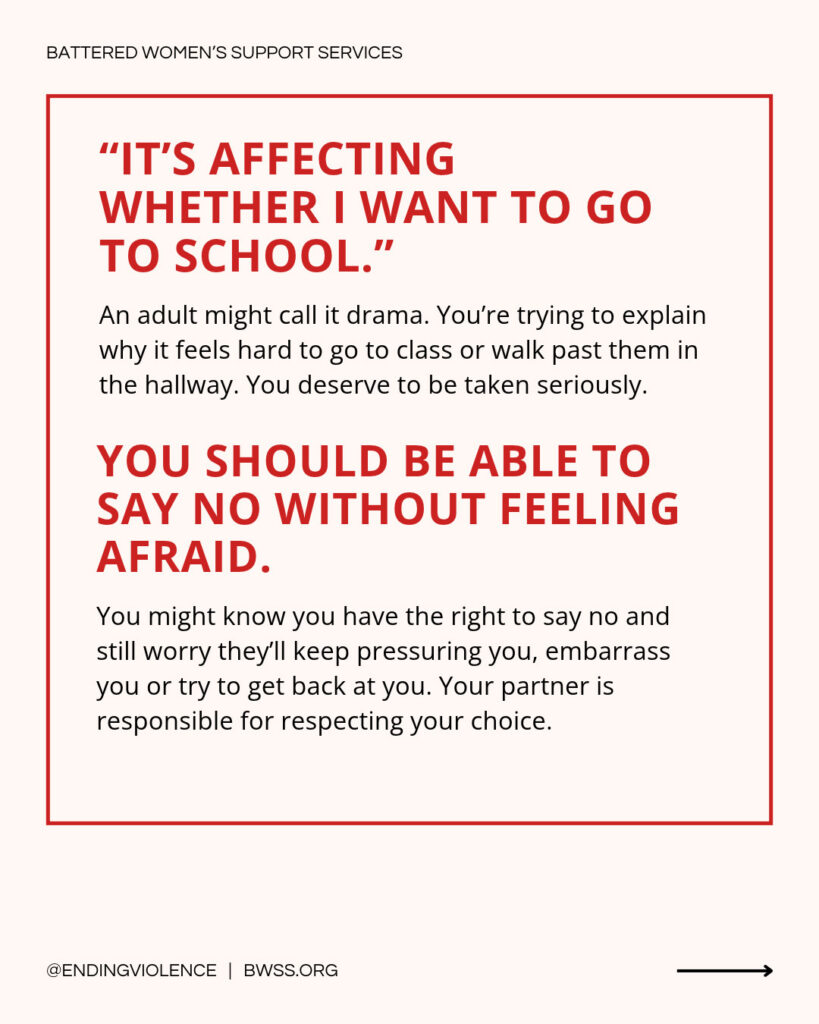
07You deserve to be taken seriously
If someone calls it “teenage drama” when you’re trying to explain why you’re afraid to go to class, what’s happening still matters. You can read about it on your own or think about who else might take you seriously.
08You should be able to say no without feeling afraid
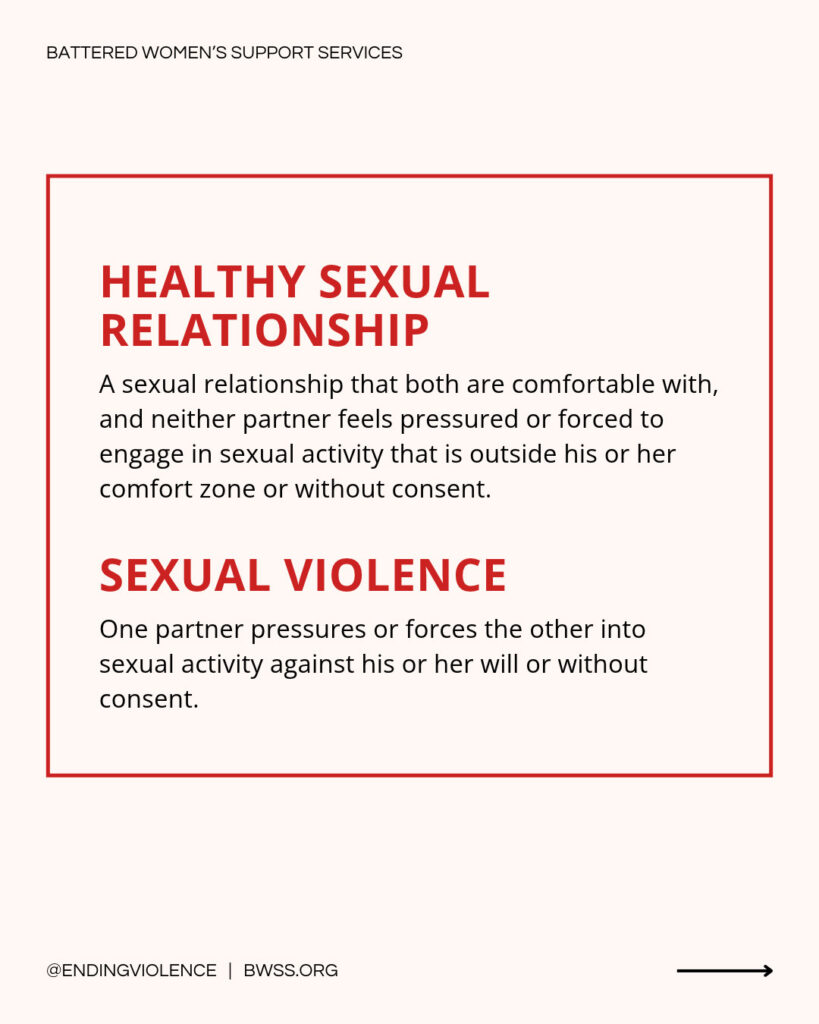
You may know you have the right to say no or change your mind and still worry they’ll keep pressuring you, embarrass you or try to get back at you. Your partner is responsible for respecting your choice.
09A safety plan can help you keep doing what matters to you
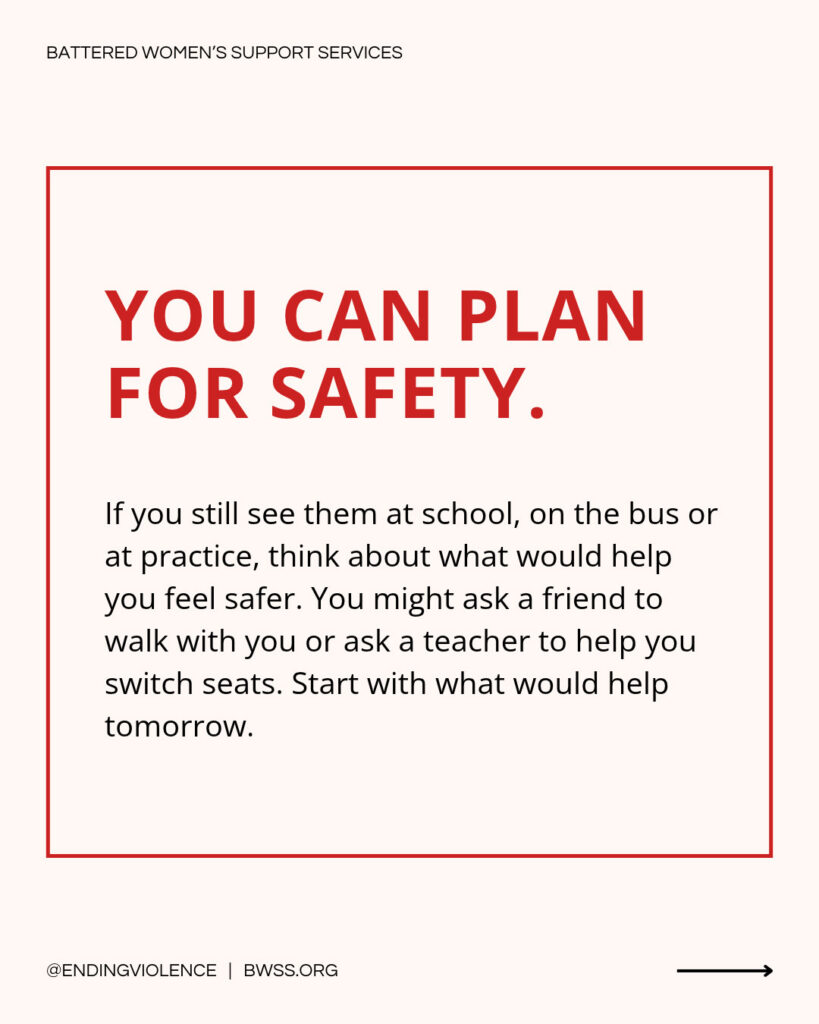
Maybe you want to stay in the class you chose, keep seeing your friends or finish the season with your team. Start with what you want to keep doing. You might ask a teacher to change a seating arrangement or ask someone you trust to walk with you after practice.
10Your friends can help make things safer
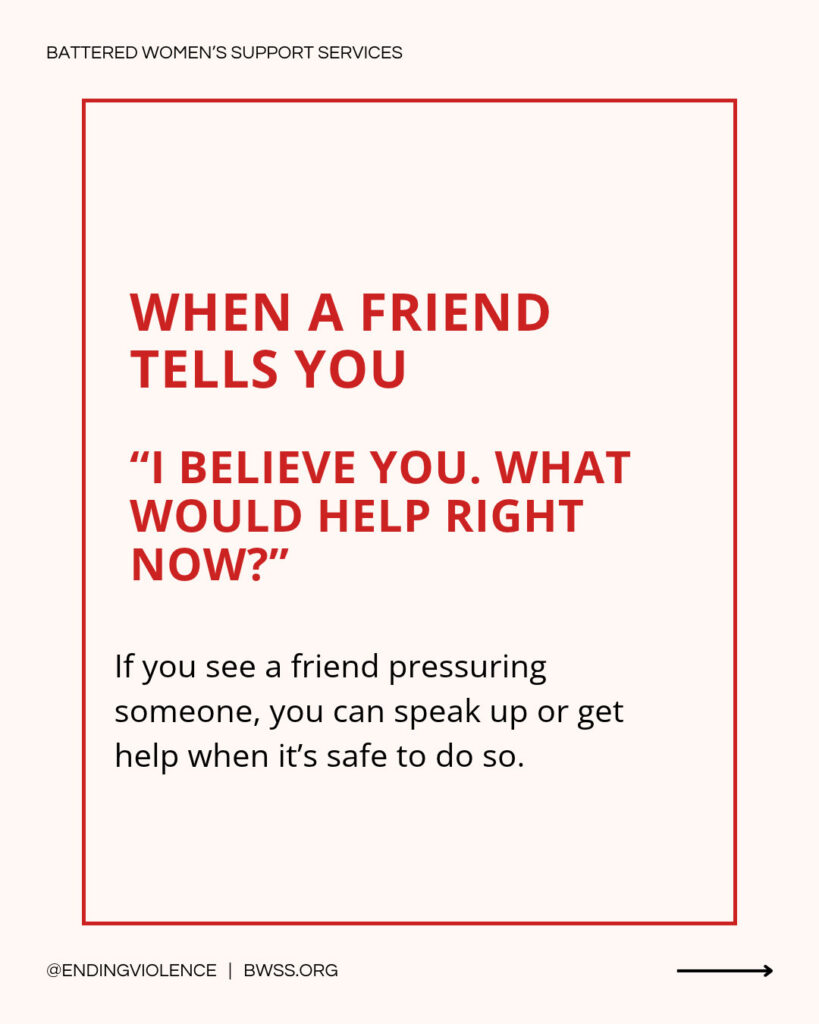
A friend can believe you, ask what would help and check in when and how you choose. If you’re the friend and someone confides in you, you can start with “I believe you. What would help right now?” If someone in your group is pressuring a partner, you can speak up or get help when it’s safe to do so.
For adults, schools and youth programs
What adults, schools and youth programs can do
If a young person tells you she’s worried about seeing someone at school or afraid of what might get shared online, ask what she’s most concerned about and what would make tomorrow safer. Explain what you can keep private and what you may need to share. Involve her in decisions about support and offer practical help that fits her day.
Schools and youth programs can reach the whole peer group early. BWSS has just wrapped up a series of dating violence prevention workshops at local high schools. Students practised recognizing controlling behaviour, setting and respecting boundaries, and responding when a friend tells them something happened. BWSS offers free, youth-led Dating Violence 101 workshops in person or online.
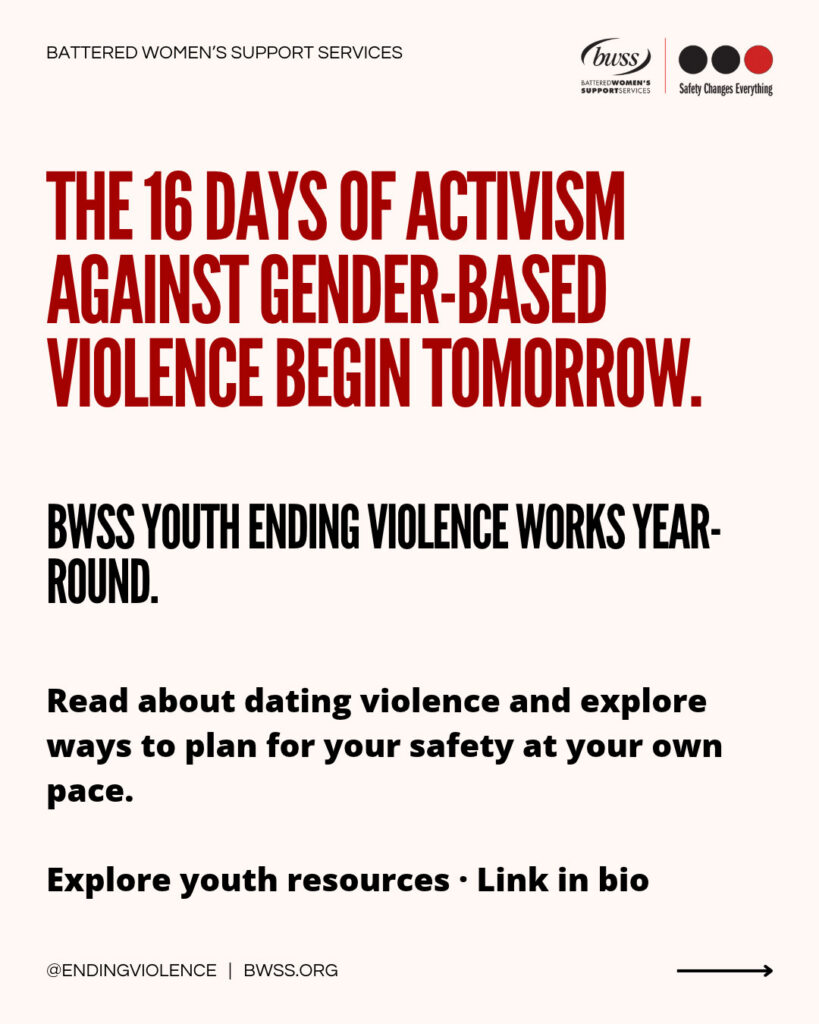
Youth Ending Violence works year-round
November 25 is the International Day for the Elimination of Violence Against Women and the start of the 16 Days of Activism Against Gender-Based Violence.
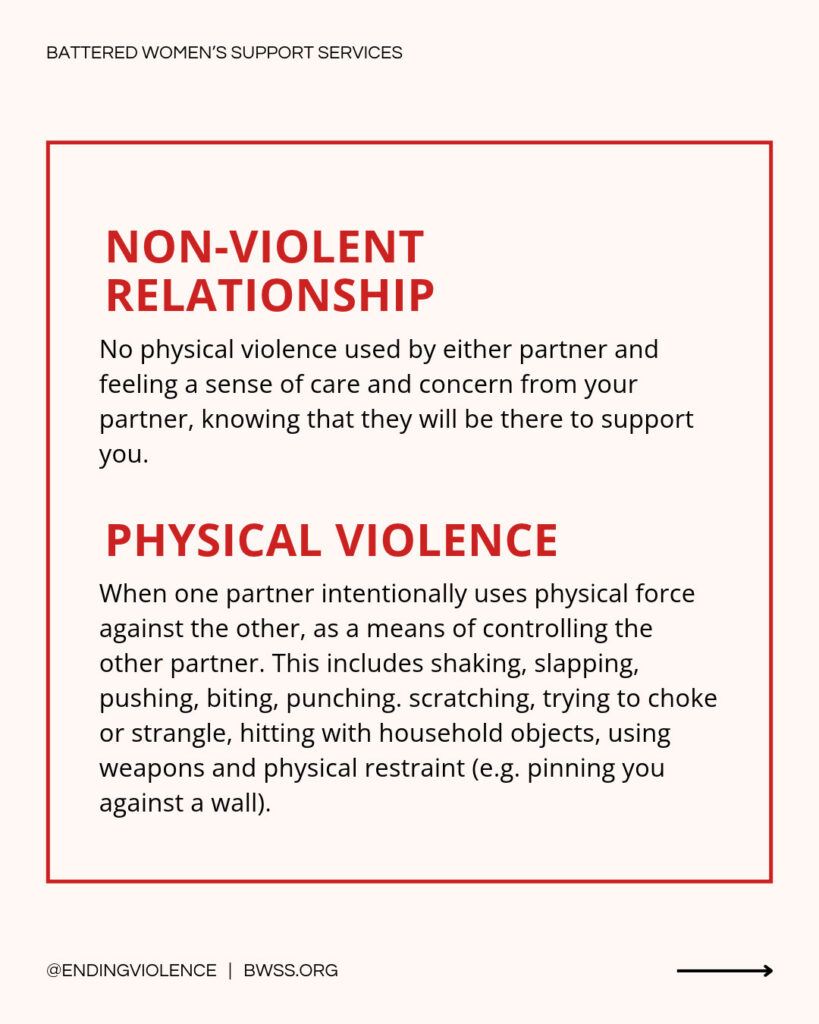
Our updated Youth Ending Violence page has concrete examples of healthy, unhealthy and abusive behaviour. It covers digital abuse and online dating safety, planning for safety during a relationship or after a breakup, and ways to help a friend. It also explains how to reach BWSS if you want support.
You can look for answers without having to tell your story.
Read the Youth Ending Violence resources
Swipe through
Dating violence and planning for safety, in 12 slides
1 / 12
2 / 12
3 / 12
4 / 12
5 / 12
6 / 12
7 / 12
8 / 12
9 / 12
10 / 12
11 / 12
12 / 12
Scroll sideways to see all slides →
Support is available
If you want to talk with someone about what’s happening in your relationship, the BWSS Crisis and Intake Line is available at 604.687.1867 or toll free at 1.855.687.1868.