Jul 17, 2013 | Battered Women's Support Services, Events
Featured Organization: Battered Women’s Support Services

The Facts:
- 1 in 3 women will suffer violence at the hands of another at some point in their lives
- 1 in 3 Canadians will experience or be connected to a mental health problem
- 66% of all female victims of sexual assault are under the age of twenty-four, and 11% are under the age of eleven. Women aged 15 to 24 are killed at nearly three times the rate for all female victims of domestic homicide.
- Immigrant women may be more vulnerable to domestic violence due to economic dependence, language barriers, and a lack of knowledge about community resources
- On any given day in Canada, more than 3,000 women (along with their 2,500 children) are living in an emergency shelter to escape domestic violence.
The Power Of A Single Story:
“I was 6 years old the first time, my mother’s second husband hit me. I had left an empty popsicle wrapper on the table, and forgot to put it in the trash. These memory of how this event shaped is still fuzzy, but what I do remember was my first real and raw understanding of what fear, anxiety and no longer feeling safe feels like. What I do remember is hearing screaming behind me as I ran up the stairs blindly grabbing at the carpet, as he dragged me back down – kicking and screaming. Being thrown into the spare bedroom, it was dark, a chill in the air. He scrambled on the bed and my own screaming for my mother was deafening. She cried in the corner of the doorway, begging him to stop. Then I felt something hit the side of my head, sending me flying off the bed and into the side wall. I remember tucking myself into the fetal position, my face hot, I was sweaty, shaking, my head pounded and I could taste iron – my own blood. He left, closed the door and told me, lights off and to not come out until I was ready to be “good.
I stayed in that room for what seemed like hours, laying on the floor, trying to understand what had just happened. Trying to understand why someone who said they loved me and my mother would cause such pain and fear. At the age of 6 – nothing, none of this makes any sense and it re defines, it re shapes how you see the world and your place in it. From that moment on, I slept with a night light on, I had a backpack ready by my bedroom window, a crayoned route to my biological father’s house and I slept with that widow cracked open in case my cat and I had to escape. No child should ever have an escape route from their own home.
After that day, the abuse, the anger would continue. I would witness him hit my mother, fight with her, knock her down; physically, psychologically and spiritually. Over the years she became less and less the strong, vibrant mother I knew – and more of a woman fighting for her life. He controlled her actions, she lost friends, she rarely went out, she drank, he made her do cocaine with him. He was a sexual predator. For 9 years, I was slapped, spanked, whipped with a belt and even up to the age of 12 I remember being stripped naked and “disciplined.” At the age of 14 when we lost our home to debt, I convinced my mom to leave him. I got 2 jobs in high-school, she got a restraining order and when the divorce was finalized – the healing began. The long road of recovery, begins with a single step.”

I tell this story in detail because stories, like mine, need to be told. They need to be heard and the silence needs to be broken. Abuse is what started the downward spiral of my mother’s mental illness – a two decade long battle with her demons, her manic depression – later turned- bi polar disorder, struggling with alcohol addiction.
For me – I turned to running as a way to process and understand “what the F*** had happened to me.” In all our trauma, my mother never got angry with me, she was always loving and even at a young age, I knew I was the glue that had to hold it all together. This burden turned out to be my most valued lesson. In my mother’s passing from accidental suicide; I have learned that in my own silence there can be no full healing. I choose to not only speak for myself, but to pay tribute and honor to my mother’s memory by telling her story of courage.
As an adult, I have had decades of therapy to better understand the long term effects of my childhood abuse and chronic pain has been one of them. I have suffered from back pain for nearly a decade. The reasons why some children experience long-term consequences of abuse while other’s emerge relatively unscathed are still not fully understood. The ability to cope, and even thrive, following a negative experience is what we call “resilience.”
Resilience comes from really owning your sh*t, really accepting the cards that we are dealt and more importantly, accepting that your future, the life you wish to lead, the legacy you wish to leave behind – can only be chosen by “YOU.” The right to choose is the most important rights we, as a human species can harness.
For years I struggled to understand why some people who survive trauma – be it combat, violence, sexual or physical abuse, neglect or isolation – exhibit tremendous resilience and lead full, loving lives; while others become defined by their trauma. For years, I stood somewhere in between. Someone who couldn’t fully accept her past, but someone who wasn’t about to be defined by it either.
Over the last year, I have been knee deep, head down, rolling around in every leader, TED Talk and podcast I could my hands on that deals with; wholehearted living, defense against the dark arts, vulnerability, cognitive behavioral therapy, superhero movies – you name it, I am researching it.

Daring Greatly
One of the turning points for me was the talks, and associated books by Brene Brown, specifically, her book called “Daring Greatly,” where she discusses “Gremlin Ninja Warrior Training.” Shame derives power from being unspeakable – from being silent. It’s easy to be silent, because they do not have to risk judgement, ridicule or criticism. To be vulnerable, to let ourselves be seen – is a scary place.
Daring greatly requires worthiness and much like those manipulative “gremlins” from the 1984 Steven Spielberg movie; shame is that booming voice that self sabotages our efforts to move forward, it numbs us from feeling. I don’t want to feel hurt anymore, I don’t want to be angry anymore – but at the same time those gremlins numb us from feeling love, connection, trust and joy. We cannot NOT feel. It is that voice that says…. “You’re not enough,” “You don’t have a degree,” “Your past is less than exceptional,” “You’re still single,” and so on and so on and so on.
Roosevelt once said; “It is not the critic who counts; not the man who points out how the strong man stumbles, or where the doer of deeds could have done them better. The credit belongs to the man who is actually in the arena, whose face is marred by dust and sweat and blood; who strives valiantly; who errs, who comes short again and again, because there is no effort without error and shortcoming; but who does actually strive to do the deeds; who knows great enthusiasms, the great devotions; who spends himself in a worthy cause; who at the best knows in the end the triumph of high achievement, and who at the worst, if he fails, at least fails while daring greatly, so that his place shall never be with those cold and timid souls who neither know victory nor defeat.”
The answer is shame resilience. Resilience is about moving from shame to empathy. When we share our story with someone or a group who responds with empathy and understanding, and we practice self-compassion – shame cannot exist. Gremlin Ninja Warrior Training has four elements:
- Recognizing shame and understanding its triggers
- Practicing Critical Awareness – Give yourself reality checks
- Reaching out – Own your sh*t and share your story
- Speaking Shame – talk about how you feel
RUN4MOM is all about putting one foot in front of the other; both metaphorically and physically. This is the first year where I am focusing the majority of my acceptance, advocacy and awareness on surviving child abuse and sharing my mother’s story of domestic and family violence. Battered Women’s Support Services has been an expert on providing women-centered, anti-oppression support and training for more than three decades. They provide several training programs for women and front line workers across BC, as well as programs, support services and crisis intervention for women and girls experiencing violence.
Supporting Battered Women’s Support Services (BWSS):
For over 30 years BWSS has been working to end violence against women and girls. They provide education, advocacy and support services to assist all battered women in its aim to work towards the elimination of violence and to work from a feminist perspective that promotes equality for all women. In 2010 they launched their The Violence Stops Here campaign recognizing the role men play in eliminating violence against women.
One of the key programs, I feel needs to be recognized is the Advancing Women’s Awareness Regarding Employment (AWARE) program; which is one of the many ways that Battered Women’s Support Services works to eliminate all forms of violence and abuse against girls and women. Their specialized employment program includes:
Recognizing, Understanding and Overcoming the Impact of Abuse (RUOIA)
Workshops related to personal development and employment related skills
Career Exploration including informational interviews, job search skills, volunteer work experience
Information and referrals to educational and training resources
Critical and Essential Services:
This pass year Battered Women’s Support Services:
- responded to 10,000 information & direct service requests
- provided 4200 court/police accompaniments
- facilitated 500 Legal Advocacy workshops
- ran 420 support group sessions – 1520 women attended
- provided 3550 1-1 counselling sessions
- supported 105 women in Job Search skills
- offered 500 Training in Violence Prevention & Intervention
Diversity:
- Percentage of women who self identified as recent immigrants: 42%
- Percentage of women who self identified as Aboriginal, Indigenous, First Nations, Native, Indian or Métis: 18%
- Percentage of women who self identified as refugee: 2%
For more information on BWSS: https://www.bwss.org/
My Sister’s Closet:
Women are the experts of their experience and their healing journey. BWSS has numerous programs to help women establish better connections and healing along their journey. Everything from crisis line support, to counseling, to legal advocacy, to youth programs, to a social enterprise called “My Sister’s Closet.”
One of the many ways BWSS meets the needs of women in our community is through social enterprise. This includes a Retail Program and a thrift boutique, My Sister’s Closet.
My Sister’s Closet is a community boutique offering a mixture of fashion to shoppers and an exceptional experience to over 40 volunteer women, who enable their boutique to be open 7 days a week. Their boutique is a space for community to come together each and every day to end violence against women and girls.
You can find gently used, recycled, vintage, and eco-fashion clothing in a variety of styles and sizes for women and men. All the clothing and accessories are donated by community members, retailers, and film industry.
The proceeds from sales go to fund BWSS support services and programs. My Sister’s Closet was born from the decision of being free from the whims of government to end violence against women. In the past year alone, 10,000 women accessed services at BWSS. In addition, clothing is donated out to organizations serving women and men in need of free clothing such as the YWCA Single Moms housing, BC Coalition of People with Disabilities, DTES Women’s Centre, and to BWSS Safety & Outreach Program in the DTES.
My Sister’s Closet also supports local women artisans. Giving retail space and promoting their work contributes to their financial independence and the growth of their artistic expression.
For more information on My Sister’s Closet: https://www.bwss.org/support/programs/social-enterprise/my-sisters-closet/
Join us for RUN4MOM ON July 28th and why not stop by and support BWSS, CMHA and Sarah J on July 26th for our RUN4MOM Pre race event party!
Date: Friday July 26th
Time: 7pm – 9pm
Location: 1092 Seymour Street, Vancouver
Come and join Sarah Jamieson for the RUN4MOM pre race party. This is a great opportunity to connect and meet the women and supporters of BWSS and SHOP at My Sister’s Closet. This is a free event, and all refreshments can be purchased by donation.
How Can You Support?
- Join me on RUN4MOM. Walk with me on my run route – from Ambleside to Dundarave @9am on July 28th
- Donate to either one of the charities and take a stand against violence and stigma. Donate here: http://www.canadahelps.org/GivingPages/GivingPage.aspx?
- Share RUN4ACAUSE and help break the silence at www.sarahmjamieson.wordpress.com
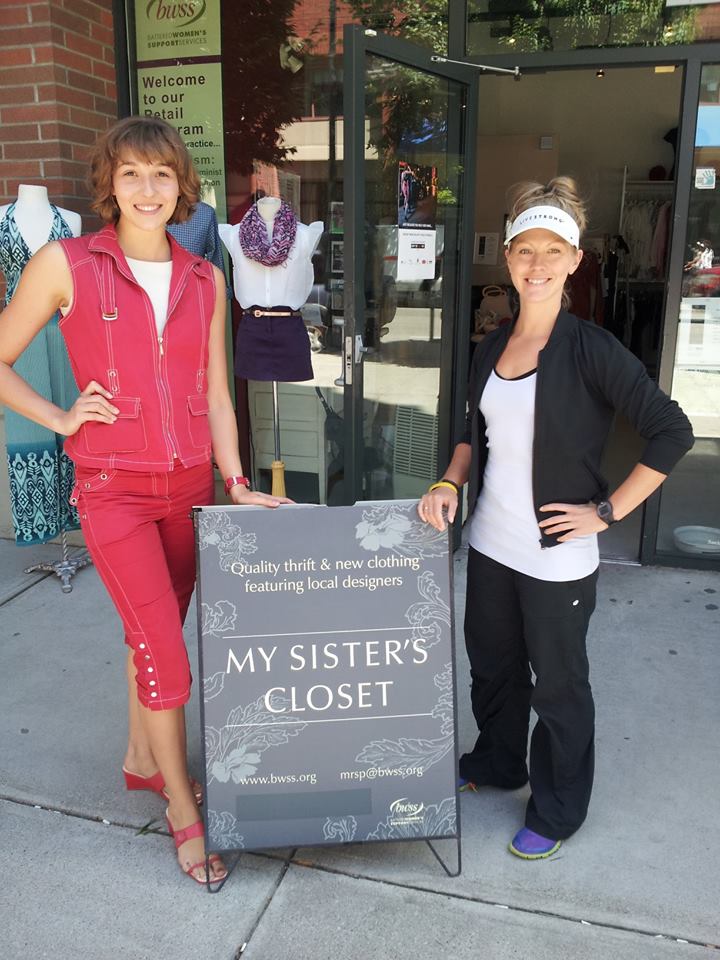
This blog is written by Sarah Jamieson. BWSS wants to acknowledge and appreciate her strength, support and action. Here she is outside at our social enterprise My Sister’s Closet with one of our volunteers Ava.
Jul 11, 2013 | Battered Women's Support Services, Indigenous Women, Media Advisory, Missing Murdered Indigenous Women and Girls
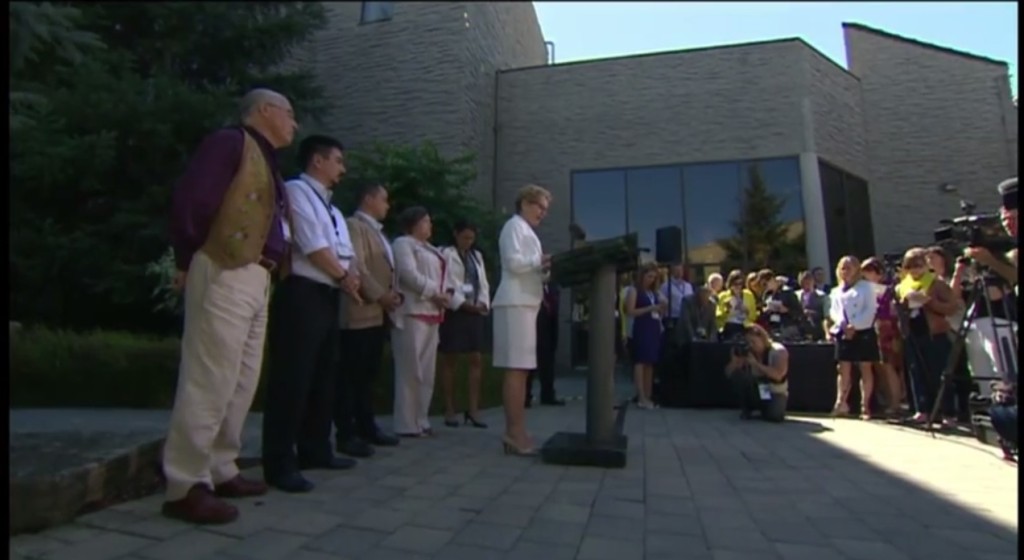
(Coast Salish Territory/ Vancouver, B.C.- July 10, 2013) The attached letter is from an informal coalition of 20 community and advocacy groups in response to the recent announcement by former Attorney General Shirley Bond that civil litigation by children of Robert Pickton’s victims may “constrain” its work in responding to the recommendations of the Missing Women Commission of Inquiry, and to the recent resignation of Honourable Steven Point as advocate for the recommendations. The coalition is seeking engagement with newly appointed Minister of Justice and Attorney General, Honourable Suzanne Anton.
By way of background, on April 2, 2012, fourteen groups sent an open letter to Commissioner Oppal advising that they would not be participating in the Policy Forums or Study Commissions aspects of the Missing Women Commission of Inquiry. Many of these groups, plus other supporters, have been meeting as an informal coalition since then to discuss how to move forward in supporting the children and families, and in pursuing justice for the missing and murdered girls and women.
For more information, please contact:
Aboriginal Front Door Society, Mona Woodward, (604) 697-5662
Atira Women’s Resource Society, Janice Abbott, (604) 331-1420
B.C. Civil Liberties Association, Micheal Vonn, (604) 250-6815
BC Native Women’s Association, Barbara Morin, (250) 461-6880
Battered Women’s Support Services, Angela Marie MacDougall
Butterflies in Spirit, Lorelei Williams, (778) 709-6498
Carrier Sekani Tribal Council, Tribal Chair Terry Teegee, (250) 640-3256
Downtown Eastside Women’s Centre, Alice Kendall, (604) 681-8480 ext. 233
Ending Violence Association British Columbia, Beverly Jacobs, (604) 633-2506 ext. 16
February 14th Women’s Memorial March Committee, Lisa Yellow-Quill, (604) 618-1061
Lookout Emergency Aid Society, Karen O’Shannacery, (604) 255-0340 ext. 12
PACE: Providing Alternatives Counselling & Education Society, Ellen Wiebe, ellenwiebe@gmail.com
PHS Community Services Society, Patrick Smith, (604) 779-6837
Pivot Legal Society, Doug King, (778) 898-6349
Union of B.C. Indian Chiefs, Grand Chief Stewart Phillip, (250) 490-5314
Union Gospel Mission, Genesa Greening, (604) 506-0845
West Coast LEAF, Laura Track, (604) 684-8772, ext.214
WISH Drop-in Centre Society, Kate Gibson, (604) 720-5517
Honourable Suzanne Anton
Minister of Justice and Attorney General
PO BOX 9044 STN PROV GOVT
Victoria BC, V8W 9E2
Via facsimile: 250 387-6411
July 10, 2013
Dear Attorney General:
Open Letter: Community and Advocacy Groups Strongly Object to Stalling by Province since Conclusion of Missing Women Commission of Inquiry and Set out Requirements for Participation
Congratulations on your appointment to Minister of Justice and Attorney General, we anticipate a strong working relationship with you to advance the critical file of missing and murdered women. We are a coalition of community and advocacy groups who were shut out of the Missing Women Commission of Inquiry (the “Inquiry”). We understand that your June 10 “Mandate Letter” from the Premier states that one of your priorities is to “consider implementation of the recommendations of the Missing Women Commission of Inquiry.” However, prior to your appointment and shortly after the election, your predecessor announced that civil litigation by children of Robert Pickton’s victims may constrain the government’s work in responding to the recommendations of the Missing Women Commission of Inquiry, and that Xwĕ lī qwĕl tĕl (the Honourable Steven Point) resigned as advocate for their implementation. We are frustrated and offended by the suggestion that civil litigation by families will constrain the government’s response or stall the work that needs to be done to deal with the ongoing tragedy of violence against women, particularly Indigenous women. If the government truly wishes to make changes in good faith and in the spirit of reconciliation, it should not constrain its actions out of fear that those actions may have an impact on litigation. Such a tactic is not a legal requirement – contrary to the inference that your predecessor appears to have made in her statement that litigation must take precedence over any other process. Rather, it is a defensive move that has already shaken the hope that there might be constructive action taken by the government to protect vulnerable women.
As you know, the undersigned groups were not funded to participate in the Inquiry, and did not participate in the Policy Forums or Study Commission aspects of the Inquiry. We refused to lend the credibility of our respective organizations’ names and expertise to the Inquiry, which could only be described as a deeply flawed and illegitimate process. For decades, family members of missing women, grassroots women’s organizations in the Downtown Eastside of Vancouver (DTES), community groups and Indigenous and public leaders, have incessantly called for a full public inquiry into the missing women of the DTES and the Highway of Tears. We were forced to withdraw due to denial of a just process, uneven funding for applicants granted standing, discrimination against women and Indigenous groups, and violations of international human rights standards. We were deeply troubled by the extremely narrow and restrictive terms of reference and the imposed tight timelines, and continued to demand that all applicants who were given standing be provincially funded, as recommended by Commissioner Oppal. The Commission lost all credibility among Indigenous, sex work, human rights and women’s organizations that work with and are comprised of the very women most affected by the issues this Inquiry was charged with investigating.
The litigation does not prevent the government from continuing essential work with impacted families and communities to create tangible solutions to the tragedy of violence against women that continues to unfold. Former Attorney General Shirley Bond’s statement that the work may be “constrained” unfairly places the blame for the government’s own inaction on the families involved in the litigation, who are seeking justice for the deaths of their loved ones. The families of the missing and murdered women must absolutely not be made into scapegoats for the government’s lack of progress.
Since the conclusion of the deeply flawed Inquiry, and the release of a 1500-page report by Commissioner Wally Oppal in December, 2012, the Province has been extremely slow in taking action implementing recommendations from the report, despite the glaring urgency for real and substantial change to be made on the ground in order to prevent further violence and to pursue justice for the missing and murdered women. We acknowledge that the immediate undertaking of the government to open the WISH Drop-In Centre over night with annualized funding of $750,000 was a critical and positive step; however, we cannot understand why, given the forced vulnerability to violence on the Highway of Tears, that the second immediate measure recommended by Commissioner Oppal to develop and implement an enhanced public transit system to provide a safer travel option connecting the Northern capital and Northern communities, particularly along Highway 16 (the Highway of Tears), was not implemented.
Members of the Coalition met with the Honourable Steven Point twice to discuss his role as “champion” to provide advice to the government as it implements the recommendations, and as Chair of a new Minister’s Advisory Committee on the Safety and Security of Vulnerable Women. Mr. Point indicated to us that he would be stepping down after getting the process up and running, with the recommendation that a woman should chair the committee. He did not state that this was related to any litigation, even though the coalition met with him on the morning of May 14, just days before his resignation was announced. We feel extremely betrayed by this sudden shift, which was made without any consultation or engagement with the families or with impacted community and advocacy groups. Despite our skepticism about the Commission and our previous exclusion, summarized above, we participated in these meetings with Mr. Point in good faith, with a number of our members considering how to engage constructively in that process. The government’s announcement has, once again, damaged the relationship between BC, the families of the victims (who spoke for themselves about their disappointment after the announcement), and stakeholder groups.
Recommendations Not Implemented: Upon review of the 63 formal recommendations in Commissioner Oppal’s report, which was released approximately six months ago, we are extremely concerned that the Province has begun work on only two of the recommendations, now apparently stalled out with the resignation of Mr. Point:
12.1 That Provincial Government appoint an independent advisor to serve as champion for the implementation of the Commission’s recommendations. This appointment should take effect within 12 weeks of release of the report.
12.2 That the independent advisor work collaboratively with representatives of Aboriginal communities, the DTES, and the victims’ families in the implementation process.
Given that Mr. Point was appointed in December 2012, we strongly object to the fact that none of the other recommendations have begun to be considered or implemented, and we are offended with the absence of justice for our missing and murdered women. Approximately six months after the release of the MWCI final report and recommendations, we ask whether the government thoroughly reviewed the report as committed on December 17.We call on the newly re-elected government – as a whole – to prioritize the issue of missing and murdered women, and to work with the families and community organizations to make real change. We know that the Premier has spoken of a strong commitment to government serving the needs of families. We expect the Premier and the government to understand that it is impossible to focus on creating jobs and building a strong economy without equally attending to the pursuit of justice for the most marginalized people and families in the Province.Necessary Conditions to Implement Recommendations: The Inquiry process was flawed from the beginning, and we were extremely concerned with, among other shortcomings: limitations of the terms of reference; no lawyers for organizations and community members who represent crucial perspectives; lack of witness protection; delayed, incomplete disclosure; impossible timelines; and limited witnesses. The failed Inquiry, far from assisting Indigenous women and women from the Downtown Eastside, ironically reinforced their marginalization. Gender and sexual violence against girls and women continues in Downtown Eastside Vancouver unabated. The Missing Women’s Commission of Inquiry missed an opportunity to respond to this critical social issue through recommending funding for a range of gender and sexual violence support services and gender and sexual violence prevention activities. We advise that if the Province of British Columbia is going to be successful in implementing the recommendations of the Inquiry:
• The Province must work collaboratively and directly with families and impacted community groups to implement recommendations and genuinely take action to make real change on the ground for vulnerable women, and not make unilateral decisions.
• We suggest a focus on key recommendations, determined in cooperation with the families and impacted community groups, and giving urgent priority to those which would direct and provide assistance to the families and to seeking justice for the missing and murdered women.
• There must be adequate funding from the Province to implement the recommendations.
• The proposed Minister’s Advisory Committee on the Safety and Security of Vulnerable Women, if established, must be large enough to allow for adequate representatives from the groups involved, and must include elder advisors as full members. The proposed Committee must allow the people most affected to appoint who sits on the Committee from their respective groups, rather than allowing the Minister with discretionary powers to make appointments. We are confident this will create a stronger and more effective committee.
• In addition to the fact that recommendations 12.1 and 12.2 are currently not even being implemented given the resignation of Mr. Point, the Province must take into consideration that the independent advisor would be most effective if it is a woman, given the extremely sensitive and gender-based nature of this work. Further, we object to the appointment of an independent advisor to serve as “champion” because we are concerned that this would mean the independent advisor would be bound to support all the recommendations even if s/he – or the Committee – did not agree with all of them, effectively taking away any independence.
• The Province must commit to a public, independent annual report on the situation of missing and murdered women in British Columbia, and on implementation of the Commissioner’s recommendations. We strongly urge you to ensure that the recommendations do not get put aside and ignored, as the majority of the recommendations did coming out of the Frank Paul Inquiry.
• In order to address the gaps and eliminate the critical and devastating issues of violence against Indigenous girls and women, intersecting and deeply rooted factors including colonialism, racism, and extreme conditions of poverty must be examined. We remind you that in Canada, Indigenous women are five times more likely than other women to die as a result of violence, and that this problem is a national and international crisis. We absolutely refuse to accept the racist notion concerning the normativity of violence that many Indigenous girls and women experience on a regular basis.
Coalition Committed to Pursuing a National Inquiry and International Investigation: In December 2011, the UN Committee on the Elimination of Discrimination against Women announced that it was initiating an investigation of Canada with respect to disappearances and murders of Indigenous women and girls. Given the failures of the British Columbian and Canadian governments to effectively address the human rights crisis of missing and murdered Indigenous women and girls, including the social and economic conditions that make Indigenous women and girls more vulnerable to violence in the first place, our organizations will dedicate what limited resources we can offer to working with the United Nations to facilitate their investigations and fact-finding processes, in order to ensure that Canada is held internationally accountable for these ongoing human rights violations.Canada has been criticized by the United Nations Committee on the Elimination of Discrimination against Women and, in 2012, by the UN Committee on the Elimination of Racial Discrimination because of the inadequacies in its law and practice respecting the prevention, investigation, prosecution and punishment of violence against women, particularly Aboriginal women. The high levels of violence experienced by Indigenous women, as well as the hundreds of missing and murdered Indigenous women across the country are evidence of Canada’s failure to meet its international legal obligations to respect, protect and fulfill the fundamental human rights of women. To date, Canada has not made an effective response to these serious and significant findings by expert human rights bodies.We remind you that the United Nations Declaration on the Rights of Indigenous Peoples clearly sets out a framework for states to effectively ensure the rights of Indigenous women:
Article 21(2): States shall take effective measures and, where appropriate, special measures to ensure continuing improvement of their economic and social conditions. Particular attention shall be paid to the rights and special needs of indigenous elders, women, youth, children and persons with disabilities.
Article 22(2): States shall take measures, in conjunction with indigenous peoples, to ensure that indigenous women and children enjoy the full protection and guarantees against all forms of violence and discrimination.
We, the undersigned groups, continue to strongly advocate for a national public inquiry into the hundreds of murders and disappearances of Indigenous women and girls in Canada , to address the service, socio-economic and human rights gaps, and make concrete and specific recommendations to end violence against Indigenous girls and women at a national level.Moving Forward
Although members of this coalition were shut out of the Inquiry process, we continue to meet regularly to discuss how to move forward in order to support the families, and to pursue justice for the missing and murdered women. We are not going anywhere, and we look forward to the opportunity to work with you on this important issue. We will be pursuing justice with or without you, and we certainly hope that you choose to work with us.Minister Anton, it is absolutely imperative that you work collaboratively with the families and impacted communities to make the issue of justice for the missing and murdered women one of your top priorities as Minister of Justice and Attorney General. Given the urgency of this issue, we request a meeting at your earliest convenience so that we can discuss how to move forward in addressing the violence against disadvantaged and marginalized women and girls in British Columbia. Please contact Don Bain, Executive Director at the Union of B.C. Indian Chiefs, to set up a meeting time (604) 684-0231.Yours truly,
Aboriginal Front Door Society
Amnesty International Canada
Atira Women’s Resource Society
B.C. Assembly of First Nations
B.C. Civil Liberties Association
BC Native Women’s Association
Battered Women’s Support Services
Butterflies in Spirit
Carrier Sekani Tribal Council
Downtown Eastside Women’s Centre
Ending Violence Association British Columbia
February 14th Women’s Memorial March Committee
Lookout Emergency Aid Society
Justice for Girls
PACE: Providing Alternatives Counselling & Education Society
PHS Community Services Society
Pivot Legal Society
Union of B.C. Indian Chiefs
Union Gospel Mission
West Coast LEAF
WISH Drop-In Centre Society