Follow The Violence Against Women in Relationship Act

31 Things British Columbia Can Do Right Now to End Violence Against Women

2. Audit for compliance with BC’s Violence Against Women in Relationship policy

BC’s Violence Against Women in Relationships (VAWIR) policy sets out clear guidelines for professionals, including police, Crown, probation officers and child protection workers to follow when responding to violence against women. Without oversight and monitoring for consistency, the VAWIR policy is just words; it is necessary to ensure adherence to these policies by all relevant ministries, agencies and departments through an auditing process. In so doing, practice issues, service gaps, and inconsistencies among regions can be documented and solutions developed to ensure that these policies are followed effectively, in women’s best interests.

Women in British Columbia have waited too long already. That is why we are offering 31 things that BC’s new Provincial Office of Domestic Violence (PODV) can push for right now to increase safety for women and to bring us closer than we have ever been to ending violence against women once and for all. We are calling for 31 social, economic and legal changes, none of which are unachievable in this province. Some would require very little financial investment, and each of them will save resources in the long term given the high costs of violence against women.

For more information:

1. Call violence against women what it is

2. Audit for compliance with BC’s Violence Against Women in Relationship policy

3. Address the immediate financial and housing needs of women fleeing violence

4. Enhance access to justice for women – invest in family, immigration and poverty law legal aid services

5. Make addressing women’s inequality a core learning objective for all BC students

6. Add sexual violence by police to the mandate  of the Independent Investigations Office

7. Address the feminization of poverty with a provincial anti-poverty plan

8. Push to add gender and sex to the hate crime provisions of Canada’sCriminal Code

9. Bring back regional coordination committees for women’s safety

10. Join the call for a national inquiry into missing and murdered Indigenous women

11. Do not let immigration status stand in the way of women’s safety

Follow @EndingViolence to learn more about #31Things British Columbia Can Do Right Now to End Violence Against Women

Jane Doe Advocates Network–31 Things British Columbia can do Right Now to End Violence Against Women
31 Things British Columbia Can Do Right Now to End Violence Against Women
image

Originally posted by The Jane Doe Advocates Group on March 1, 2013

We believe that an end to violence against women and gender inequality is possible. Over the past two decades, reports and plans have filled bookshelves, filing cabinets and hard drives. These documents have been generated through community-based and academic research, though project evaluations and through government consultations. Many of these reports have been informed by the hard-won expertise and insights of anti-violence organizations, feminist activists and women who have personally experienced gendered violence. Some have included excellent analysis and powerful recommendations, but implementation has consistently been spotty at best.

Women in British Columbia have waited too long already. That is why we are offering 31 things that BC’s new Provincial Office of Domestic Violence (PODV) can push for right now to increase safety for women and to bring us closer than we have ever been to ending violence against women once and for all.   We are calling for 31 social, economic and legal changes, none of which are unachievable in this province. Some would require very little financial investment, and each of them will save resources in the long term given the high costs of violence against women.

We chose March 2013 to put forward these practical recommendations to mark International Women’s Day and to honour BC’s long and vibrant history of feminist activism. Everything we are proposing is built on a solid foundation laid by women who came before us and by women across the province who continue to work tirelessly to put an end to gendered violence and to achieve substantive equality for women.  We have already sent the full list to PODV.

Over the coming month we will be releasing one thing BC can do each day. We are inviting women and men who believe in a world without gendered inequality and violence to join us in tweeting, posting to facebook and otherwise sharing one thing that BC can do to end violence against women each day for the month of March.


To keep up to date, follow us this month on twitter @janedoelegal

To mark International Women’s Day 2013, here are 31 things British Columbia can do right now to promote women’s safety and while addressing the root causes of gendered violence:

 
1. Call violence against women what it is
 

Language shapes the way we view the world. It also shapes the way we act within it.

According to statistics Canada, approximately 83% of all police-reported domestic assaults are against women and over 80% of victims of dating violence are women.  The severity and frequency of violence against women who report spousal violence is also much higher that violence reported by men, with women being three times more likely than males to report that they had been sexually assaulted, beaten, choked or threatened with a gun or a knife by their partner or ex-partner during an assault. Yet, “violence against women” is disappearing from policies, legislation and public discussions and being replaced by gender-neutral terms like “domestic violence” and “partner assault.”

This linguistic shift erases the gross disproportionality and qualitative difference in gendered patterns of violence.
When talking about gendered violence and power-based crimes, euphemisms and legalese allow us to remain comfortably detached from disturbing truths —the truth that assault is not a “dispute,” rape is not “sex” and sexual harassment is not “joking around.” When we shift our language in law, in policy, in the courts and in everyday life we make systemic problems visible and open up the possibility for identifying appropriate solutions.


Endorsing Organizations and individuals

Atira Women’s Resource Society
Battered Women’s Support Services
Pivot Legal Society
Samnani Law Corporation
WAVAW Rape Crisis Centre
West Coast LEAF
YWCA of Metro Vancouver
Isabel Chen, Co-Director of Keep Safe Initiative
Tracey Young, Forensic social work consultant, Catalyst Enterprises BC


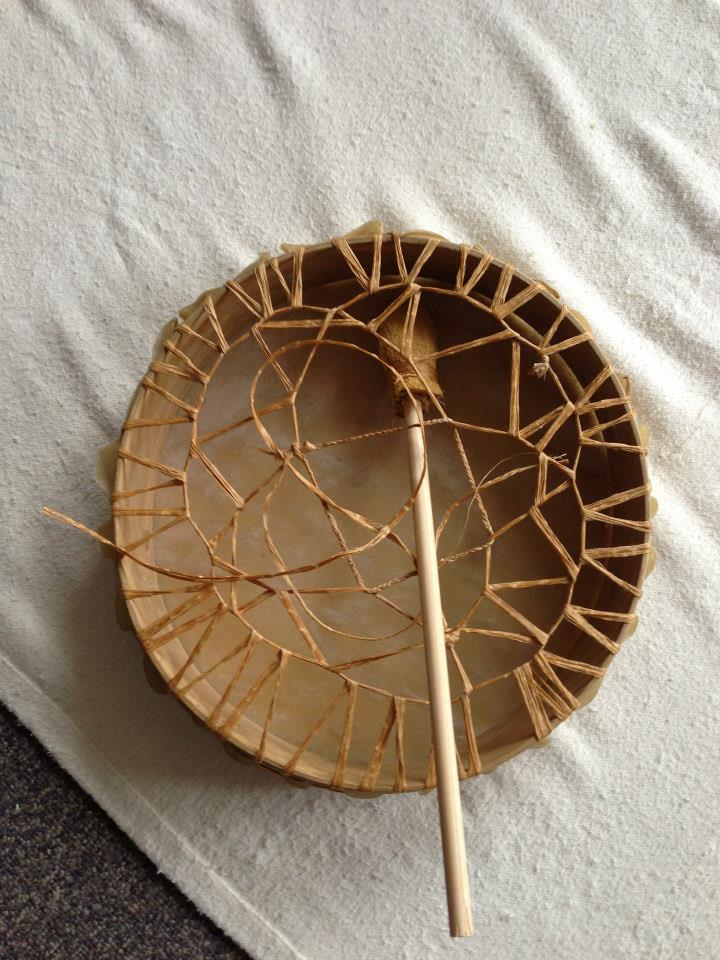
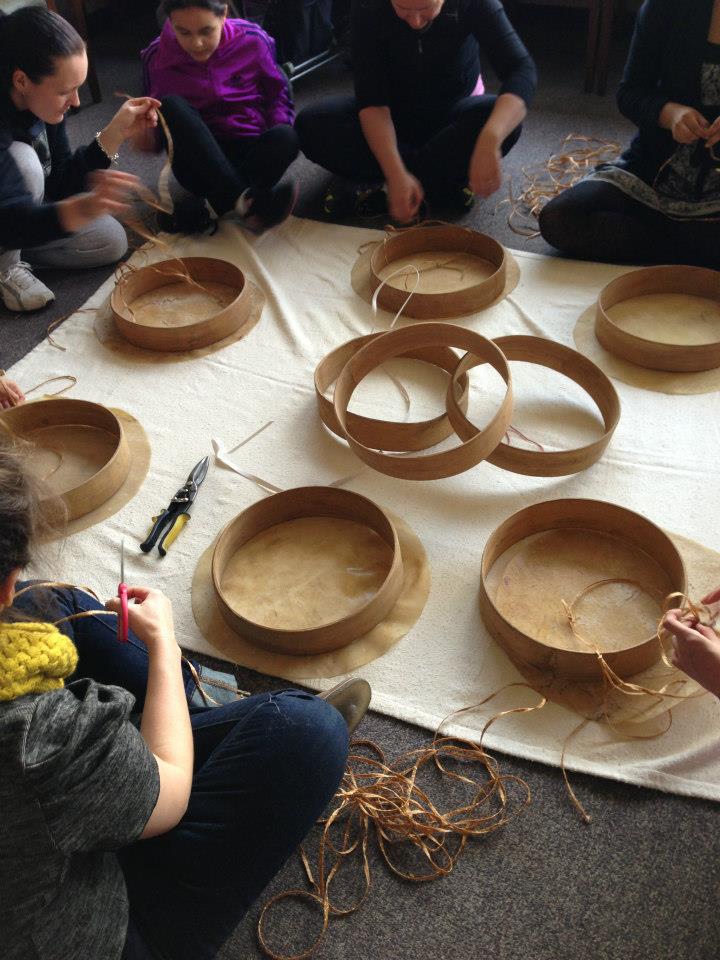
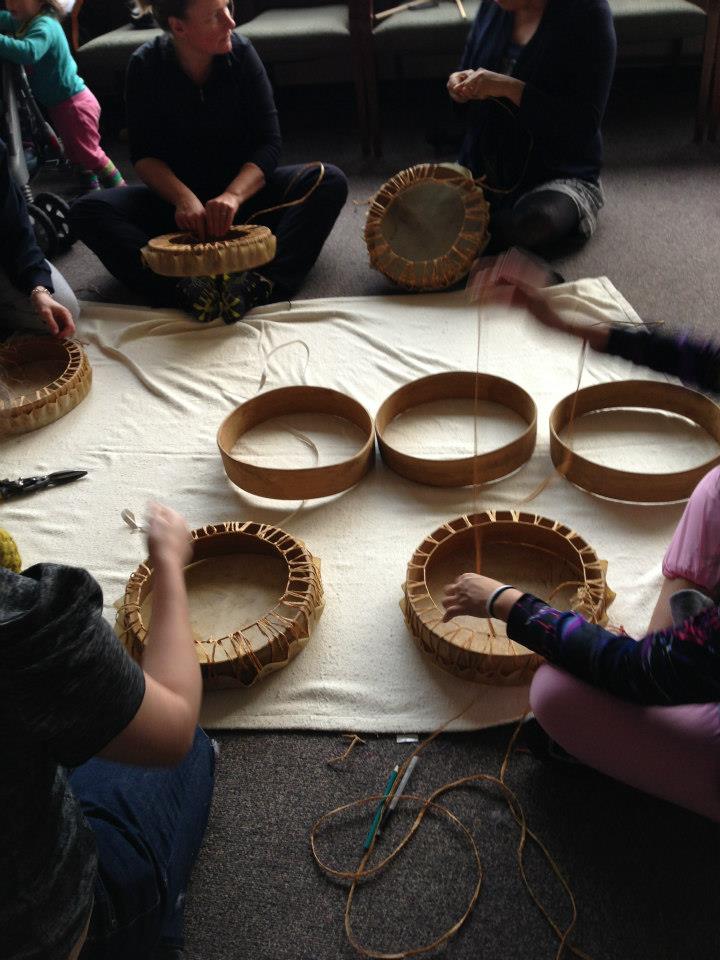
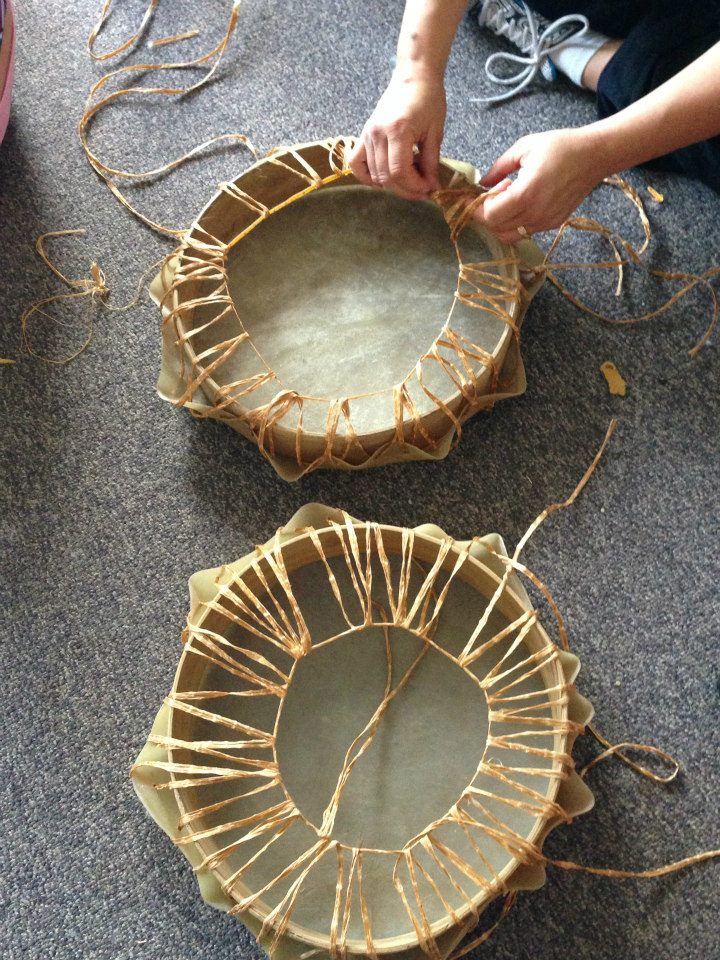
The Heartbeat of Mother of Earth – Aboriginal Women’s Drum Making Workshop

by Terriea Harris, BWSS Aboriginal Women’s Outreach Counsellor

Drum is a voice, a prayer to Spirit, is the voice of the Earth coming through to speak of its heart. Drumming connects us to our Creator, connecting our heart to the heartbeat of the Earth. It is a way to connect one’s spirit with the Great Spirit.


“The spirits are with me and I feel even stronger when I drum and sing.”

Drum is a voice, a prayer to Spirit, is the voice of the Earth coming through to speak of its heart

For years, our teachings by elder woman were passed down from one generation to the next orally or by using one’s voice, which has maintained the importance of our identity. Drumming played a vital role in passing on these teaching and traditions to new generations as it accompanied to those oral histories and stories.

“Everything about the drum and sound of the drums is a great medicine as we all unite.”


verything about the drum and sound of the drums is a great medicine as we all unite

Aboriginal Women had voices and were revered in many traditional communities. With the Colonization, women would lose everything from the traditional way of life, their status in their communities, their children to residential schools, their cultural teachings to the Church and their voice to the patriarchal system. The oppression of colonization on Aboriginal Women aimed to silence them with its practices and acts. They taught men to dominate women or to use force if necessary, then their teachings was put into policy with the enactment of the Indian Act whereby Aboriginal Women could lose their status -and what little rights they had- if they married a non-native man.


Drumming has always played a significant role in our history

Drumming has always played a significant role in our history. Some traditional teachings share that men only drum and women will surround the circle in order to balance the female and male energy. Traditionally, women would sing and doing so, was considered a great honour by the men. Today, we, Aboriginal Women create women only drum spaces because of the power of drumming for healing from the effects of Colonization and the impact of trauma. We know that trauma can be very disconnecting and as we journey on our healing process, reconnecting to spirit, self, our culture and our voice is an important part of that process.

“Drumming teaches that wellness can be found in many ways. Healing through songs is so powerful.”


Wildflower Women of Turtle Island Drum Grou

At BWSS Aboriginal Women’s Program, every Thursday we are coming together with our sisters at Wildflower Women of Turtle Island Drum Group to support women in their healing process. As we recognize the drum as the strong bond with the Great Spirit,  we organized our first drum Making Workshop to create our personal drum to enhance this spiritual connection with the heartbeat of Mother Earth and so taking back our power.

“Music in all forms is soothing to the soul. Being part of a group in this process is very significant in my healing process”

“I have been a part of the drum group at BWSS. I hope it stays as our youth. Love the experience every week! Powerful!”

Keep posted for our upcoming drum making workshop and join us in our Wildflower Women of Turtle Island Drum Group!


The quotes are by women who have participated Wildflower Women of Turtle Island Drum Group and Drum Making Workshops.

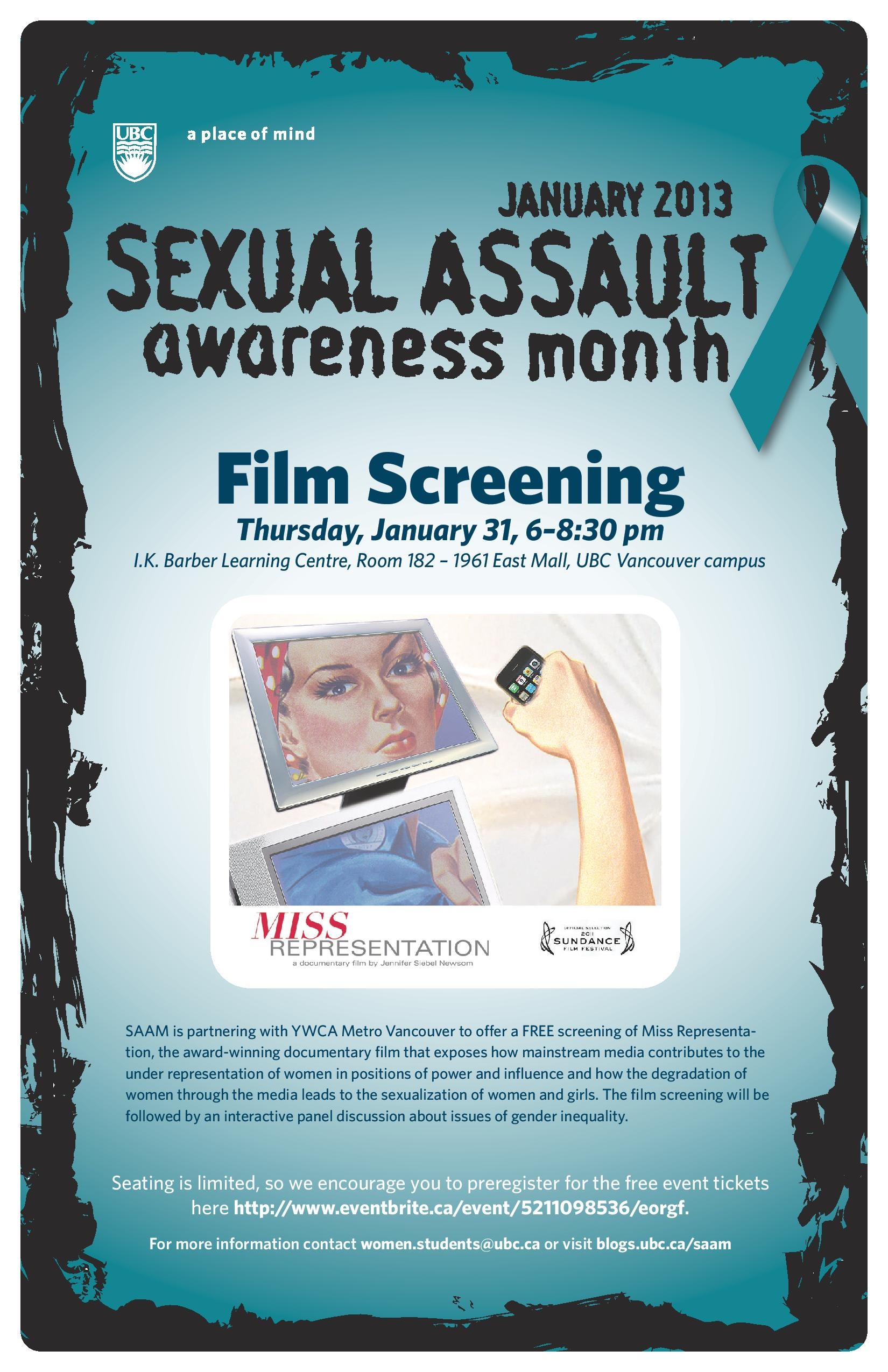
Sexual Assault Awareness Month Film screening: Miss Representation

Film screening: Miss Representation
When: Thursday, January 31, 6:00pm-8:30pm
Where: I.K. Barber Learning Centre, Room 182 – 1961 East Mall, UBC Vancouver campus

What is Sexual Assault Awareness Month (SAAM)?

Stopping sexual assault is everyone’s responsibility. As friends, relatives, lovers and neighbors there are important and concrete actions we can take to raise awareness and end violence.

January is Sexual Assault Awareness Month (SAAM) – a UBC community initiative developed to raise awareness across campus about the issues behind sexual assault and violence. Our focus is a positive one, inspiring people to realize that we can all play a role in putting an end to sexual assault.

Miss Representation film screening – poster with details has been attached

Access & Diversity
at the University of British Columbia is partnering with YWCA Metro Vancouver to offer a FREE screening of Miss Representation as part of SAAM this January. This award-winning documentary film exposes how mainstream media contributes to the under representation of women in positions of power and influence and how the degradation of women through the media leads to the sexualization of women and girls. The film challenges the media’s limited and often disparaging portrayals of women and girls, which make it difficult for women to achieve leadership positions and for the average woman or girl to feel powerful herself. To watch a trailer of this film, please visit here.

This free event will be held on Thursday, January 31st from 6-8:30pm at the Irving K. Barber Learning Centre, Room 182 on the UBC Vancouver campus.  The film screening will be followed by an interactive panel discussion about issues of gender inequality. Join the discussion with:

Angela Marie MacDougall, Executive Director at Battered Women’s Support Service

Chantelle Krish, Manager of Advocacy and Public Relations at YWCA Metro Vancouver

Amanda Reaume, Associate Director of Advancement in the Dean of Science for Simon Fraser University”

Seating is limited, so we encourage you to pre-register for the free event tickets here.  Free tickets will be available at the door, if space remains.

Here is a selection of Ending Violence blog posts on women (and men) resisting media representations:

MissRepresentation:  The Media is the Message and the Messenger a film review by Dana Gore

How Media Literacy Can Help End Violence Against Women by Joanna Chiu

Violence Sells?  Time to say ‘Enough’ to Twisted Advertisers by Joanna Chiu

Angela Marie MacDougall co-hosted with Irwin Oostindie  W2 Morning Project on Co-op Radio CFRO 102.7 FM and interviews Jennifer Pozner and Joanna Chiu  Interviews begin 20 minutes into the hour long broadcast.

How to get your Messages Heard and Hold the Media Accountable, with Strategies from Jennifer Pozner by Joanna Chiu

Indigenous and Women of Colour Media Makers Resist!: How to Create the Media You Want to See in the World by Joanna Chiu

Women with Disabilities: Understanding Media Representations to Empower one of the Most Victimized Groups in Society by Joanna Chiu

Your Message, Your Voice:  Blogging to Fill the Need for Independent Critical Analysis by Joanna Chiu

Resisting Media Representations. How Women Can Effectively Challenge the Way They Are Represented. A Literary Review by Silvia Almanza Alonso

Survivors Speak out to Break Silence about Systemic Violence Against Women and Girls by Joanna Chiu

Fighting Sexual Assault One Tweet at a Time by Sady Doyle

Porn Addled Teenage Boys do Rule the World by Soraya Chemaly

Missrepresentation the Media is the Message and the Messenger a Film Review by Dana Gore

Retro Sexism:  The Desperation of Sleemans Old Milwaukee Free Girl ad Campaign by Angela Marie MacDougall

Beauty and Body Image in the Media

Men Speak out about Sexist Coverage of Rape a call to action

Mad World Toy ads and Learning Gender posted Bitch Media

Beauty Redefined

Media Misses the Point by Athena Affan

Bic Soleil and Fluid Hair Salon: Misogynist Advertising Making News… Again by Angela Marie MacDougall


22nd Annual Feb 14th Women’s Memorial March

22nd Annual February 14th Women’s Memorial March – Downtown Eastside Vancouver

Our team is preparing for the 22nd Annual February 14th Women’s Memorial March Downtown Eastside Vancouver. With one heart we connect with at least eleven other Women’s Memorial Marches being held across the land. Established to remember and mourn women who are missing and women who have been murdered as a result of violence and oppression. We ask that you join us this Feb. 14th at 11 am at Hastings and Main in Vancouver, Coast Salish Territory to honour their lives and support the families who are missing their loved ones.

Thursday Feb 14th

March starts at noon from Carnegie (Main and Hastings)

* Please NOTE that this year the march starts one hour earlier *

The first women’s memorial march was held in 1991 in response to the murder of a Coast Salish woman on Powell Street in Vancouver. Her name is not spoken today out of respect for the wishes of her family. Out of this sense of hopelessness and anger came an annual march on Valentine’s Day to express compassion, community, and caring for all women in Vancouver’s Downtown Eastside, Unceded Coast Salish Territories. Twenty two years later, the women’s memorial march continues to honour the lives of missing and murdered women.

On Thursday Feb 14th 2013, we will gather at 11 am at the Carnegie Community Centre Theatre, 401 Main Street (corner Hastings, Vancouver) where family members speak in remembrance. Given space constraints, we ask the broader public to join us at noon, when the march takes to the streets and proceeds through the Downtown Eastside, with stops to commemorate where women were last seen or found; speeches by community activists at the court house; a healing circle at Oppenheimer Park around 2:30; and finally a community feast at the Japanese Language Hall.

Increasing deaths of many vulnerable women from the DTES still leaves family, friends, loved ones, and community members with an overwhelming sense of grief and loss. This year, the Women’s Memorial March occurs in the context of the provincial missing women’s inquiry, which marginalized the voices and experiences of DTES residents, Indigenous communities, and women’s groups. Women continue to go missing or be murdered with no action from any level of government to address these tragedies or the systemic nature of gendered violence, poverty, racism, or colonialism. We are calling for a national public inquiry and continue to seek justice internationally with submissions at the level of the UN.

This event is organized and led by women in the DTES because women – especially Indigenous women – face physical, mental, emotional, and spiritual violence on a daily basis. The February 14th Women’s Memorial March is an opportunity to come together to grieve the loss of our beloved sisters, remember the women who are still missing, and to dedicate ourselves to justice.

* SUPPORT THE WOMEN’S MEMORIAL MARCH

There are many ways to support the Feb 14th Women’s Memorial March:

1) Spread the word and join us (all genders welcome) to the Feb 14th march. We respectfully ask that you please do not bring your banners, flags, or leaflets as the Women’s Memorial March carries five banners only to honour the women.

2) Plan a memorial march in your community. Last year, memorial marches were held in approximately ten other cities and communities. If you are organizing a memorial march please email us the details at marlene.george@vancouver.ca so we can maintain
communication, compile the information on our website, and build strength in our coordinated efforts.

3) If you want to help volunteer (setup, cleanup, serving food etc) on the day of and can commit to 2-hour shifts between 8 am and 6 pm, please email brandy@bwss.org

Thank you all for your support and commitment, Feb 14th Women’s Memorial March Committee
Website:http://womensmemorialmarch.wordpress.com/
Phone: 604 665 3005
Email: marlene.george@vancouver.ca(Committee Chair Marlene George)
Facebook:https://www.facebook.com/events/488831777821558/?fref=ts

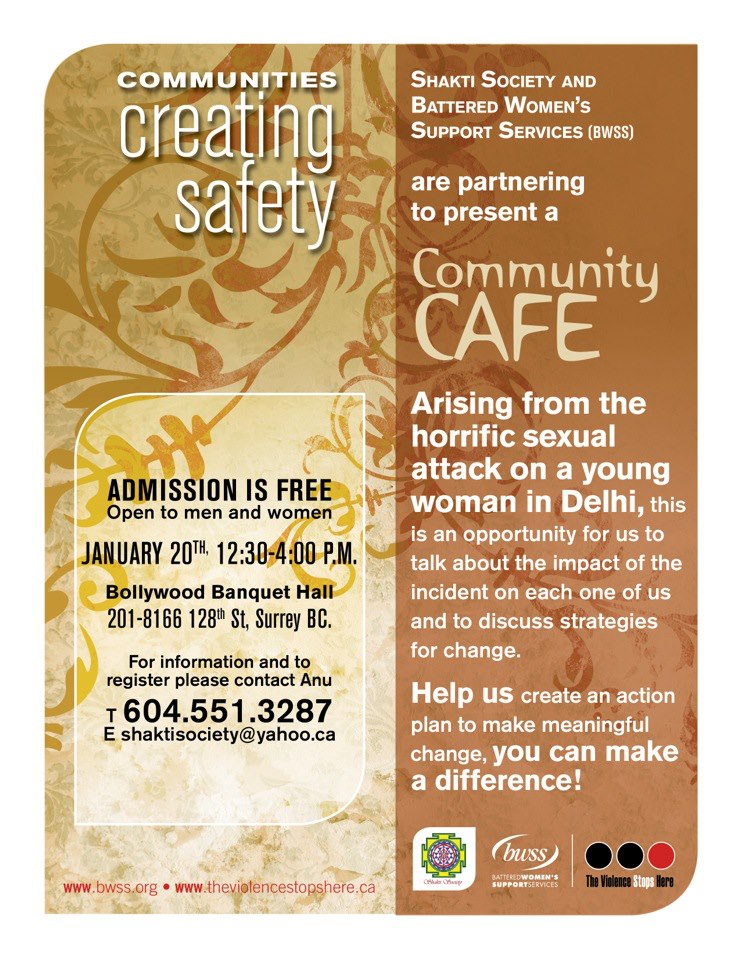
Community Cafe – Communities Creating Safety

Shakti Society and Battered Women Support Services have partnered to present a forum on Sexual Violence. We have been in an ongoing struggle to address gender violence which is an epidemic in Canada and all over the world. The recent atrocities in India have brought together more women and men with the goal to put an end to this gender violence. Through this event we will strengthen our conversations to involve the community at large to address the issue of sexual violence here in Canada. In this forum, we aim to strengthen an open dialogue to encourage the community to talk about the impact of gender violence on each one of us and discuss strategies for change.

Please join us to engage in a meaningful dialogue to explore how you want to create safer communities.

Agenda:

1 pm Opening

Brandy Kane, Manager of Aboriginal Women’s Program, Battered Women’s Support Services

1:10 pm. – 1:50 pm Panel presentations

Moderator: Sonia Andhi

Panellists:

Helen Griffiths, Provincial Nurse Coordinator, BC Women’s Sexual Assault Service

Caring for sexual assault survivors

Harpreet Singh, Journalist

Media literacy, the role of media in creating awareness and shaping social response

Dr.Nazia Niazi, Family physician

The medical and physical reality of sexual assault

Sgt. Richard Rabinovich, Vancouver Police Department Sex Crimes and Child Abuse Special Investigation Section

Justice System in Sex Crimes & Child Abuse Cases

1:50 pm – 2 pm Coffee break

2 pm – 3: 45 pm Small group discussions on dynamics of sexual violence

3:45 pm – 4 pm Wrap-up

The forum will be held at Bollywood Banquet Hall: #201 8166 128 Street Surrey BC on January 20, 2013 from 12:30 to 4:00 p.m.

Registration required. Call Anu at 604-551-3287.