Work and volunteer at BWSS

Apply to come work with us

We are a feminist ending violence organization with an entrepreneurial spirit known for our commitment to creating and implementing programs and services that empower women from all walks of life. We offer the opportunity to work within an accomplished team making a difference every day on the frontline and beyond. If you are looking to work in an organization engaged in making a real difference in the lives of children and women in our community, please apply to work with us!

The following positions are currently open:

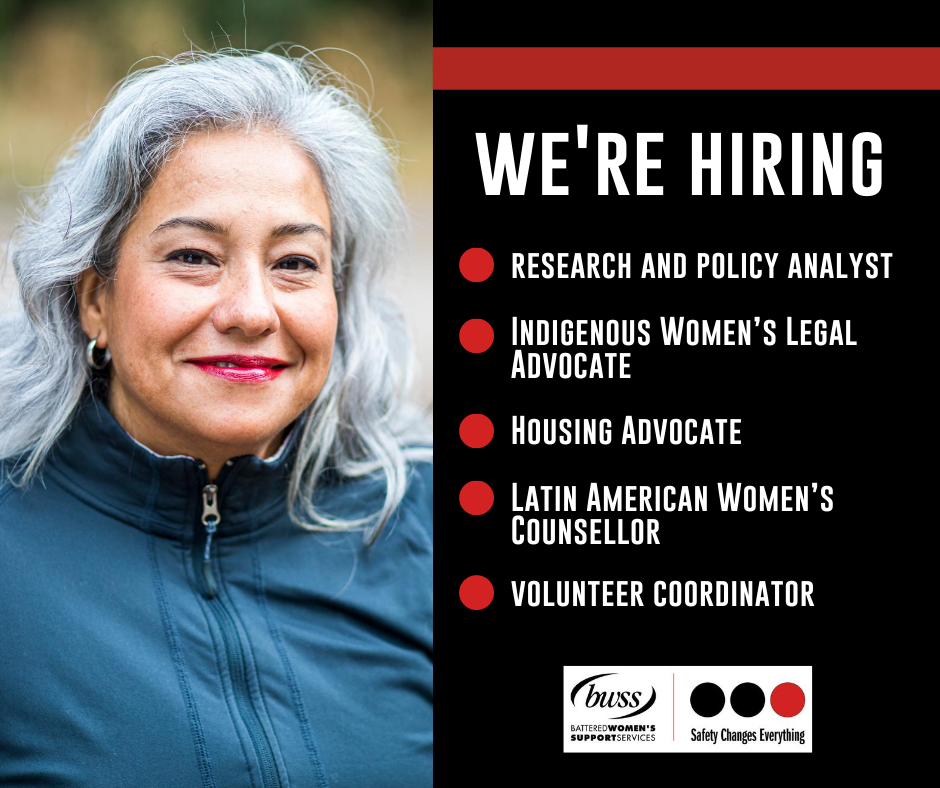
  • Research and Policy Analyst
  • Indigenous Women’s Legal Advocate
  • Housing Advocate
  • Latin American Women’s Counsellor
  • Volunteer Coordinator for My Sister’s Closet

Sign up for our Prevention and Intervention Volunteer Training

Our Prevention and Intervention Volunteer Training Program is offered to self-identified women who want to obtain the necessary skills to contribute to end gender-based violence, and will be offered again starting on September 18 to December 4, 2020.

We’re proud to say that our training is well-respected and well-known in the anti-violence community. Program training participants gain skills in crisis intervention, peer counselling, safety assessment, safety planning, advocacy, referrals, group facilitation, and public education.

With our crisis line and intake now extended to 24 hours a day and seven days per week, we are grateful for the commitment of our volunteers who help us respond to victims and survivors on the other side of the crisis line.

Consider these when helping your loved one suffering from domestic violence

For those that are experiencing domestic violence, reaching out to a loved one is extra challenging under COVID-19.

Now that we are in a different phase of the pandemic, it has been recorded that more than a million Canadian women lost their jobs in the first two months of the pandemic, and are facing additional stressors related to finances, and health. Some are torn about the next steps for their children’s futures.

Our crisis line continues to take calls from people who are concerned about their loved ones experiencing domestic violence. Although there are so many factors that are even more frustrating at this time, your friend or family member may still be unable to contact you because of their abusive partner. Your support, involvement and presence continue to be vital.

Please consider the above thoughts when talking to your loved one who is suffering from abuse.

You can also call our crisis line and we can help you determine how you can support your loved one.
📞 Call 604-687-1867 or 1-855-687-1868
📱
✉️ Email intake@bwss.org

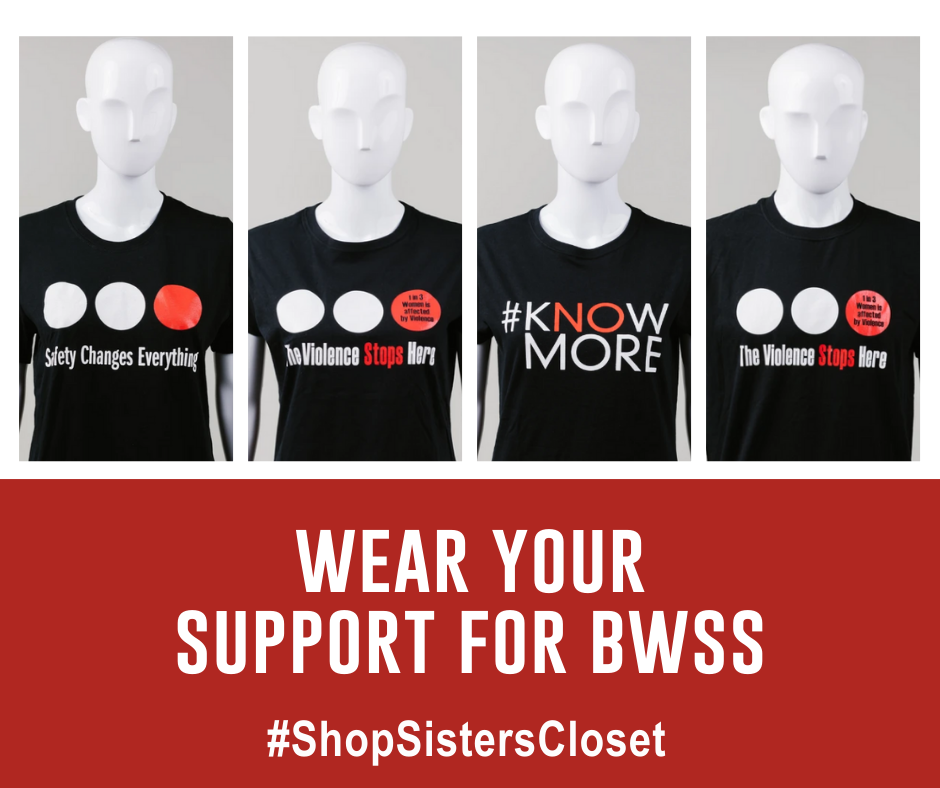
Wear your support for BWSS

We’re selling shirts with 100% of proceeds going towards our mandate to end gender-based violence.

If you’re interested in other fashionable wear, check out our social enterprise My Sister’s Closet – social enterprise of Battered Women’s Support Services. We have an online shop and our store at The Drive (1830 Commercial Drive – Wednesday to Sunday from 11 am to 6 pm) is now open!

Thank you very much for your support.

Canadian courts test the “rough sex” defence

Canadian courts test the “rough sex” defence

As seen in The Economist, August 1, 2020

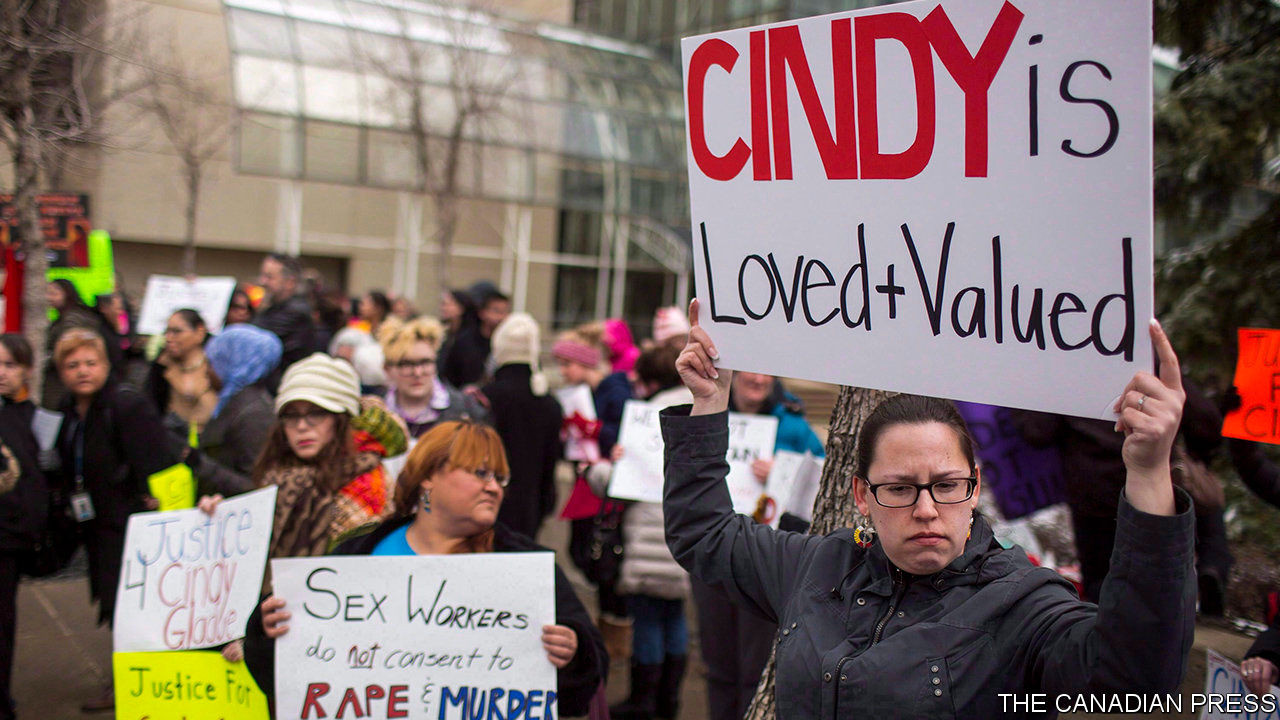
In a trial in Canada later this year, one of the questions is whether Cindy Gladue liked rough sex. Specifically, if she liked it rough enough to consent to digital penetration that tore an 11cm wound in her vaginal wall. Ms Gladue bled to death, so she cannot testify. Bradley Barton, charged with her manslaughter, says her death was a tragic accident. Mr Barton’s case, a retrial, will be heard in November. The verdict in another case is expected on July 31st. David Miller is accused of first-degree murder of his girlfriend, Debra Novacluse, in 2016. He told police that her death was a result of rough sex gone too far.

The cases come as a group of academics have called for a restriction on the use of the “rough sex” defence in homicide cases.

Elizabeth Sheehy, Isabel Grant and Lise Gotell, who specialise in gender studies and the law surrounding violence against women, argue that the law shouldn’t recognise the consent of the victim as a defence for causing bodily harm or death. “Rough sex rebounds on women,” they say.

It is not just in Canada that the so-called “50 Shades of Grey” defence appears. Men in America, Britain, Germany, Italy and Russia have claimed that their partner’s death was a tragic, kinky accident. We Can’t Consent To This, a British campaign group, has counted 27 cases since 2010. The group recently celebrated the addition to a proposed domestic-abuse law of a clause barring the use of consent as a defence for bodily harm (although this principle was already established in common law).

It is unclear how often the defence is used in Canada. In March, Kalen Schlatter used it as part of his (unsuccessful) defence against the charge of murdering Tess Richey. Ms Sheehy, Ms Grant and Ms Gotell say it has become more common since 2015.

Angela Marie MacDougall, the director of Battered Women’s Support Services in Vancouver, says that since 2010 her organisation has heard more complaints from women that their partners have been violent during sex.

Canadian law says that a person cannot consent to bodily harm in the context of a fist fight. But punch-ups are not usually engaged in for pleasure. “The difficulty is that our Supreme Court [did not say whether] this same rule would apply in the context of sexual contact,” say Ms Grant and her colleagues. Some think harm during sex should be illegal regardless of consent.

But despite, or because of the risks, some people do like rough sex. bdsm, or bondage, domination, sadism and masochism, can feature acts that some people would find extreme. Some of these acts, such as asphyxiation, are dangerous. “It’s very debated in the community if it can ever be safe,” says Andrea Zanin, a Canadian writer who focuses on bdsm. Ms Zanin rejects any proposals to criminalise kinky sexual behaviour, especially the notion that a person can’t consent to harm. However, consent should be explicit, and can never be assumed. “You can’t say that because someone is involved in kink, [assaulting her] is okay,” she adds.

Still, when people engage in risky acts, accidents happen. Just ask any athlete. A person can be strangled into unconsciousness in 15 seconds. No one really knows how long death takes after that. Estimates range from 30 seconds to several minutes. There are no controlled experiments, for obvious reasons.

When evidence is heard in court, the verdict largely depends on whom juries believe. What jurors believe depends on what they find plausible. In recent years public awareness and acceptance of diverse sexual practices has increased. But male violence against women has not gone away.

The worry is that a murderer could deliberately make the crime look like “rough sex” gone wrong. Even if false, his story could be consistent with the physical evidence. A murder charge requires proving that someone intended to kill or seriously harm the victim. So much of the evidence hinges on accounts of intention and consent. “He said, she said” cases are notoriously tricky. In a concerning number of trials, it’s a case of he said, she’s dead.

If you or someone you know needs support, please contact our Crisis & Intake Line:

Toll Free: 1.855.687.1868
Text: 604.652.1867
Email: intake@bwss.org

We’re here to serve you online and in person

Here for you in person too

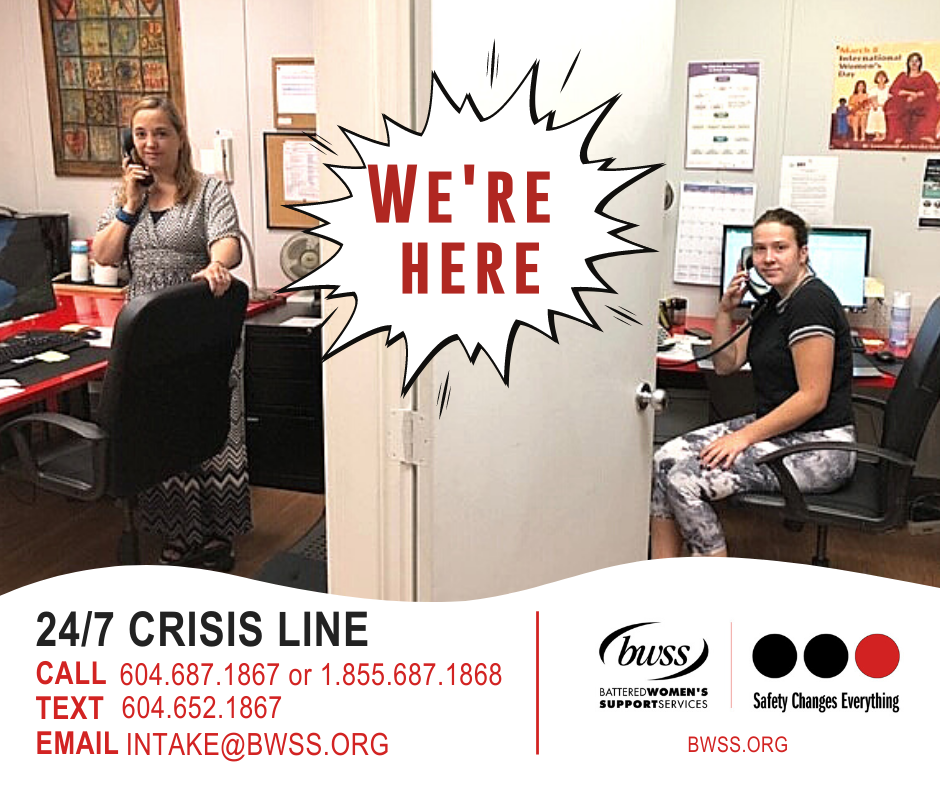
Our direct service team has been working very hard since social isolation was mandated in March.  Our office has remained open for drop-ins and staff have been onsite. As we enter the next phase of the pandemic here in BC, we are offering more services at our confidential location in Vancouver.

Crisis Line and Intake Coordinator Elza and volunteer Breanne, along with the rest of the staff are practicing physical distancing in the office as we continue to offer in-person services as well as virtual sessions. Although our office hours are still reduced, we acknowledge the importance of having face-to-face sessions for many of the women we serve, and have continuously found ways to stay connected.

Volunteers back in action

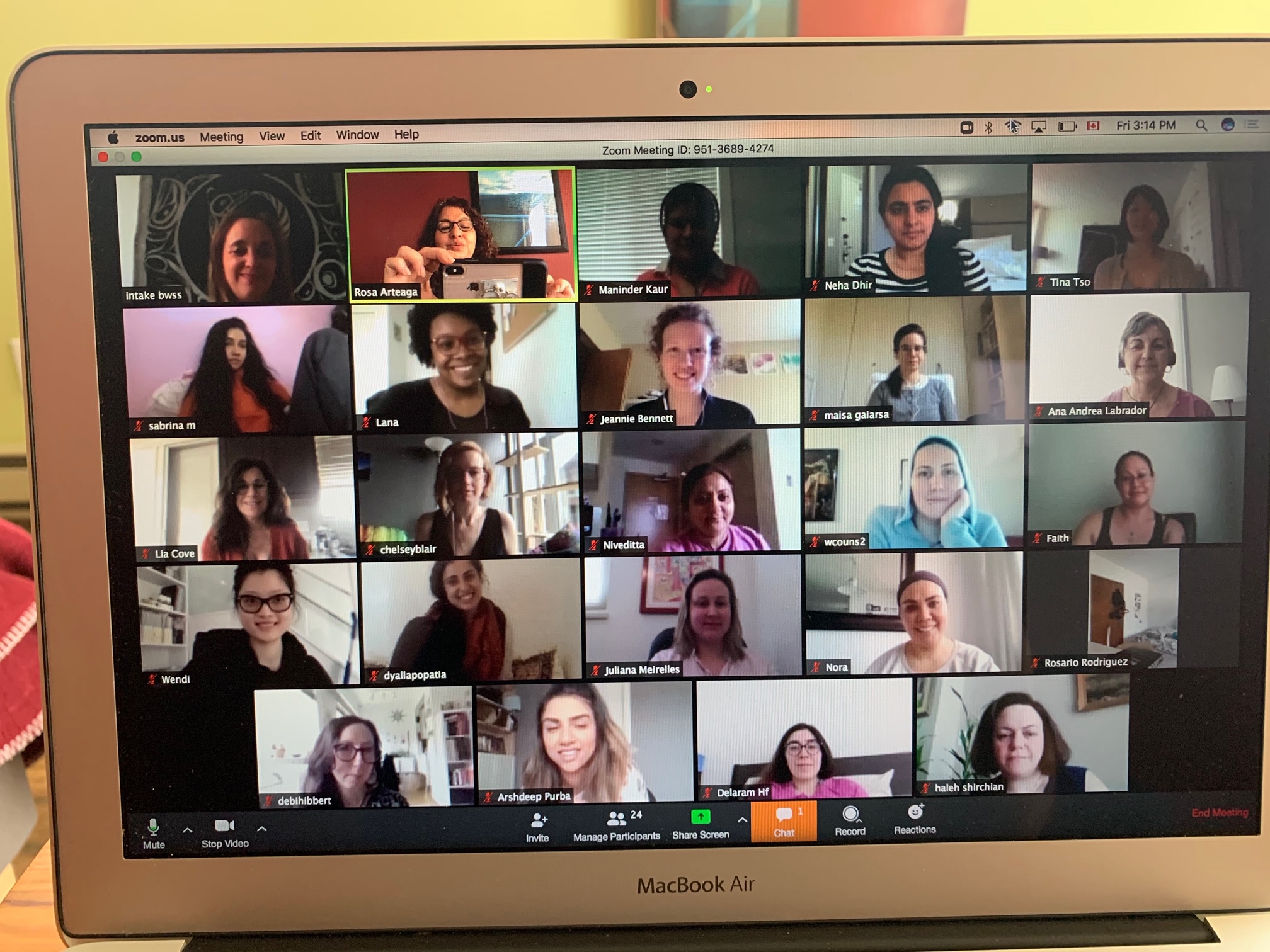
Congratulations to BWSS Prevention and Intervention trainees who graduated from a unique spring 2020 training series.  BWSS has offered this training for 40 years and this year, under COVID-19, the entire session happened virtually in addition to our support group with the entire session happened virtually in addition to our Healing from Trauma support group with Ileah and Daniela; Wildflower Women of Turtle Island Drum Group and art workshops by Summer-Rain and Michelle; and the Advancing Women’s Awareness Regarding Employment Program (AWARE) workshops by Stephanie and Claudia. Big thanks to our wonderful team members including Manager of Direct Services and Programs, Rosa Elena Arteaga, and Crisis and Intake Coordinator Elza Horta who did a fabulous job moving the training to the virtual world. 

Our trainees have now become committed volunteers, taking calls through our 24-hour-and-7-day-a-week crisis line. Great work, everyone!

Our training is world-renowned, and if you would like to join the September 2020 session to take action on gender based violence through our crisis and intake line, we would be thrilled to have you join us.

We offer Anti-Racism, Anti-Oppression and Ending Gender Violence workshop

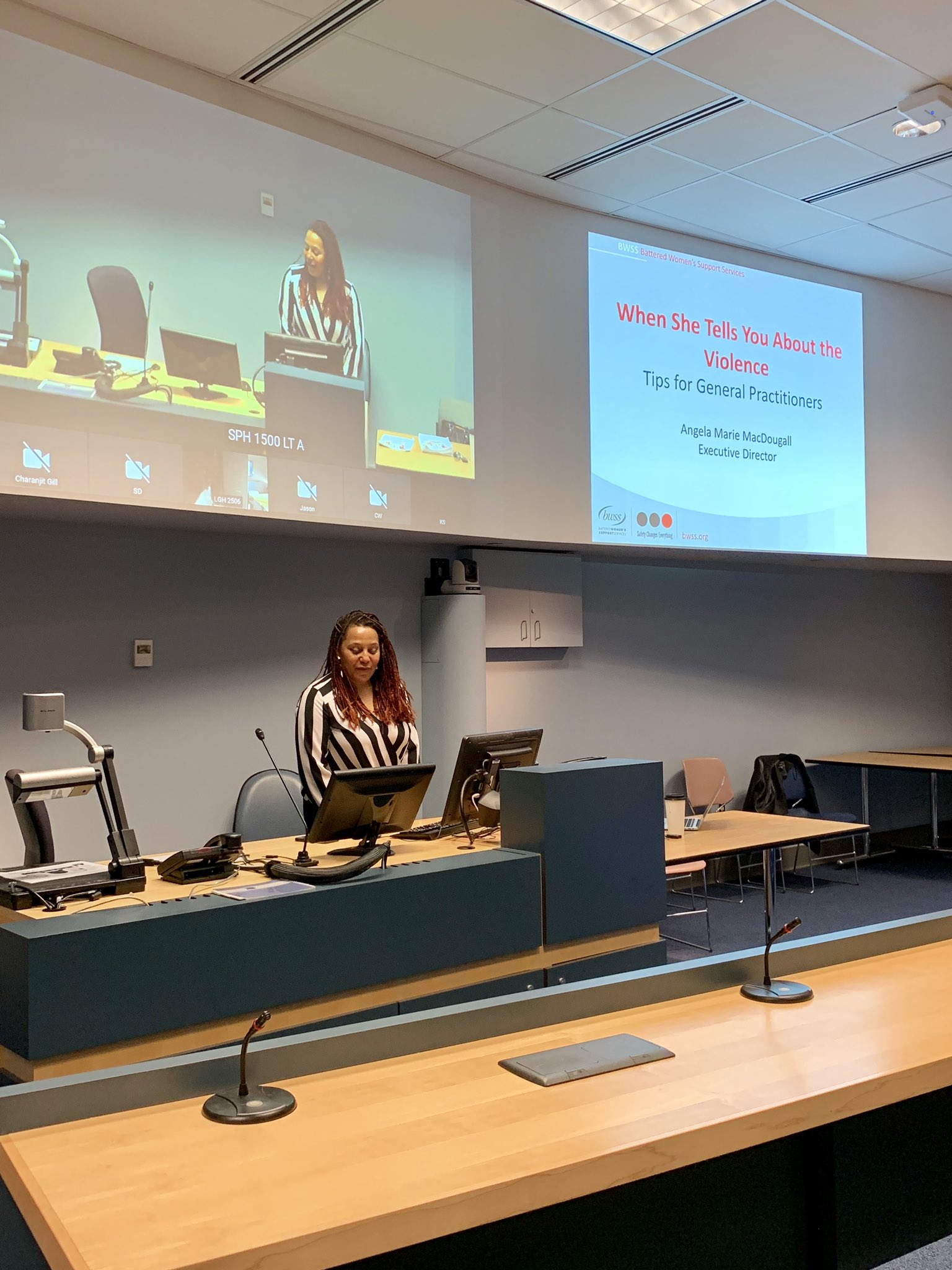
With the continued movements such as Black Lives Matter and Land Back, which demand to eradicate racial injustices and inequities globally, BWSS is proud to be a part of these movements by providing anti-racism training for thirty years. We have now also designed a workshop especially for anti-violence organizations. Angela Marie MacDougall, our Executive Director, is conducting an Anti-Racism, Anti-Oppression and Ending Gender Violence workshop for the great people at Sara for Women, a feminist non-profit society providing safe refuge and community-based resources for women in Mission and Abbotsford.

The Anti-Racism, Anti-Oppression and Ending Gender Violence workshop intends to deepen the application of an anti-racism and anti-oppression framework in the frontline work of women’s and anti-violence organizations.

Working Towards an Intersectional Feminists Recovery

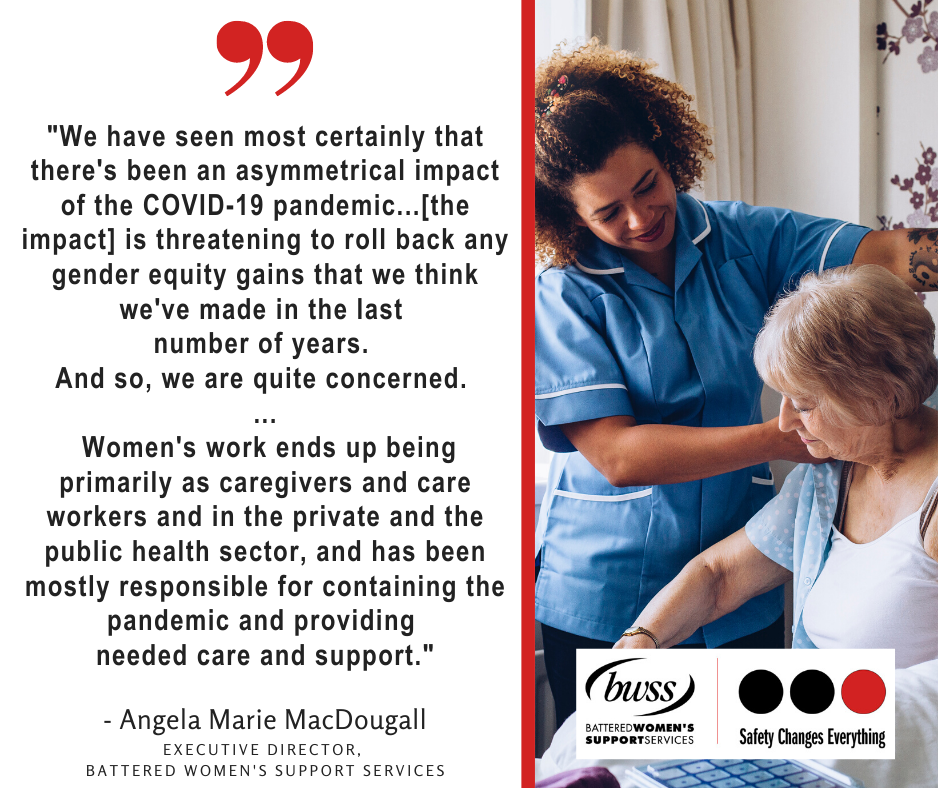
According to a report by RBC, Canadian women’s participation in the labour force is down to its lowest level in three decades, while also having to shoulder more child care responsibilities than men. The federal and provincial governments are now talking about what “recovery” could mean and unfortunately we are seeing minimal recognition and action on the impact for women.  As a founding member of Feminists Deliver, we are taking action on “just recovery” through a report, This Economic Labour Hurts the Arch of Our Backs: A Feminist Economic Recovery Plan for COVID-19.

Find our more by listening to our Executive Director Angela Marie MacDougall’s interview alongside Feminists Deliver’s Priscilla Omulo with CBC’s Stephen Quinn.

We’re now a part of BC Society of Transition Houses

We’re excited to be members of the BC Society of Transition Houses, which supports anti-violence workers in their work to provide the most compassionate and effective help possible for women, children and youth experiencing violence. Together, we can be a strong voice for those we support and advocate for the changes needed to end violence against women, children and youth.

Domestic homicide is Predictable and Preventable

The tragic, and entirely preventable, deaths of Chloe and Aubrey Berry are a grim reminder that when we are concerned about violence against women we should also worry about violence against the children. On paper, the legal system is designed to safeguard women and children’s right to a life free from violence. However, the Oak Bay tragedy confirms that this right is only extended in theory, and not in practise.

Rather than providing reprieve to women and children fleeing violence, the family law system revictimizes them, by obliging them to repeatedly disclose their most traumatic memories in court proceedings; allowing abusive men to cross examine them; and permitting abusive fathers unfettered access to their children. At BWSS, we provide emotional and advocacy support to numerous women who express hopelessness, frustration, and anger with the court system. Many are caught between the proverbial rock and hard place when they are faced with parenting time orders that allow their abusive fathers to spend time with their children, children who have often been victims themselves and have witnessed the violence perpetrated on their mothers. Women face the impossible choice of either following the court order and placing their children in jeopardy or being held in breach of the court order.

In October, BWSS wrote an open letter to B.C. Minster of Justice, David Eby on the Provincial Court Family Rules Project which includes the “Consensual Dispute Resolution”(“CDR”). It is BWSS longstanding direct experience as well as extensive research in the field that has repeatedly demonstrated alternative dispute resolution processes, including mediation, are neither safe nor appropriate for women, particularly when there is a history of relationship violence. Children who have witnessed their mother’s abuse are also being abused and they experience the impact. With alternative dispute resolution processes, unfortunately, FJCs, judges and others in the legal systems are continuing to place an overriding importance on children’s contact with their father, even if that father is abusive.

Preventing such a tragedy from happening again requires significant changes to the system, including extensive training for judges and police officers, free access to legal representation for women fleeing violence: the majority of people who require legal aid for family law services are women and many women who are fleeing violent partner. This means that women have been directly affected to the progressive cuts to Legal Aid since 2002. Additional social resources for women and children to help ensure their safety. Women and children cannot access justice if their voices are heard but not believed.

Western University’s Centre for Research and Education on Violence Against Women and Children found that Eighty per cent of domestic homicides are preceded by at least seven risk factors that were known to someone close to them. The risk factors include prior violence against women, stalking, separation, prior threats and a perpetrator’s substance abuse. These deaths are preventable.

Battered Women’s Support Services is holding Women Seeking Safety: BWSS Forum on Violence against Women and their Children and the Law on Friday, January 26 2018 looking at systemic change, lethality/assessments and recommendations. Details to follow.

Links

B.C. girls’ deaths prompt debate about how judges handle domestic-violence cases

Girls’ deaths in B.C. see questions raised about judges and domestic violence

Angela Marie MacDougall, BWSS ED interview on Roundhouse Radio

Let’s Be Clear Pick-Up Artists = Men Who Contribute to Rape Culture

Nicole* was shopping on Robson street when a man approached her. After a few minutes of harmless conversation, Nicole tried to turn back to what she was doing, but the man insisted and continued to harass her.

“I made it very obvious to him that I didn’t want to talk,” Nicole says. “I backed away from him, I pulled my phone out, I gave him one word answers. And he just kept going on and on. It got to the point where I had to end the conversation.”

Nicole’s experience is far from unique. According to news report of Vancity Buzz, the man who harassed Nicole was part of a “social club”, probably participating in a pick up artists (PUA) bootcamp where they learn how to “pick up” women and share seduction tips with each other. Then they take to the streets to practice the techniques they learned. As our ED Angela Marie MacDougall said in an interview yesterday at CTV News, PUA techniques focus heavily on a steadily escalating process of coercion and many come with an assumption that a man has a right to have sex with any woman he wants.

The male sexual entitlement makes them believe that women owe them sexual favours in exchange for their attention, aggressiveness, or just existing. If he doesn’t succeed in landing a given “catch”, he’s less of a man which puts tremendous pressure on him to seal the deal at all costs. No surprise “no means no” doesn’t appear in neither PUA’s curriculum or dictionary. It teaches men that women are objects to be won, and that when a woman says no, it doesn’t actually mean no.

So many of these tips and indeed much of the terminology are misogynist and directly encourage rape and boundary-crossing behaviour. They are encouraging men to use tremendous pressure to get women to sleep with them. And what if they are denied sex? Overcome “last minute resistance”, for example one of the PUA techniques, with a series of coldly calculated steps intended to get a woman to cave in and have sex. These steps notably don’t include an active solicitation of consent.

When a culture judges its men on what age they first had sex, how many women they have sex with, and the hotness level of their conquests, inevitably some of these men would adopt the attitude that sex without consent is okay. Respecting women would become only a hindrance that has to be overcome no matter what. The structure of such techniques creates the idea that forcing women to have sex is normal, and that pressuring sexual partners is acceptable. As these techniques spread out beyond the PUA community, they become internalized by the rest of society. In the process, they can become increasingly distorted.

It is clear that PUA is a huge contributor to rape culture in our society. These men are participating in a smarmy, objectifying, highly sexist culture that treats women like prizes to be won rather than human beings. Even naming predators’ action of harassment as “pick up artists”, not respecting women’s personal space and their choices, having sex without consent as an “art”, all normalize the unacceptable. And thanks to the normalization of coerced sex, their victims may have difficulty discussing what happened to them, let alone reporting it to authorities who might be able to take action.

PUA Poster

Download the poster here.

If you could do something to end violence against girls and women, wouldn’t you?

images

International Day to End Violence Against Women in Canada

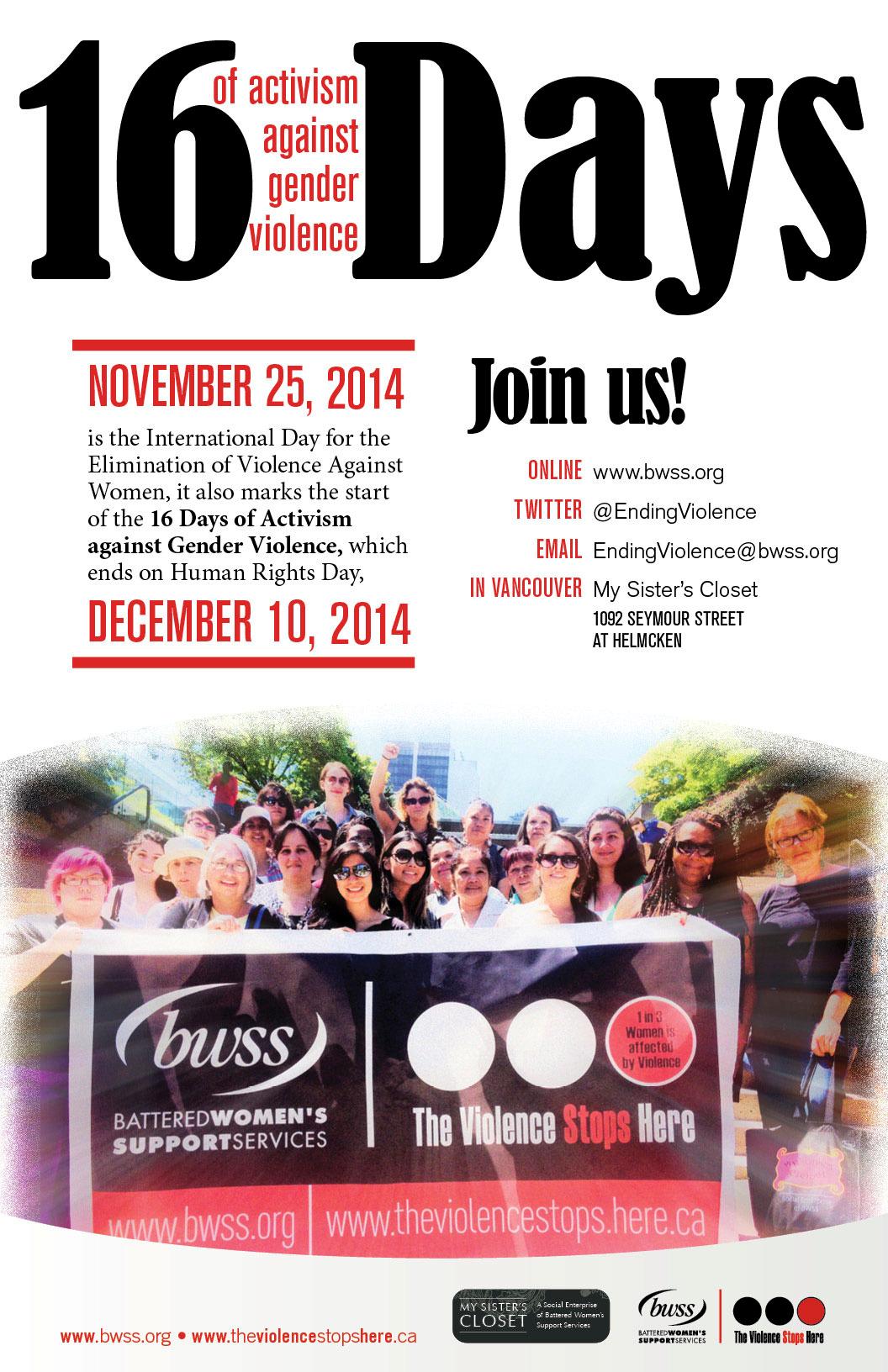
16 Days of Activism Against Gender Violence Women from November 25, 2014 , continues through December 6th to on December 10th. Our ED Angela Marie MacDougall joined Sonia Sunger on Global TV to talk about the International Day to End Violence Against Women.
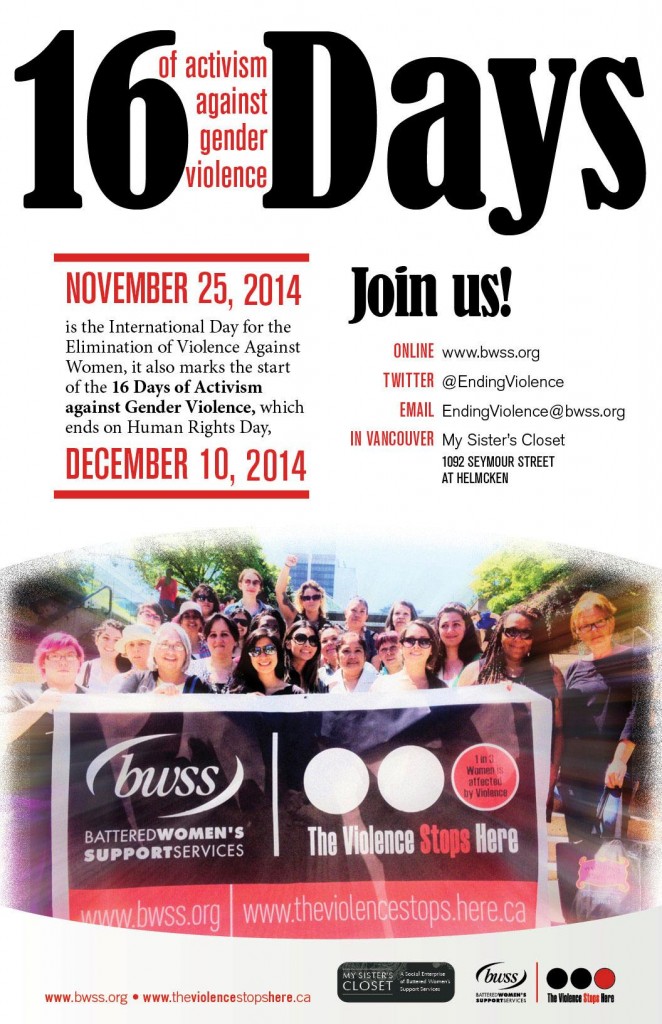
16days

Download and listen the postcast here. The following is a rush transcription of the interview:

Sonia Sunger: We are going to be turning to other news now. We have a guest here to talk about the International Day to end Violence against Women, Angela Marie MacDougall. You’ve actually just been listening to this press conference that has been going on, and obviously we talked to you about, today obviously is a very big day for the elimination of violence against women. First, I want to get your thoughts on that press conference that just happened. I know you know it’s an emotional day obviously for a lot of people and you have been taken aback by some of the comments that were made

Angela Marie MacDougall: Yes, thank you for the opportunity to join you this morning. I think, I found the press conference riveting and pointed. You know, I think that the lawyers and certainly reverend Al Sharpton did an extraordinary job through their comments to speak to the ways in which these proceedings that happened in Ferguson did not follow proper procedure. They asked very important questions about how these proceedings was undertaken and indicted the proceedings in terms of how it was done. And I think anyone who has been watching this and paying attention to the United States and the ways in which African American people in the United States historically from the very beginning of the creation of the US as a country in terms of stealing Africans from Africa in order to do slave labour until the present day. We have seen these kinds of things go on for generations, and so this is an example of what has happened historically and it’s happening again. And I think the that was very pointed for me was hearing Al Sharpton say that “Our hearts are broken, but our backs are not broken” and I think that’s the message I am taking away is that this work continues to address systemic racism and discrimination. And we have to understand that African American boys and men and girls and women are murdered every 28 hours by a police or a police type individual. This is astonishing and we have to in order to really understand the level of threat that people are facing.

SS: Are you surprised? I guess you are not obviously surprised by the reaction that we have seen in the US I mean that this has sparked a whole new civil rights movement and Al Sharpton is saying they are going to hold an emergency meeting in Washington coming next week, saying they are going to form a plan for ongoing demonstration and saying this is far form over and it’s really just the beginning.

AMM: If there is anything to take from this it is that people have become galvanized behind from the death of Michael Brown. And since Michael Brown there have been several young men and women that have been murdered, shot unarmed by law enforcement officers in the US since then several. And so, people are fed up. And this is understandable and people are really mobilizing around these and things have to change. One of the problems we bump up against is whether the system is actually broken or if it is working exactly as its intended, and it’s a tricky question that has yet to be answered truly.

SS: Exactly and that’s the question that they were raising today and that’s about the process itself was this process they used, the problem itself, and you heard the reverend and the lawyer saying that in this case, it was prosecutor only, and there was no cross examination, there was no ability to take a second look at the evidence that was presented, so I mean I think that’s where the anger and resentment is coming from. Was this process completely fair?

AMM: That’s it. Those are the questions and they are good questions for those of us who went there and weren’t able to be a part of that proceeding to see how it went down. These are important critical questions that have to be asked. And you know the question is really is how will that system be held accountable. I  know that they want to  push for legislation that has a law enforcement wearing body cameras and hope that would bring some transparency because and not being able to trust the proceedings that are in place. I think also and have the government step in. What historically has happened within the United States where local communities have a long history of systemic racism and police violence that people can’t trust, that local communities can address these very serious issues, and so seeking outside people such as the federal government to participate. And that’s a really good question about why the federal government was not involved in this?  I think that the issue is accountability at the end of the day here and transparency, and what’s been raised here is very serious as there has not been a level accountability, or transparency.

SS: And I think that will be the next step to see how the federal government in the US handles this whether they do step in and the next steps there. I wanna talk to you also about today being the day of the International Day to End Violence against Women and this day falls with, you know, two recent cases of violence in Surrey’s South Asian community in the past few months including one this weekend where a woman in her 60s was found dead and her husband is being charged with second degree murder.

AMM: Well Sonia…Violence against women is one of the most pressing social issues of our time. Woman are being murdered every day by their male partners all across the lands. And you know, we’ve seen horrific murders of women in Surrey. We continue to seek the amount of public awareness, but we really need a behavior change at this point, we need to see real change that’s going to address levels of unsafety, violence, and oppression in women are experience in their homes. In their homes understand that this is happening in women homes where it’s supposed to be safe.

SS: I understand that the BWSS is celebrating an important milestone. I don’t know if you want to say celebrating, but marking looking at the past 35 years of progress that the organization has made. So when you think of that, 35 years of history how far have you come?

AMM: Well so, murders of women have not stopped. So we need to start right there. When Battered Women’s Support Services was created in 1979, we had a situation where we could not talk about violence against women it was simply deemed to not exist. If we think about 1882 when Margaret Mitchell who was an MP for Vancouver East spoke at the House of Commons and she spoke about the prevalence of which she called then wife battering and the male MPS in the House of Commons laughed at her. So that was the context of when BWSS started and our very name Battered Women’s Support Services and that name was selected to make visible that which was rendered invisible. And so, when we fast forward to present day we have a situation now to where things have shifted, we have way more public awareness media reports are much better in terms of accuracy and there is a significant backlash whenever victims are blamed. We really appreciate the role of social medial and how communities and communities of women and others are mobilizing around social media in order to bring a level of awareness and to push back around victim blaming. So those are some things that have happened. One of the things I think is really important to note is that no more than ever woman are leaving abusive relationships. More than my mothers time, more than my grandmothers time. And this is really important torn recognize that woman are leaving and seeing that there are options other than living with violence.

SS: Yeah, and the other part of this is also sexual violence and allegations of that you know just in the past few weeks we’ve seen the allegations against Jian Ghomeshi, and cases like that making a lot of people think about that sort of violence against women and a lot of people coming out and more people are willing to speak about it. Do you think that is elevating the conversation?

AMM: Yes most definitely, it is positioning women’s voice at the center of this conversation, women had have experience sexual violence at the center. And that’s where we need to be, really hearing women, hearing women share their stores of sexual violence, talking about ways in which the power dynamics played out that contributed, talk about the way in which power dynamic contributed to the silencing and to the disbelief when women went public, weather that was from co-workers or law enforcement, friend and family this is extraordinarily important because it is the victim blaming and the silencing, and the undermining of women’s voices over the years that has allowed those who would do sexual violence and domestic violence against women to continue and that’s shifting and this is a critical important part of this shift within our culture.

SS: Alright well let’s hope this shift and conversation continues. Angela Marie MacDougall from Battered Women’s Support Services joining us today.

AAM: Thank you, Sonia.


If you could do something to end violence against girls and women, wouldn’t you?

images