23rd Annual February 14th Women’s Memorial March needs your help…

23rd Annual February 14th Women’s Memorial March needs your help…

Their Spirits Live Within Us

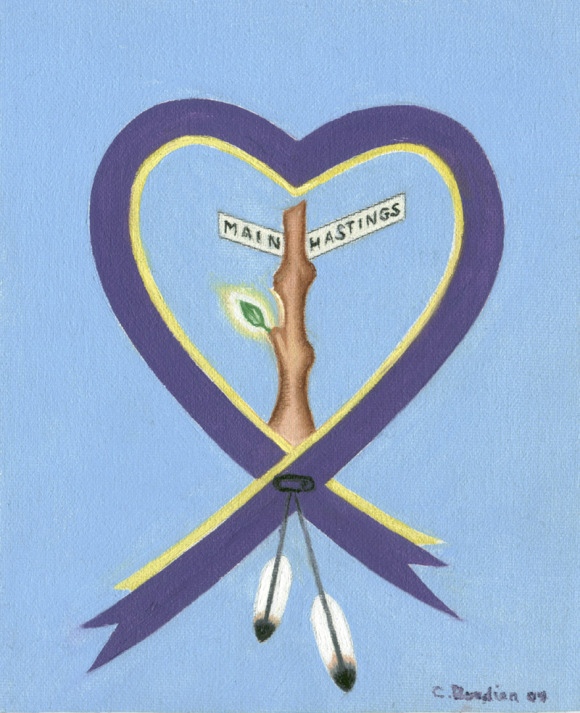
The February 14th Women’s Memorial March began after the brutal and tragic murder of a Coast Salish woman in Vancouver’s downtown eastside (dtes). Women from the community were so outraged by the manner in which she was murdered and fed up with the continued violence against women in the community. The women organized a march through the downtown eastside to raise awareness around violence against women.

The February 14th Women’s Memorial March is sponsored by organizations and individuals like you. The march is held to honour and grieve the loss of the lives of women who die each year due to violence and to remember the more than 32 women who are still listed as missing. Each year the Memorial March committee must raise funds to pay for such things as hall rental, sound system, food, red & yellow roses, memorial brochures, posters, candles, tobacco and other expenses. If you would like to sponsor one component of this years march please call Mabel Nipshank at 604 681 8480 ext 222, or Alice Kendell, 604 681 8480 ext 223.

Please join us at the march, please respect the march and leave your agency banners at home as the Women’s Memorial March carries five banners to honour the women.

We thank you in advance for your support and look forward to you joining us at the 23rd Annual February 14th Women’s Memorial March. It will be held on Friday February 14th, 2014 starting at NOON at the corner of Main & Hastings in Vancouver.

Please make cheques payable to the
Downtown Eastside Women’s Centre, memo: Memorial March,
302 Columbia St. Vancouver, BC V6A 4J1

All donations over $10.00 will be gratefully acknowledged with a tax deductible receipt.

For more information please contact
email address:

Thank you very much for your attention, time and support.

Marlene George Mabel Nipshank
Co-Chair Co-Chair

On behalf of the organizing committee of the 2013 February 14th Women’s Memorial March

http://womensmemorialmarch.wordpress.com/2013/11/15/23rd-annual-march/

20140110-171509.jpg

Our Beginning Collaboration with SFU Men’s Hockey Team

Violence against women is an issue which impacts entire communities.

The solution to bring an end to it will require participation from all community members.

Collaborations among individuals, groups, communities, agencies, organizations is essential.

BWSS has and continues to welcome opportunities to collaborate and build new relationships to strengthen awareness and response to violence against women.

One of our recent community collaborations is with SFU Men’s Hockey Team.

We came together to begin the conversation how they as an university athletic team can support and join our efforts.

This video is just a beginning to what we hope will lead to future collaboration which extends and shares the awareness, response, and action these young athletes can do in their own lives, athletic life, university life, and beyond.

Each of us has the power to create change and when we come together and funnel that power it is all the more stronger.

Check out our beginning collaboration with SFU Men’s Hockey Team.


Last year, Battered Women’s Support Services responded to over 10,000 crisis calls from women and girls to get help and end violence. We could not provide this essential support without your contribution.

images


Community Forum on Responding to Changes to Immigration Policy

On November 15, 2013, BWSS organized a community forum to discuss responses to changes in immigration policy and ways to improve service delivery in collaboration with the Migrant Mothers Project and YWCA Metro Vancouver. We came together with 55 people including educators, front-line workers, management and volunteers who work in the areas of immigration and refugee settlement, immigration law, child protection/children’s aid, health care services, adult education, anti-violence against women services and community development.

Following the forum Rosa Elena Arteaga wrote Community Forum on Responding to Changes to Immigration Policy: Supporting Non-Status, Refugee and Immigrant Women Survivors of Gender Violence blog to share our knowledge and analysis on the discussed topics. Today, we are pleased to share a summary of the Forum to respond your requests for hearing more about the discussion and to share our knowledge to improve service delivery in our community.

Please read the Forum Summary, prepared by the Migrant Mother Project. You may download the document here.

Discussion Themes

Many topics emerged at the Vancouver Forum which commenced with acknowledgement that we are on Unceded Indigenous land belonging to the Coast Salish peoples, including the territories of Musqueam, Squamish, and Tsleil-Waututh Nations. Throughout the forum, the connections between colonialism, global capitalism, and migration were integrated with analysis of the marginalization of women living with precarious immigration status in Canada. Here we expand upon some of the core themes that were raised at the Vancouver forum.

1. Linking Indigenous Sovereignty in Coast Salish Territories with Forced Migration

The Forum commenced with an opening ceremony led by Brandy Kane (Thunder Eagle Woman) who gave recognition to the traditional lands where the forum took place and led us in singing the Wonder Warrior song. Angela Marie MacDougall, Executive Director at BWSS added to the introduction and noted that the significance of the Women Warrior Song and the central role that Indigenous women are playing as leaders in anti-Violence Against Women work in Vancouver. It was evident that the women’s movement in Vancouver is committed to Indigenous sovereignty and recognizes the suffering of Mother Earth as inseparable to anti-violence work. This was further reinforced through linking the aboriginal plight of disputed lands in Canada, but also worldwide, to circumstances that lead to forced migration and oppression faced by immigrant women who are denied citizenship in Canada.
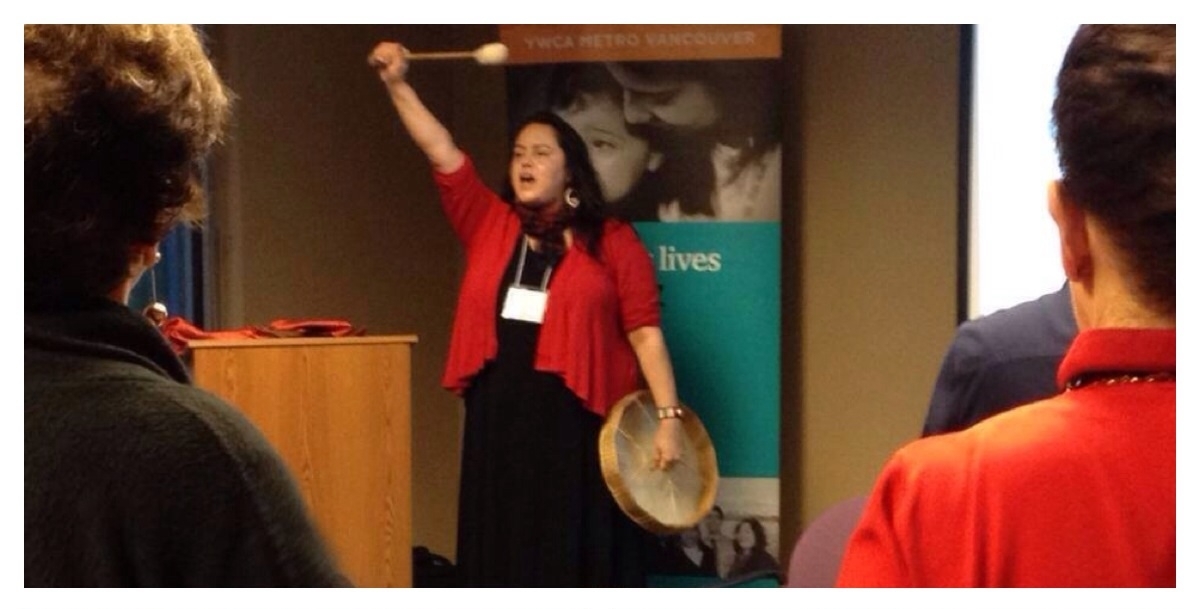
brandy kane2. Globalization and the Live-in-Caregiver Program

Linkages between global capitalism, the displacement of people worldwide, and gendered migration to Canada were especially pronounced in the Vancouver forum. It was noted that globalization and corporate culture have a transnational influence on government policies that result in environmental degradation, human displacement and cultural genocide. Live-in-caregivers were discussed as a group of women that represent a major source of income for the Philippines, but who must endure economic insecurity, forced cohabitation with their employers and family separation for several years. Through a series of case studies, forum presenters illustrated the layers of women face as live-in-caregivers and through their efforts to establish permanency in Canada and reunify with their families. The Vancouver forum attendees were congiscent of the tragedies unfolding in the aftermath of typhoon Hainan, which in part contributed to heightened awareness of the structural violence associated with migration and global inequalities.

3. Social Assistance for Mothers without Legal Status

In Vancouver, the Mothers without Legal Status Project, YWCA Metro Vancouver, began their research investigating the growing concerns for mothers without legal Canadian status and who have Canadian born children. Over five years of advocacy efforts, critical communication tactics and working with various ministries at the provincial level gave this group sufficient leverage to change certain policies in the Vancouver region including: 1) having children attend school without international student fees 2) allowing a mother to access British Colombia housing while waiting for permanent residency, and 3) providing social assistance to single parents without status who are fleeing abuse The importance of these changes were echoed by other forum attendees that noted the positive impact that these changes have had on women attempting to access services, especially within the shelter system. Moreover, the YWCA wishes to continue their advocacy efforts with other YWCA’s nationwide in order to make this a Federal campaign.

4. Developing Allies for Community Organizing and Policy Advocacy

The Vancouver Forum provided a space for attendees to discuss strategies around supporting women with precarious immigration status in Vancouver, but also to consider ways to develop networks with allies across the province and Canada-wide. The YWCA Metro Vancouver has been reaching out to YWCAs across Canada to explore the potential to expand their campaign for Mothers without Status to a federal level. There was a large desire to rally public awareness on this concern and doing so through sharing of women’s narratives, especially through social media and public awareness campaigns. In particular, the attendees noted the need to hold more events to raise consciousness on this topic in Vancouver.
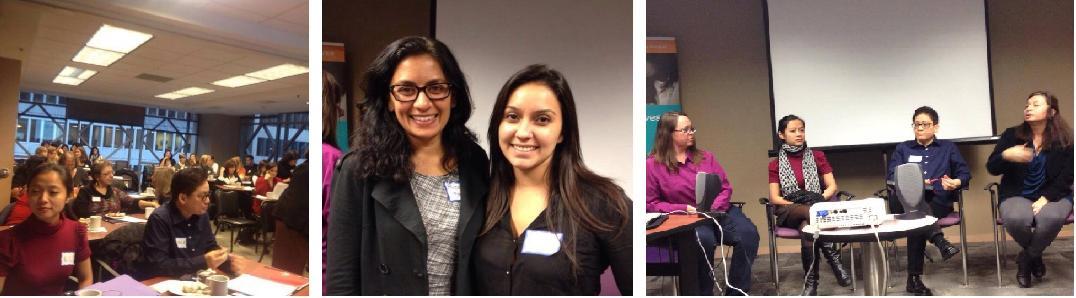
community forum

The Vancouver forum created a space to discuss precarious immigration status, within a larger context of colonialism, globalization and subsequently forced migration. It is these factors that continue to impact and create links between Mother Earth, Indigenous sovereignty, as well as women with precarious immigration status seeking safety in Canada. Women’s experiences and resilience were honoured and shared amongst the group, which gave us a glimpse into the lives of the women that are caught in the middle of such global forces.

Service providers in the Vancouver area have been generating strong networks and are committed and able to discuss the injustices that are faced by their clients with precarious immigration status. Forum attendees highlighted the potential for networks amongst service providers to influence policy change at the local and provincial level.. However, additional efforts to mobilize networks that are able to engage media and policy makers to influence ministries at the provincial level and subsequently the federal level are critically needed. There was a strong sentiment of continuing to connect with one another in order to push for fair and equal policies for women, as well as their families, with precarious immigration status.

Within the anti-violence movement in Vancouver, there is an understanding that violence is significantly felt by women with precarious immigration status and that there is a need to prevent this violence from occurring by challenging and shifting unjust practices. Although more work remains to be done, the forum in Vancouver was an inspiring example of how to service providers, immigrant women and Indigenous leaders can work together to support women whose full humanity remains unrecognized in Canada.

Please read the article written by Rosa Elena Arteaga here: Community Forum on Responding to Changes to Immigration Policy: Supporting Non-Status, Refugee and Immigrant Women Survivors of Gender Violence

On November 15th 2013, Battered Women’s Support Services hosted a Community Forum on Responding to Changes to Immigration Policy, in partnership with The Migrant Mothers Project and YWCA Metro Vancouver. Over 50 front-line workers, counsellors, settlement workers, and community activists came together to learn and share knowledge. We reinforced our commitment to continue our collaboration and to increase our networks so we can affect change and attend to the inequalities that migrant women face within Canada’s economic, social, legal and political systems. Inequalities that, more than often, deny basic rights to migrant women and their families. Read full article…
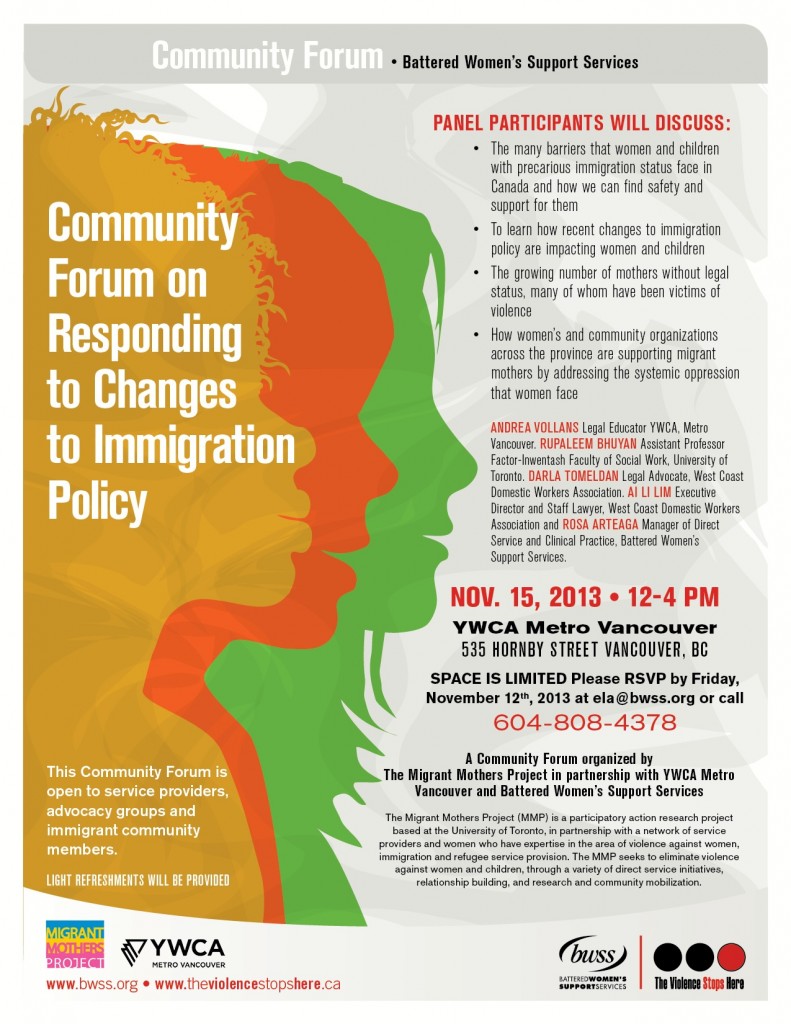
Immigration Policy Community ForumDownload the poster here.

Battered Women’s Support Services responded to over 10,000 crisis calls from women and girls to get help and end violence in 2012. We could not provide this essential support without your contribution.

images


This blog was updated on December 23, 2013.
Prevention of Violence against Women: Everyone has a role…

by Rona Amiri, BWSS YOUth Ending Violence Consultant

Although some people may think violence against women is a private issue, we know that everyday in Canada, more than 3,000 women – along with their 2,500 children – are living in emergency shelter to escape violence from their intimate partner relationships.

When we see these statistics it is evident that we all have a role in preventing violence against girls and women.  As individuals we can help end violence through social action including advocacy, activism, donating and raising funds for the cause and volunteering.

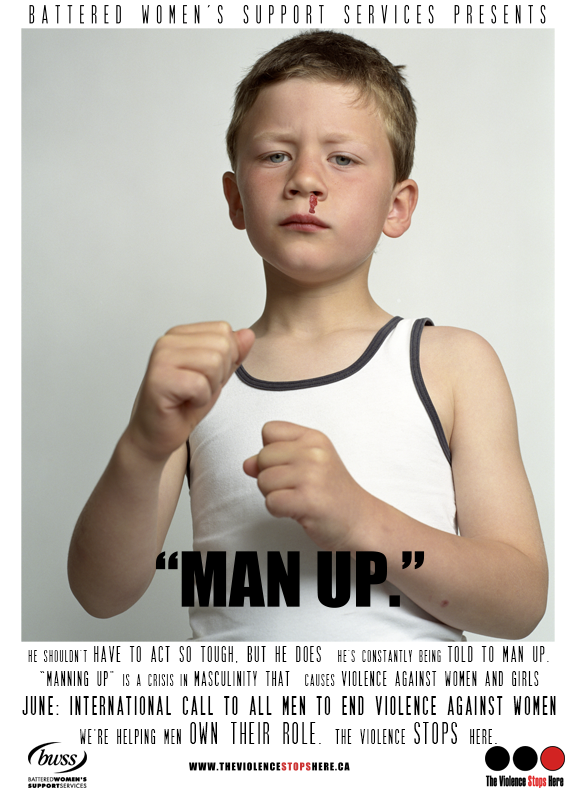
We know violence is preventable, and men need to be involved in the prevention process in order for the solutions to work. Battered Women’s Support Services has launched several campaigns targeted to men to own their role in ending violence. The role of men is to ending violence because it is primarily men who are the perpetrators of violence against girls and women. June of 2013 BWSS launched an international call to all men to end violence against women.  Through the campaign BWSS urged men to own their role and invite them to support ending violence work to help creating security, hope and better living situations for women.

June Man Up campaign

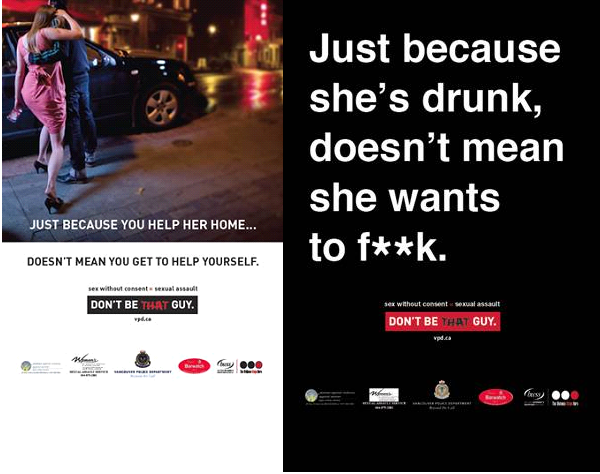
A key aspect in violence prevention is discrediting myths regarding sexual assault. Myths prevent survivors from getting the support they need and stop perpetrators from being held accountable for their actions. Campaigns telling men not to rape are helping the shift the culture in the society by focusing on perpetrators actions rather than focusing on what women can do to keep them safe. The Don’t be that Guy campaign in Vancouver, which BWSS and organizations we partnered with, sends the message that sex without consent, is sexual assault.  It emphasizes the role of men to take responsibility for their behaviour rather than other campaigns that target women to be ‘safe’ in order to avoid sexual violence.

don't be that guy

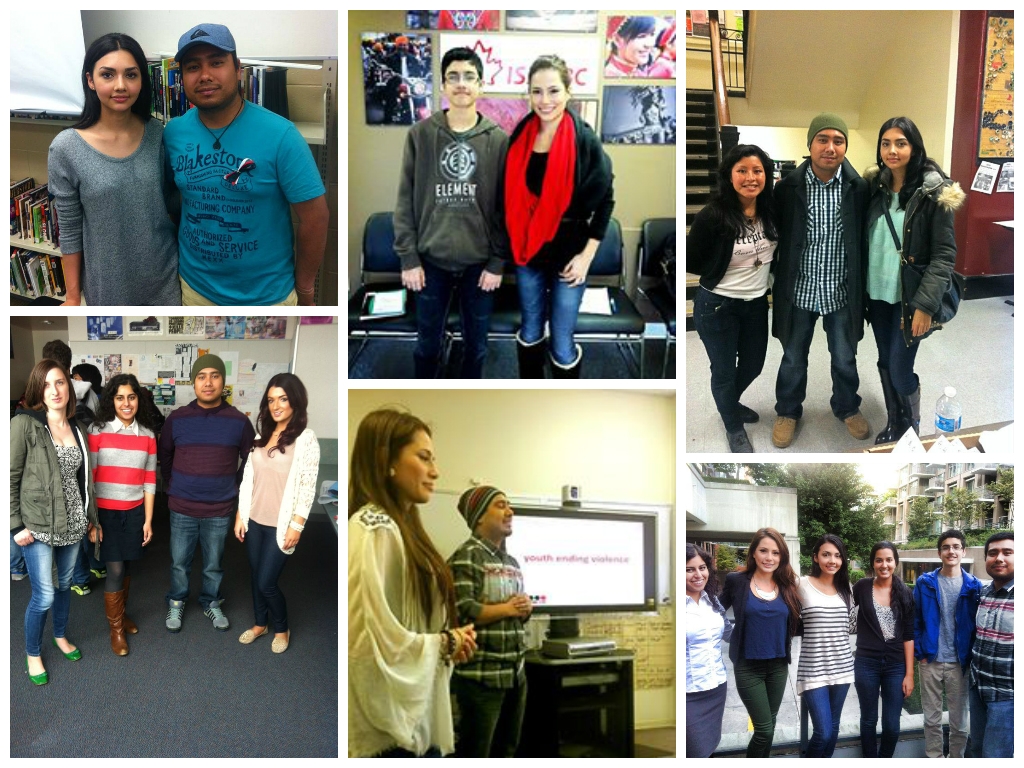
Violence prevention works. Research shows that high school violence prevention programs are highly effective. BWSS has delivered youth prevention programming since the late 1980’s. In 2011, we launched the pilot phase of our YOUth Ending Violence Prevention Program. The workshops challenge our socialization, i.e. looking at what it means to be feminine and masculine and how those ideas play a role in violence against young women in relationships. They included strategies on how to take a personal stance against violence and be an empowered bystander. Since the pilot project our female and male youth facilitators have presented to over 2,400 youth in high schools and community organizations throughout the Lower Mainland!
yev

Last year, Battered Women’s Support Services responded to over 10,000 crisis calls from women and girls to get help and end violence. We could not provide this essential support without your contribution.

images

Local Community Groups Form Consortium to Create Services and Support for Those Who Wish To Exit the Sex Industry

afds_logo Logo2SWAN Logo

HUSTLE-logo-white-with-stroke-CMYKHIM logo with websiteNewPACELogowish

Local Community Groups Form Consortium to Create Services and Support for Those Who Wish To Exit the Sex Industry

Vancouver, BC- In an effort to respond to the existing gaps and effectively meet the needs of  those who do sex work, six community organizations with a vast range of expertise in delivering services to individuals engaged in the sex industry have formed a Consortium to oversee the design, development and implementation of a transition and exiting program. Aboriginal Front Door, Battered Women’s Support Services, HUSTLE, PACE Society, SWAN Vancouver Society and the WISH Drop-In Centre Society each have a variety of expertise in working with different groups and individuals engaged in the sex industry, including self-identified female and male sex workers, survival/street sex workers Indigenous women, Migrant and Immigrant indoor workers, and victims of violence.

“The reasons for sex work entry are vast and varied. Economic necessity is often a primary reason why a significant percentage of people begin sex work.” said Matthew Taylor, Program Manager HUSTLE, Health Initiatives for Men “Other factors include poverty, homelessness, physical and mental health issues, addiction issues, the legacy of colonization, a history of childhood abuse, sexual exploitation, discrimination, lack of education and other barriers. A full range of issues contribute to keeping people in sex work when there are not accessible opportunities open to them.”

Since the closing of PEERS Vancouver in May 2012, there has been a significant gap in services to support the diverse needs of individuals engaged in sex work. Sex work exiting programming was one of the recommendations in Forsaken: The Report of the Missing Women Commission of Inquiry (MWCI).

“Clearly, government, community organizations and residents of Vancouver are acutely aware of this tremendous gap and the need for an effective response.” said Angela Marie MacDougall, Executive Director, Battered Women’s Support Services.

The Consortium has worked within the City of Vancouver’s Task Force on Sex Work and Sexual Exploitation which was formed in September 2011 with the mandate to prevent sexual exploitation and protecting vulnerable adults and neighbourhoods affected by sex work.

“This commitment outlasts the task force,” said Kate Gibson, Executive Director WISH Drop-in Centre Society “And it brings together organizations that already do make a difference in the lives of people and will continue to seek a solution to ensure there are options and opportunities for people to transition out of sex work.”

The Consortium will speak the need for services and supports for those who wish to exit the sex industry during The City of Vancouver’s Standing Committee on City Finance and Services on Wednesday, December 18, 2013.

-30-

For more information:

Kate Gibson

Executive Director, WISH Drop-in Centre

Phone:  604-669-9474

Angela Marie MacDougall

Executive Director, Battered Women’s Support Services

E-mail: director@bwss.org


Barriers Faced by Women Leaving Abusive Relationships

By Taruna Arora, BWSS Legal Advocate 

At BWSS, women who access our services often deal with an intersection of the law. As a legal advocate, I cannot provide legal advice but I provide legal information and help complete court forms. I also accompany women to court and sometimes, to lawyers. To assist women in dealing with the justice system, we offer advocacy workshops once a year where lawyers from the community deliver presentations on various topics related to family, immigration, and criminal law.

I work primarily with family and immigration law, but women often deal with other concerns such as rental tenancy or Ministry of Children and Family Development. In these situations, the women are often without savings and an understanding of the law in Canada. Some of the women who access our services are immigrants and others are Canadian citizens by birth. In either case, the law is complex and the overlap of different areas makes it even more difficult to problem solve. There are services available in the community such as access pro bono were women can see a lawyer for 30 minutes of free legal advice but these lawyers can only advise on one area of the law. Therefore, if a woman is dealing with multiple or intersecting law issues the problem is not solved.

Often time’s women do not have the finances to hire a lawyer. In these cases women need legal representation in court that a legal advocate cannot provide. The woman will then have to apply for Legal Aid. Legal Aid provides lawyers in limited circumstances for a limited number of hours and even if the woman qualifies, these hours are usually not enough to finish the work. The outcome is that women are forced to self represent. I have had numerous conversations with my friends who are lawyers and most have them lose sleep over a trial. So, women who barely speak the language, have minimal (if any) understanding of the legal system and are dealing with trauma find it extremely difficult to self represent especially since they are asked to stand up against the man who abused them for years. These women also find it hard to retain a job (if they have one) because they need so much time off to prepare for trial and then attend court.

At BWSS we help women apply for legal aid and appeal legal aid decisions as well. We also have a list of lawyers who understand the issue of violence and abuse against women; we make referrals to these lawyers as well. We hope that our role and services including counselling and legal advocacy help women navigate these resources and fill a gap that exists in the current system.

vawalBWSS has written resources in response to this growing problem which are now available. Please visit our Legal Resources page to download the toolkit or manuals.


Last year, Battered Women’s Support Services responded to over 10,000 crisis calls from women and girls to get help and end violence. We could not provide this essential support without your contribution.

images