Apr 16, 2025 | Battered Women's Support Services
April 16 marks Equal Pay Day in Canada—the symbolic date that shows how far into 2025 women must work to earn what men made by the end of 2024. For women, girls, and gender-diverse people across British Columbia, this day is more than symbolic. It’s a reminder that economic injustice is not a theory—it’s a daily reality. And for survivors of gender-based violence, unequal pay is not just unfair. It’s dangerous.
The Pay Gap Is Not a Myth
Critics often claim there’s no such thing as a pay gap or that it’s simply “woke ideology.” But the numbers don’t lie:
- Women in BC earn 87 cents for every dollar earned by men.
- Indigenous women earn about 67 cents, and racialized and immigrant women earn between 67–75 cents.
- Women with disabilities experience the largest gap, earning just 54 cents on the dollar.
These statistics come from Statistics Canada, not political commentary. And they don’t even account for unpaid labour or the growing number of women working in precarious and informal jobs with no benefits or protections.
Survivors Are Economically Punished
Survivors of GBV face unique economic barriers:
- Many are forced to leave jobs due to stalking, violence, or harassment.
- Others are navigating the courts, childcare, and trauma.
- Survivors often experience employment discrimination and are pushed into unstable work arrangements that leave them vulnerable to further harm.
But the most insidious form of financial control is economic abuse—a tactic where abusers manipulate access to money, employment, credit, and financial information to isolate and entrap their partners. Survivors report having bank accounts emptied, credit ruined, and income stolen or monitored by abusers. And when they try to leave, their economic dependency becomes a barrier to safety.
The Fight for Equal Pay Is a Fight for Freedom
For survivors, closing the pay gap is not about luxury—it’s about survival. Without access to income, housing, and employment, women are forced to stay with their abusers or risk poverty, homelessness, and losing custody of their children.
That’s why programs like AWARE at BWSS are so critical.
AWARE at BWSS: Advancing Women’s Awareness Regarding Employment
The AWARE program at Battered Women’s Support Services (BWSS) helps women move beyond the cycle of trauma and violence by building economic independence through employment. AWARE is grounded in a trauma- and violence-informed approach that honours survivors’ experiences and resilience.
At BWSS’s office in Vancouver, AWARE offers women a safe space to identify their skills, define their personal and career goals, and build community. It’s flexible and responsive—recognizing that women are often balancing child care, legal systems, housing instability, and healing from violence.
AWARE’s holistic approach includes:
- Understanding and overcoming the impacts of abuse, with a focus on values, boundaries, conflict resolution, and safety planning.
- Counselling and coaching, with up to 10 hours of individual and group support.
- Academic development including basic computer skills, First Aid, Food Safe, and Serving It Right.
- Clothing and accessories through My Sister’s Closet, BWSS’s social enterprise, which provides outfits and accessories for job interviews.
- Career and individual exploration, including resume building, interview skills, and action planning.
- Employment skills training, such as teamwork, communication, and understanding workplace dynamics.
Women can self-refer and join AWARE through a continuous intake process, making it accessible and adaptive to each woman’s situation.
To apply or learn more, call AWARE at 778-628-1867 or email Claudia@bwss.org.
Let’s Be Clear: Equal Pay Is Not Just a Women’s Issue
Equal Pay Day is not just about cents on the dollar. It’s about dismantling the systems that keep survivors poor and dependent. It’s about valuing care work. It’s about refusing to normalize economic abuse. And it’s about demanding political and policy changes that prioritize safety, equity, and justice.
At BWSS, we know from decades of front-line experience that economic justice is safety. And until the wage gap is closed, survivors will remain at risk—not just of poverty, but of violence.
This Equal Pay Day don’t be distracted by the backlash. The pay gap is real. It’s measurable. And it’s a matter of life and death.

Apr 14, 2025 | Battered Women's Support Services
The Reality at Home: What’s at Stake for Survivors in Canada’s Federal Election
As Canada prepares for a federal election on April 28, 2025, the political conversation will turn to taxes, trade, and economic recovery — but for millions of women, girls, and gender-diverse people, the most important question is far more personal: Will I be safe in my own home?
Because for many, home is not a place of safety. It’s where violence happens.
The Hidden Crisis in Canada’s Homes
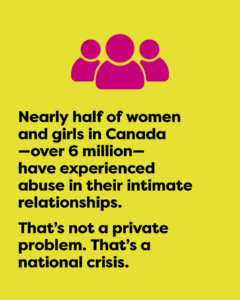
More than 44% of women and girls in Canada who have ever been in an intimate relationship — about 6.2 million people — have experienced abuse. From psychological and emotional abuse to physical and sexual violence, the impact is devastating. And it doesn’t end with women.
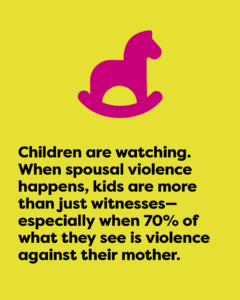
Children are not just bystanders. In homes where spousal violence occurs, 70% of the time, children witness their mothers being assaulted. These assaults tend to be more serious, and the effects on children’s mental health, development, and safety are long-term.
These are not isolated incidents. These are systemic, widespread, and deeply connected to the political and economic decisions made by our leaders.
When the Economy Hurts, So Do Families
Too often, domestic and intimate partner violence is treated as a private matter — something removed from the broader economic and political landscape. But the truth is, economic policy is gendered policy.
When inflation rises and rents skyrocket, when wages stagnate and jobs disappear, when affordable housing and childcare are slashed — violence increases. Financial stress exacerbates abusive relationships. Women lose options. Survivors have fewer ways to leave. Shelters fill up, waitlists grow, and survivors are forced to choose between staying with an abuser or facing poverty and homelessness.
This is especially true in rural, northern, and remote communities where services are scarce and distances are vast. For Indigenous, Black, immigrant, disabled, and 2SLGBTQ+ survivors, the barriers are even higher.
Add to that the impacts of trade wars and tariffs, which make essentials like food and clothing more expensive. When the economy breaks under the weight of global uncertainty, it’s women and children who fall through the cracks first.
Election 2025: Time to Demand Better
That’s why feminist organizations across Canada, including Action Canada for Sexual Health and Rights, have come together under the #DemandBetter campaign. Their message is clear: we need candidates who are willing to take bold action for gender equity and economic justice — not just empty promises.
As Action Canada states:
“It’s time to push candidates to build an equitable economy — one that doesn’t leave women, racialized communities, and survivors behind. Our future depends on it.”
This includes calls for universal child care, livable income supports, access to abortion and reproductive health, and measures to end gender-based violence. These are not fringe issues — they are foundational to a thriving society.
We Already Have a Plan — But It’s Being Ignored
In 2022, Canada introduced the National Action Plan to End Gender-Based Violence, the result of years of advocacy by survivors, frontline organizations, and communities across the country. It promised a coordinated federal, provincial, and territorial response to address prevention, protection, and support for those experiencing violence.
But the plan is now at risk.
Since the current Prime Minister eliminated the Ministry for Women and Gender Equality, there has been no national leadership to carry the plan forward. Funding commitments are unclear. Progress is slow. Survivors and service providers are being left in the dark.
Without a federal champion, the plan becomes a document with no direction. And survivors can’t wait.
A Call for Accountability at the Ballot Box
This federal election is a critical opportunity to change course. We need to elect leaders who understand that ending gender-based violence is not a side issue — it’s core to our national safety, our economy, and our humanity.
Voters should ask every candidate:
- Do you support full funding and implementation of the National Action Plan on GBV?
- Will you commit to restoring a national ministry dedicated to women, gender equity, and safety?
- What will you do to ensure survivors in rural and underserved areas have access to services?
- How will your economic policies reduce, not worsen, conditions that fuel violence?
We must hold all parties accountable — and ensure that their platforms address the realities of survivors, not just the interests of the powerful.
Hope Is Not Lost — But It Depends on Us
The good news is: we know what works. We’ve seen progress before. We’ve built shelters, developed legal supports, trained police and healthcare workers, and launched national campaigns. We’ve created plans that centre survivors and invest in community solutions.
But now we need action. We need investment. We need courage from our leaders — and from each other.
If we want a country where home truly means safety, we have to vote like it. We have to organize, speak out, donate, volunteer, and demand better.
Because change is possible — if we make it impossible to ignore