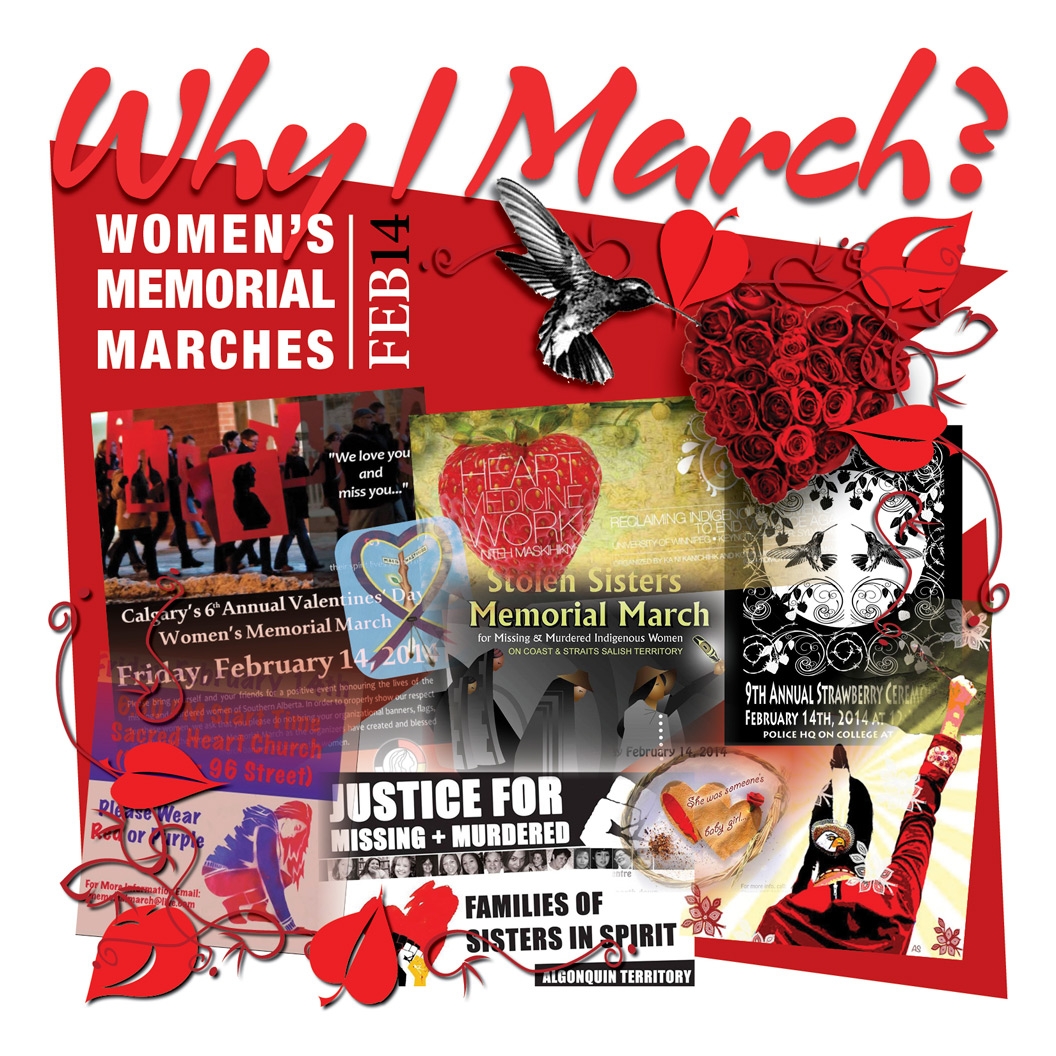
Every February 14 for the last 23 years, women have been marching to protest the forces of colonization, misogyny, poverty, racism and to celebrate survival, resistance, struggle and solidarity to make women’s resistance visible. Led by Indigenous Women, February 14 Women’s Memorial Marches signify the strength of decolonization and the power of Indigenous Women’s leadership throughout and across the lands. February 14 — Why I March? is a blog series written by women to bring voice to the personal experiences of the activist, the family members, and the women who work tirelessly in their communities to address violence. Please read February 14 — Why I March? blogs below.
In Vancouver, we will gather tomorrow at 11 am at the Carnegie Community Centre Theatre, 401 Main Street (corner Hastings, Vancouver) where family members speak in remembrance. Given space constraints, the Women’s Memorial March Committee is asking the broader public to join us all at noon, when the March takes to the streets and proceeds through the Downtown Eastside, with stops to commemorate where women were last seen or found; speeches by community activists at the court house; a healing circle at Oppenheimer Park around 2:30; and finally a community feast at the Japanese Language Hall.
We ask that you join Women’s Memorial March on February 14th to honour their lives and support the families who are missing their loved ones.
Find the March closest to you: http://womensmemorialmarch.wordpress.com/national/
February 14 — Why I march?
‘Their spirits live within us’: Annual February 14 Women’s Memorial March for Murdered and Missing Women
By Angela Marie MacDougall
In January 1991 a woman was murdered on Powell Street in Vancouver, Coast Salish Territories. Her name is not spoken today out of respect for the wishes of her family. Her murder in particular acted as a catalyst and February 14 became a day of remembrance and mourning and this year, twenty three years later, February 14 Women’s Memorial Marches are held across the lands and each march reflects the nuances and complexities of the particular region with the common goals of expressing, community, compassion, and connection for all women. It is a day to protest the forces of colonization, misogyny, poverty, racism and to celebrate survival, resistance, struggle and solidarity and to make visible these forces and women’s resistance. Led by Indigenous Women, February 14 Women’s Memorial Marches signify the strength of decolonization and the power of Indigenous Women’s leadership throughout and across the lands. Read more here.
Why I March: Marlene George
By Marlene George
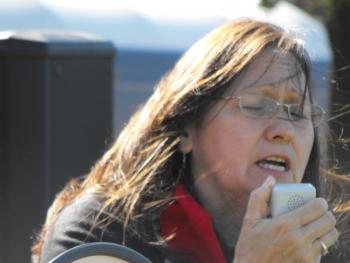 In 1996 I became involved with the February 14 Women’s Memorial March in Vancouver’s Downtown Eastside (DTES) through my work at the Downtown Eastside Women’s Centre. I was working with Marion Dubick who was helping the women to organize the march for February 14 1997. Each week we would begin with a group of women who were interested in helping to organize the march. Tasks were assigned to each person to complete for the next meeting. Women in the DTES were very active in the community in the 1990s and often participated in the Take Back the Night march held each fall. Read more here.
February 14th in Toronto — Ceremony as an Act of Sovereignty: Audrey Huntley
By Audrey Huntley
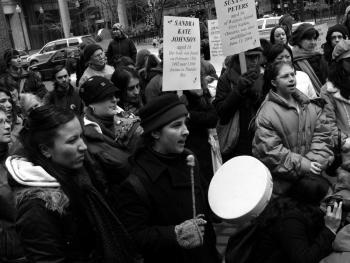 For Cheyenne, Terra and Bella.
Another year has passed since we last stood together in ceremony outside police headquarters in Toronto.
Three beautiful, young women have passed on since.
Cheyenne was a mother. Read more here.
Why I March? Women’s Memorial March February 14, 2014 — Winnipeg, Manitoba
By Sandra DeLaronde
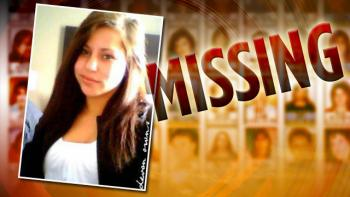 I have many memories of long summers and winter holidays in my Mothers home community of Cross Lake Manitoba. It was the centre of my world before Hydro development forever changed the landscape and the people. My memories hold some of my greatest moments of joy and lifelong friendships. I always hold a connection to my family and the land and I am very protective of these memories of Cross Lake. Lorna Lynn Blacksmith and her family are from Cross Lake. It just rattled my being to know that such a young woman from my home had dissappeared from the streets of Winnipeg. Read more here.
Why I march in Vancouver’s February 14 Women’s Memorial March
By Lorelei Williams
 I’m sure a lot of people can relate to this when I say a scary moment in a person’s life is when they lose a child for just a few minutes or even seconds. You and the child are together and then suddenly you aren’t. Your heart begins to race; you can even hear it beating in your head. Everything feels like it’s going in slow motion. You’re panicking, your head is pounding, you start to shake and feel like throwing up. Then, all of a sudden you see the child! You’re so relieved and everything is ok.
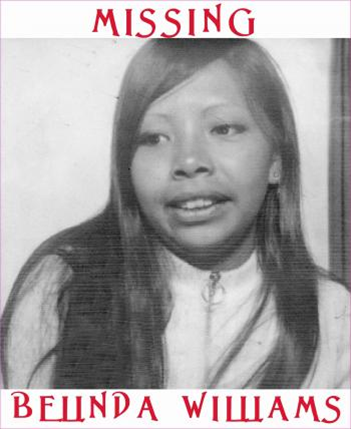
Unfortunately this isn’t the case for several Aboriginal families across Canada. Including my own. My cousin Tanya Holyk went missing in 1996. Her DNA was later found on Pickton’s Farm. My Aunty Belinda Williams who I closely resemble went missing around 1978. She disappeared without a trace. She still remains missing today. Read more here.
Memorial March for All the Missing and Murdered Women of Edmonton
By Danielle Boudreau
 It all started for me back in 2004, when Rachel Quinney was found murdered in a field Northeast of Sherwood Park, Alberta. She was 19 years old and her body had been mutilated. The headlines in the paper at the time used so many demeaning words as if to justify the death of a young woman whose life had taken a wrong turn. A year later on May 6, 2005 another friend of mine was found in a field, also murdered and once again demeaned in the media. I couldn’t sit back and do nothing, I felt I needed to tell the country who these women really were. I became a part of the Project KARE website and started chatting on the forum. When the forum was shut down, a few of us girls started another site to memorialize the women who were found dead.Read more here.
We march on…
By Raven Bowen
 I believe my first February 14th Women’s Memorial March was in 1997 in Downtown Eastside Vancouver. I was the support worker at PACE Society at the time and I was asked to say a few words. This was a great honour.
During the March we would customarily stop at the steps of the old Vancouver Police Station to listen and to share inspirational speeches and calls to action from women’s organizations. I remember how the community — a diverse grouping of Elders, family members, residents and community workers — claimed the Hastings and Main intersection. Read more here.
February 14 Women’s Memorial Marches: Not forgetting the legacy and honouring through action
By Native Youth Sexual Health Network
 This year at the Native Youth Sexual Health Network (NYSHN), we continue to participate in February 14 Women’s Memorial March events to remember and honor missing and murdered Indigenous women, girls, Two-Spirit and Lesbian, Gay, Bisexual, Transgender, Transsexual, Queer, Questioning, Intersex, Asexual (LGBTTQQIA), gender non-conforming people and their families. At NYSHN we march, gather and ceremony together in spirit with one and other; remembering and honoring ancestors and generations to come. Despite the stereotype from mainstream media outlets of Indigenous women and communities being “victims only”; Women’s Memorial Marches are a concrete example of what we have been doing and continue to do about stopping and preventing violence. Coming together in this way is symbolic of us not standing for the loss of family and friends without action and responding together across our different nations. Read more here.
Why I March at the Annual Memorial March for Missing and Murdered Women in Montreal
By Maya Rolbin-Ghanie
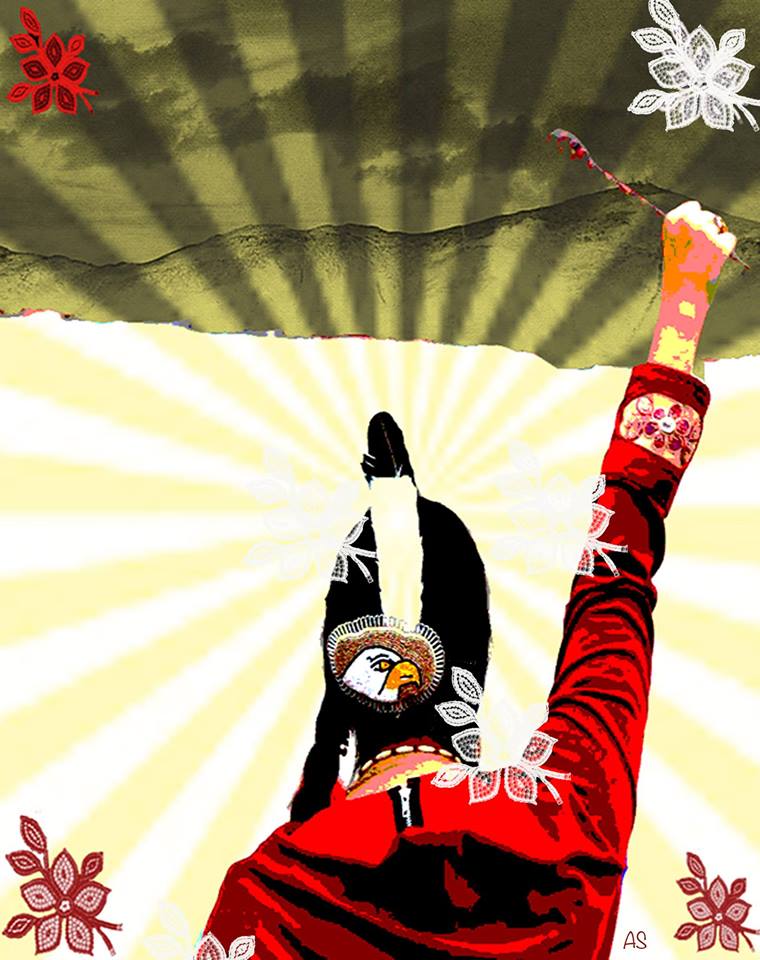 I march because:
…love is everything; it is all that matters; nothing else measures up or ever will. Love of self; love of life; love of nature; love of resistance. We need to block off streets and take up space and make people late, all to remind ourselves and those around us, and even the world, that placing any interest above love is to bow to fear.
…I’m afraid, in spite of myself. I want to walk down the street alone at night with no other distraction than the curve of the moon and the wind at my back and the shifting of the leaves. It’s unacceptable, all the blood and pain of daughters still pooling and seeping into the ground all around us. Those who possess the most power are always the most hunted. This has to change. Read more here.
From Juarez to Vancouver: Why I march on February 14
By Rosa Elena Arteaga
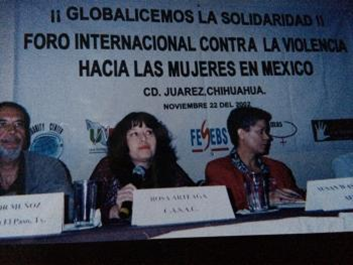 I joined the February 14th Women’s Memorial March in Downtown Eastside Vancouver in 1998. At the time, I had just immigrated to Canada. I came escaping from injustice and looking for a safe place to live for me and my family. However, sooner than later, I learned about the real Canadian history and it was very different to the official story that I had been told. I learned about the impact of colonization on the Indigenous people of this land. I witnessed and experienced racism and discrimination. I realized that the history of colonization and its impacts on Indigenous people in Latin America was similar to the impact on Indigenous people in Canada. Read more here.
These articles were posted on BWSS blog on Rabble.ca.
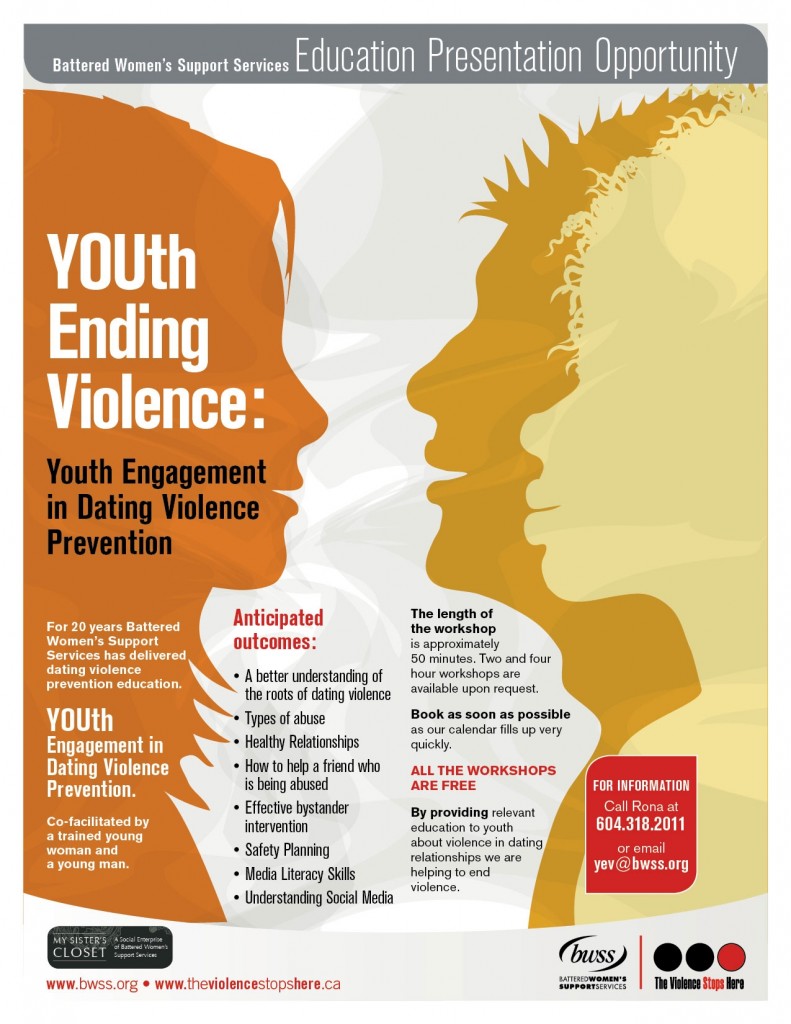 You can download the poster here.