WTC Café XIV: Sexual Assault, Safety and Public Transit

Buses and rapid transit are “moving cities”: hundreds of thousands use public transit every day in and around our city. Sexual offending on transit has as much of an impact as violence anywhere else. How can we improve public transit safety for women and girls?

Tonight join us at WTC Café XIV: Sexual Assault, Safety and Public Transit Women for an evening of discussion and planning for action on this critical issue.

The event takes place on:

Monday January 13th, 2014 from 6 pm to 8 pm
UBC Student Union Building, Room 205, 6138 Student Union Building Boulevard

“This is an opportunity to change the culture of transit” — Angela Marie MacDougall (Executive Director at Battered Women’s Support Services)

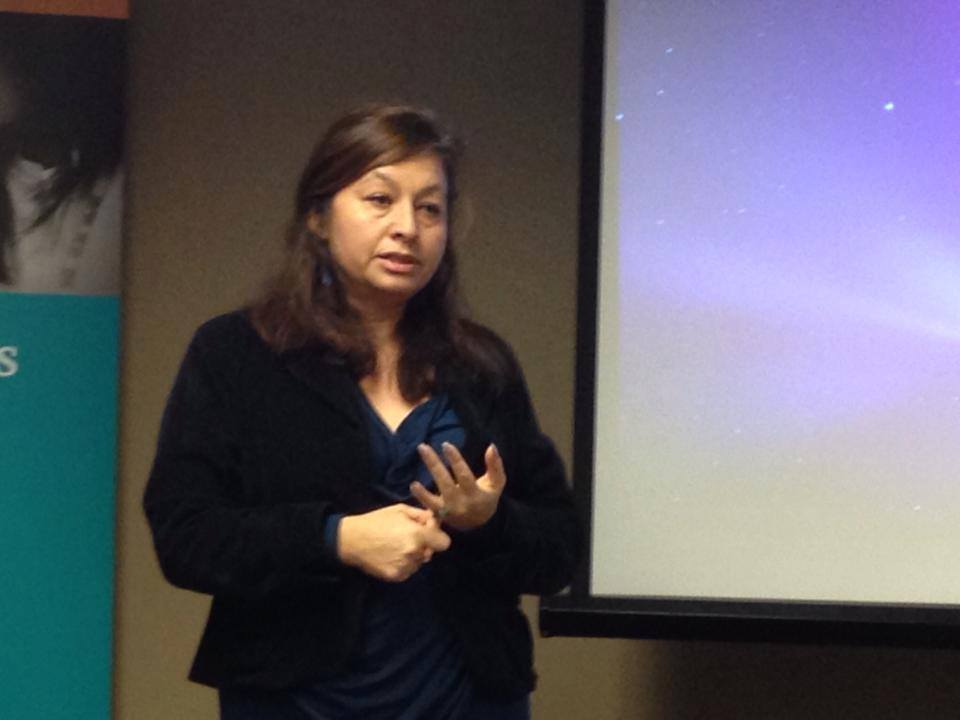
Angela Marie MacDougall, Anisa Mottahed (Manager of The Sexual Assault Support Centre at UBC), and Wendy Hawthorne (senior sergeant with The BC Transit Police) will speak briefly at the event, followed by broad roundtable conversations. Participants are encouraged to share and generate ideas to increase safety on public transit.angela -women transforming cities
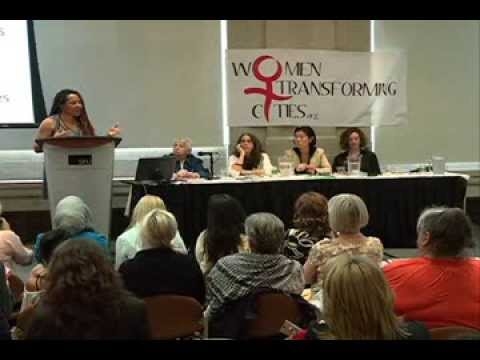
Last year, Battered Women’s Support Services took part in “Innovative Implementation of an Equity Lens to Create Ideal Cities for Women and Girls” panel to discuss some of the creative ways that NGO’s and Councillors have worked to create solutions to major crises such as violence, childcare, media representation, and how elected women councillors are working together with women’s organizations to address those problems.

Please read below article by Linda Solomon Wood and keep the conversation alive.

Violence against women condemned at Women Transforming Cities

written by Linda Solomon Wood,May 30th, 2013 on Vancouver Observer

Angela Marie MacDougall, Executive Director of the Women’s Support Services, Kristyn Wong Tam, Toronto City Councillor, Chris Morrisey, Chair of Seniors Advisory Committee for the City of Vancouver,Rita Chetnovsky, of the Coalition of Childcare Advocates for B.C. and Linda Solomon, Publisher of the Vancouver Observer, who also wrote this piece, composed an eclectic panel today at Women Transforming Cities.

“What we have all across the nation of Canada are for the purposes of violence against women, sacrifice zones. Zones where men can come and do violence against women with impunity.” Angela Marie MacDougall’s voice rises as she continues. “The DTES was certainly a place where over 22 years we have seen horrific violence against women in that neighbourhood specifically.”

MacDougall is Executive Director of Battered Women’s Support Services and she speaks with authority. She’s speaking to about 60 women participating in the Women Transforming Cities conference, organized by former City Councillor Ellen Woodsworth. I’m on the panel, too.  I’m completely engrossed in MacDougall’s talk. And I’m taking notes.

The conference at Segal Graduate School of Busness at SFU has drawn municipal leaders, urban designers and planners, and women and girls interested in transforming cities into places where women are more involved in electoral processes, and municipal governments are responsive to their priorities.

At least for today, the women are looking at all issues through “the gender lens,” weighing how women fare and how they could do better.

When it comes to violence, the picture is dark.

There have been “years of apathy” when we had a very prolific serial killer operating in this city, who was “operating with impunity,” she says. “And we had our city officials, we had law enforcement, literally ignoring this, blaming women for their own disappearances. How could that be? We have to look deep into our hearts and ask that question. How can it really be that we could create a climate in the city that would create apathy when members of our community were dying?”

“There’s a fog that comes over people when the issue of violence against women arises,” MacDougall says, her powerful voice rising.

“We’ve seen this over and over again in terms of how law enforcement responds in terms of sexual violence, the most under reported crime, how cities have neglected to provide funding for groups that are working to address violence against women.”

Taking to the streets has helped, MacDougall says. “It is important to address this piece which is called civil disobedience. I like to think of it as standing in power and making visible that which has been rendered invisible.

Kristyn Wong Tam, Toronto City Councillor

Moderated by Chris Morrisey, who was once a Roman Catholic nun, but is now chair of the Seniors Advisory Committee for the City of Vancouver, the panel includes Toronto City Councillor Kristyn Wong Tam, who speaks of her efforts to get Toronto to create a “women’s equality office.”

When Rob Ford became mayor, that became unlikely.

“You have a progressive mayor and maybe you can use the opportunity to get him to do a women’s equality office,” she suggests.

“It’s important to get down to talking about money,” Tam says. “Budgets. It’s impossible to talk about social improvements for women without talking about the budget. Gender budgeting. I don’t think cities do it well.”

But it isn’t always easy to say what needs to be said.

“For those holding elected office, we cannot be scared, we have to be willing to push back,” she says.

“There’s a lack of funding for infrastructure, for housing, libraries are falling apart, parks are falling apart. And yet we’re giving corporations massive rebates and programs that are allowing them to make more and more money. Yet it’s the people who are told they have to tighten their belts.”

$10 a day childcare campaign

Rita Chetnovsky represents the Coalition of Childcare Advocates for B.C.

She describes a childcare crisis where childcare is the second highest expense for young families, running as high as $1,900 per month.

And despite the fact that excellent childcare delivers rewards that extend far beyond childhood, Chetnovsky says, childcare workers are so poorly paid they can barely survive themselves.

“Current approaches are not working. After 30 years of describing the problem, We’ve stopped complaining and now we’re campaigning.”

The campaign is the “$10 a day daycare” project.

“We have engaged women in designing the solution. We’re proposing to bring in new legislation that enshrines the right to childcare.”

Media is the message and the messenger

I’m up. I talk about how  important it is for women to be telling not only the big stories.

Media can be an instrument of change, it can open minds and change minds. But it depends on who is piloting the ship.  Katie Couric said that.

Media is the message and the messenger.

Until more women own media companies, women will continue to be portrayed as sex objects.

There’s no appreciation for women intellectuals in the media.

Media is derogatory to the most powerful women.

Media creates consciousness.

“Media treats women like sh*t”, Margaret Cho said.

“You can’t be what you can’t see.” Marie Wilson said that.

For more information on this conference, go to Women Transforming Cities.

You can watch the panel on “Innovative Implementation of an Equity Lens to Create Ideal Cities for Women and Girls” here:


Last year, Battered Women’s Support Services responded to over 10,000 crisis calls from women and girls to get help and end violence. We could not provide this essential support without your contribution.

images

23rd Annual February 14th Women’s Memorial March needs your help…

23rd Annual February 14th Women’s Memorial March needs your help…

Their Spirits Live Within Us

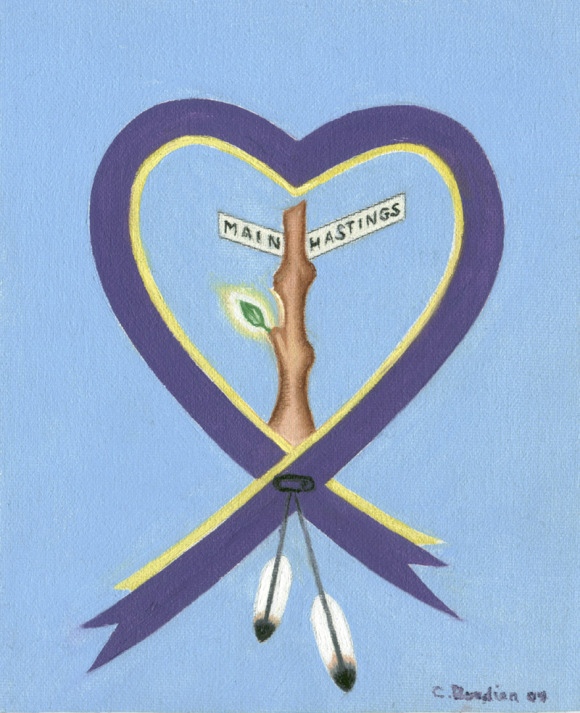
The February 14th Women’s Memorial March began after the brutal and tragic murder of a Coast Salish woman in Vancouver’s downtown eastside (dtes). Women from the community were so outraged by the manner in which she was murdered and fed up with the continued violence against women in the community. The women organized a march through the downtown eastside to raise awareness around violence against women.

The February 14th Women’s Memorial March is sponsored by organizations and individuals like you. The march is held to honour and grieve the loss of the lives of women who die each year due to violence and to remember the more than 32 women who are still listed as missing. Each year the Memorial March committee must raise funds to pay for such things as hall rental, sound system, food, red & yellow roses, memorial brochures, posters, candles, tobacco and other expenses. If you would like to sponsor one component of this years march please call Mabel Nipshank at 604 681 8480 ext 222, or Alice Kendell, 604 681 8480 ext 223.

Please join us at the march, please respect the march and leave your agency banners at home as the Women’s Memorial March carries five banners to honour the women.

We thank you in advance for your support and look forward to you joining us at the 23rd Annual February 14th Women’s Memorial March. It will be held on Friday February 14th, 2014 starting at NOON at the corner of Main & Hastings in Vancouver.

Please make cheques payable to the
Downtown Eastside Women’s Centre, memo: Memorial March,
302 Columbia St. Vancouver, BC V6A 4J1

All donations over $10.00 will be gratefully acknowledged with a tax deductible receipt.

For more information please contact
email address:

Thank you very much for your attention, time and support.

Marlene George Mabel Nipshank
Co-Chair Co-Chair

On behalf of the organizing committee of the 2013 February 14th Women’s Memorial March

http://womensmemorialmarch.wordpress.com/2013/11/15/23rd-annual-march/

20140110-171509.jpg

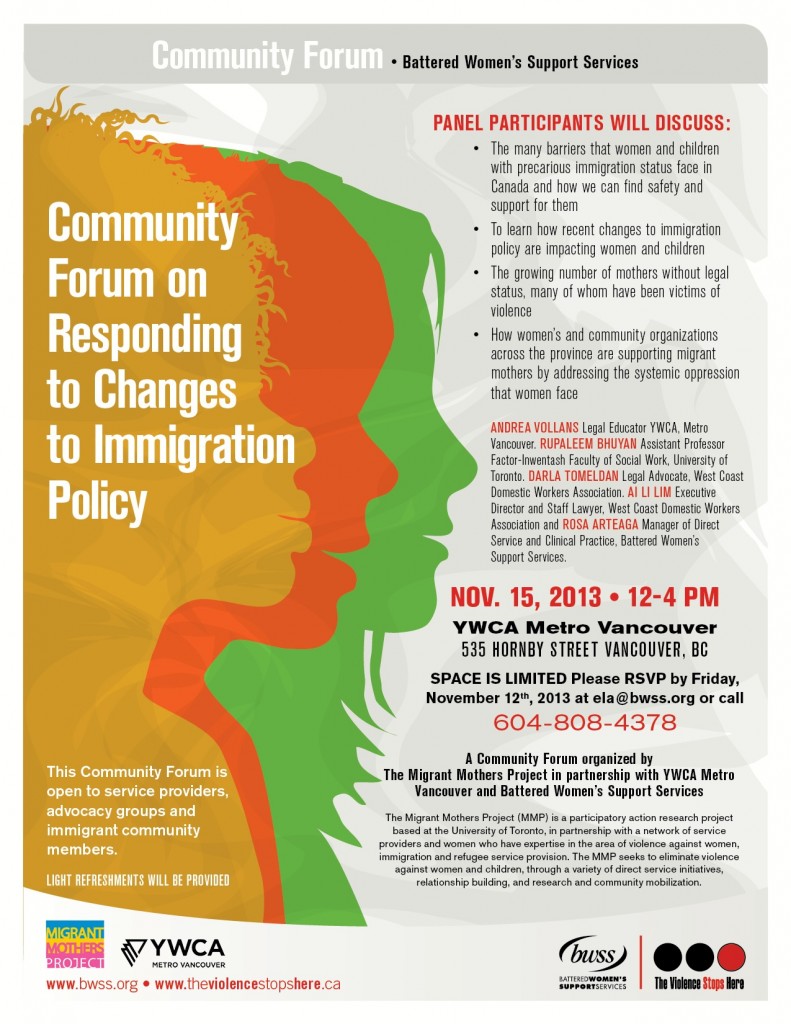
Community Forum on Responding to Changes to Immigration Policy

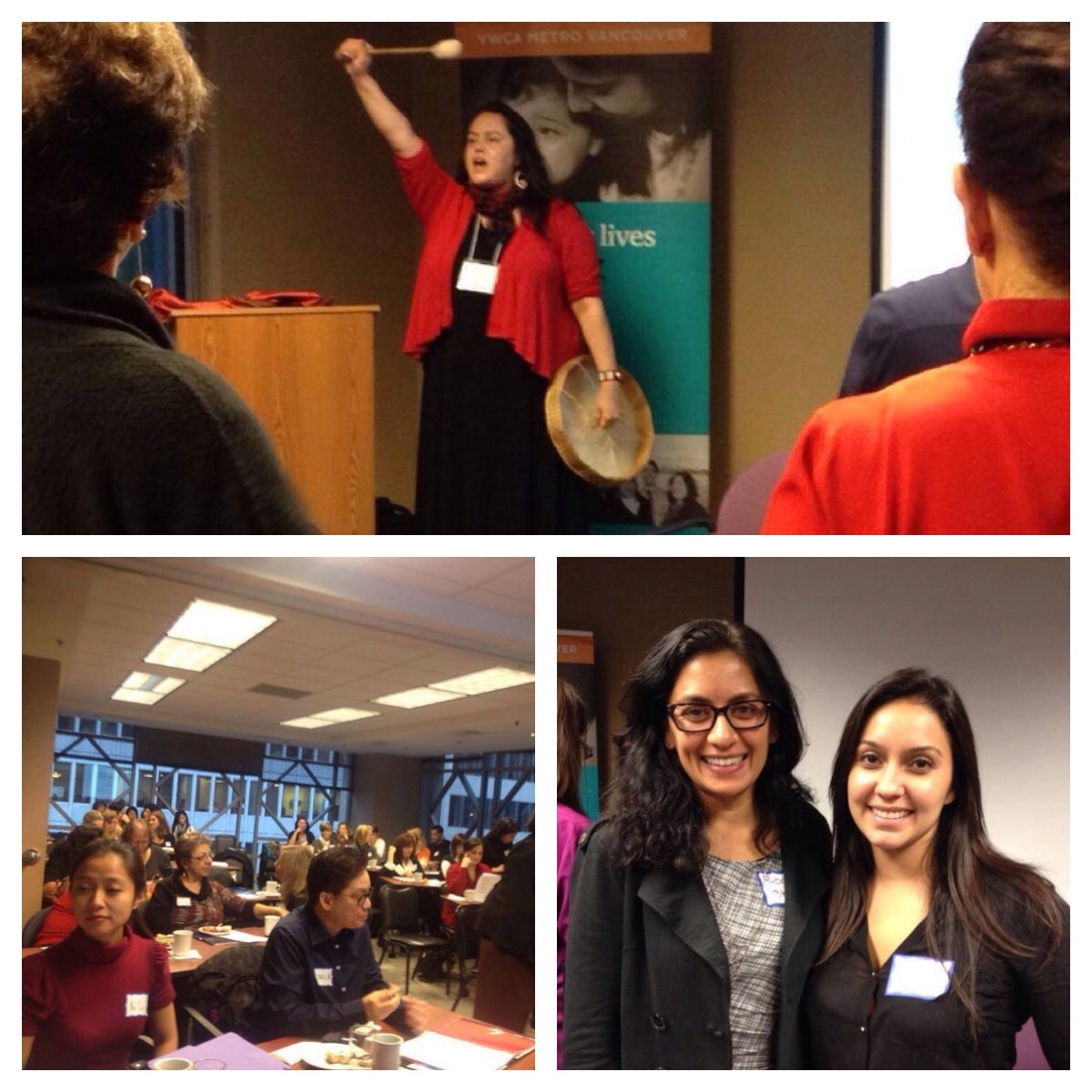
On November 15, 2013, BWSS organized a community forum to discuss responses to changes in immigration policy and ways to improve service delivery in collaboration with the Migrant Mothers Project and YWCA Metro Vancouver. We came together with 55 people including educators, front-line workers, management and volunteers who work in the areas of immigration and refugee settlement, immigration law, child protection/children’s aid, health care services, adult education, anti-violence against women services and community development.

Following the forum Rosa Elena Arteaga wrote Community Forum on Responding to Changes to Immigration Policy: Supporting Non-Status, Refugee and Immigrant Women Survivors of Gender Violence blog to share our knowledge and analysis on the discussed topics. Today, we are pleased to share a summary of the Forum to respond your requests for hearing more about the discussion and to share our knowledge to improve service delivery in our community.

Please read the Forum Summary, prepared by the Migrant Mother Project. You may download the document here.

Discussion Themes

Many topics emerged at the Vancouver Forum which commenced with acknowledgement that we are on Unceded Indigenous land belonging to the Coast Salish peoples, including the territories of Musqueam, Squamish, and Tsleil-Waututh Nations. Throughout the forum, the connections between colonialism, global capitalism, and migration were integrated with analysis of the marginalization of women living with precarious immigration status in Canada. Here we expand upon some of the core themes that were raised at the Vancouver forum.

1. Linking Indigenous Sovereignty in Coast Salish Territories with Forced Migration

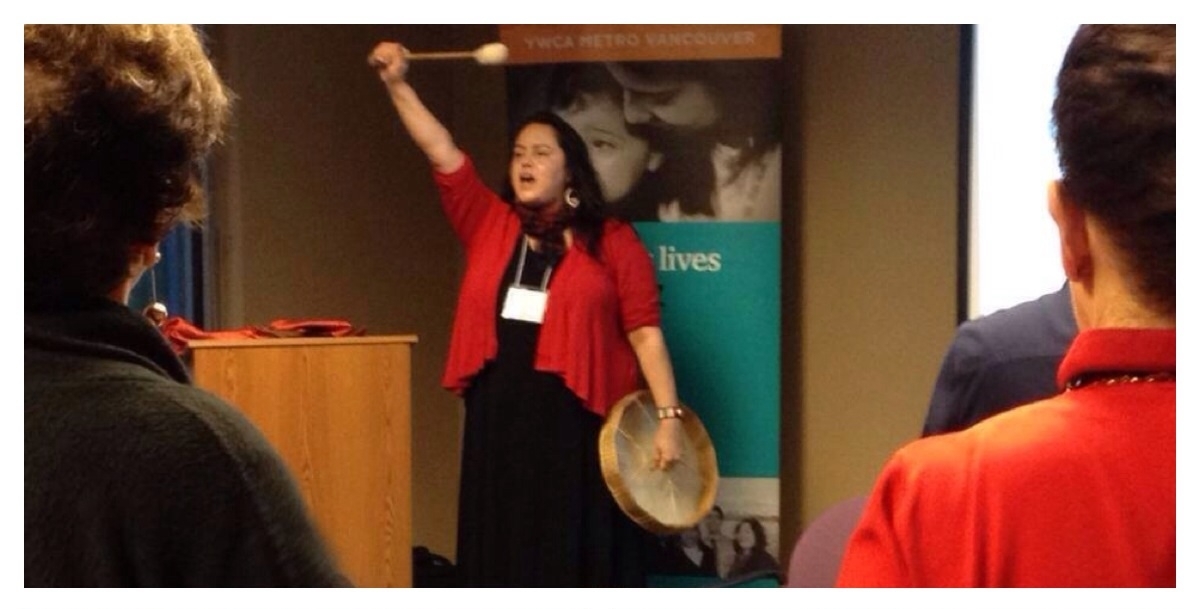
The Forum commenced with an opening ceremony led by Brandy Kane (Thunder Eagle Woman) who gave recognition to the traditional lands where the forum took place and led us in singing the Wonder Warrior song. Angela Marie MacDougall, Executive Director at BWSS added to the introduction and noted that the significance of the Women Warrior Song and the central role that Indigenous women are playing as leaders in anti-Violence Against Women work in Vancouver. It was evident that the women’s movement in Vancouver is committed to Indigenous sovereignty and recognizes the suffering of Mother Earth as inseparable to anti-violence work. This was further reinforced through linking the aboriginal plight of disputed lands in Canada, but also worldwide, to circumstances that lead to forced migration and oppression faced by immigrant women who are denied citizenship in Canada.

brandy kane2. Globalization and the Live-in-Caregiver Program

Linkages between global capitalism, the displacement of people worldwide, and gendered migration to Canada were especially pronounced in the Vancouver forum. It was noted that globalization and corporate culture have a transnational influence on government policies that result in environmental degradation, human displacement and cultural genocide. Live-in-caregivers were discussed as a group of women that represent a major source of income for the Philippines, but who must endure economic insecurity, forced cohabitation with their employers and family separation for several years. Through a series of case studies, forum presenters illustrated the layers of women face as live-in-caregivers and through their efforts to establish permanency in Canada and reunify with their families. The Vancouver forum attendees were congiscent of the tragedies unfolding in the aftermath of typhoon Hainan, which in part contributed to heightened awareness of the structural violence associated with migration and global inequalities.

3. Social Assistance for Mothers without Legal Status

In Vancouver, the Mothers without Legal Status Project, YWCA Metro Vancouver, began their research investigating the growing concerns for mothers without legal Canadian status and who have Canadian born children. Over five years of advocacy efforts, critical communication tactics and working with various ministries at the provincial level gave this group sufficient leverage to change certain policies in the Vancouver region including: 1) having children attend school without international student fees 2) allowing a mother to access British Colombia housing while waiting for permanent residency, and 3) providing social assistance to single parents without status who are fleeing abuse The importance of these changes were echoed by other forum attendees that noted the positive impact that these changes have had on women attempting to access services, especially within the shelter system. Moreover, the YWCA wishes to continue their advocacy efforts with other YWCA’s nationwide in order to make this a Federal campaign.

4. Developing Allies for Community Organizing and Policy Advocacy

The Vancouver Forum provided a space for attendees to discuss strategies around supporting women with precarious immigration status in Vancouver, but also to consider ways to develop networks with allies across the province and Canada-wide. The YWCA Metro Vancouver has been reaching out to YWCAs across Canada to explore the potential to expand their campaign for Mothers without Status to a federal level. There was a large desire to rally public awareness on this concern and doing so through sharing of women’s narratives, especially through social media and public awareness campaigns. In particular, the attendees noted the need to hold more events to raise consciousness on this topic in Vancouver.

community forum

The Vancouver forum created a space to discuss precarious immigration status, within a larger context of colonialism, globalization and subsequently forced migration. It is these factors that continue to impact and create links between Mother Earth, Indigenous sovereignty, as well as women with precarious immigration status seeking safety in Canada. Women’s experiences and resilience were honoured and shared amongst the group, which gave us a glimpse into the lives of the women that are caught in the middle of such global forces.

Service providers in the Vancouver area have been generating strong networks and are committed and able to discuss the injustices that are faced by their clients with precarious immigration status. Forum attendees highlighted the potential for networks amongst service providers to influence policy change at the local and provincial level.. However, additional efforts to mobilize networks that are able to engage media and policy makers to influence ministries at the provincial level and subsequently the federal level are critically needed. There was a strong sentiment of continuing to connect with one another in order to push for fair and equal policies for women, as well as their families, with precarious immigration status.

Within the anti-violence movement in Vancouver, there is an understanding that violence is significantly felt by women with precarious immigration status and that there is a need to prevent this violence from occurring by challenging and shifting unjust practices. Although more work remains to be done, the forum in Vancouver was an inspiring example of how to service providers, immigrant women and Indigenous leaders can work together to support women whose full humanity remains unrecognized in Canada.

Please read the article written by Rosa Elena Arteaga here: Community Forum on Responding to Changes to Immigration Policy: Supporting Non-Status, Refugee and Immigrant Women Survivors of Gender Violence

On November 15th 2013, Battered Women’s Support Services hosted a Community Forum on Responding to Changes to Immigration Policy, in partnership with The Migrant Mothers Project and YWCA Metro Vancouver. Over 50 front-line workers, counsellors, settlement workers, and community activists came together to learn and share knowledge. We reinforced our commitment to continue our collaboration and to increase our networks so we can affect change and attend to the inequalities that migrant women face within Canada’s economic, social, legal and political systems. Inequalities that, more than often, deny basic rights to migrant women and their families. Read full article…

Immigration Policy Community ForumDownload the poster here.

Battered Women’s Support Services responded to over 10,000 crisis calls from women and girls to get help and end violence in 2012. We could not provide this essential support without your contribution.

images


This blog was updated on December 23, 2013.

Reclaiming Our Sexual Selves

Reclaiming Our Sexual Selves: Supporting self-determined, embodied, and sex-positive healing for survivors of trauma

By Emma Ellison & Lauren Shay, BWSS Reclaiming Our Sexual Selves Support Group Facilitators

This Fall 2013, women gathered together in Reclaiming Our Sexual Selves to explore the ways that we, as women, have experienced the impacts of sexualized oppression and trauma. Participants engaged in the brave work of exploring two often silenced and disconnected subjects: women’s sexuality and healing from violence/abuse.

In this group, women shared a safe space to identify the impacts of violence/abuse on their sexual selves, explore practices for embodied healing, and discover their own unique approach to sexuality.  Much of our work involved self-reflection and discussion of deeply rooted beliefs about sex and sexuality.

For survivors of sexualized violence, sex and sexuality were targeted for abuse.  Sexualized violence teaches many damaging and dehumanizing beliefs about sex and self, including that sex is secretive, hurtful, and uncontrollable.  For survivors of physical, emotional, and/or sexualized abuse, our sense of trust and safety in ourselves, our bodies, our relationships, and the world is profoundly undermined.

 Reclaiming Our Sexual Selves

Survivors come up against blame, silence, and shame placed on them by not only abusers, but often their surrounding communities and culture at large.  For many women, messages that their bodies are not their own, that their bodies are vulnerable and problematic, and that they are responsible for protecting their bodies from abuse has meant a disconnection from their bodies as a site of safety, intimacy, pleasure, and wisdom.

Throughout Reclaiming Our Sexual Selves, women shared their varied and diverse experiences of oppression, trauma, survival, resistance, desire, self-acceptance, and resiliency.  Healing from abuse and reclaiming sex and sexuality is a uniquely individual experience for all survivors, shaped by our unique identities and lived realities.  It can be uncomfortable work, unsettling deeply ingrained patterns of behaviour and thought, but the potential for sexual healing to be a site for a holistic healing of the self has made this process deeply rewarding for women in this group.  Reclaiming sex and sexuality for ourselves can also be a meaningful form of resistance against sexualized oppression and the devaluing of women’s bodies through other forms of oppression.

“I know this sounds cliché by now, but never give up. Seek out help and don’t give in to the little voice that says you can go it alone. Healing treatments have improved over the years. Dedicate some time for healing. It does get easier and you will be glad you started the healing journey.” A.H. – group participant

Women shared that healing sex may or may not involve an intimate partner and that a “healing vacation from sex” and/or reclaiming a sexual relationship with themselves is a central part of their healing process.  Women valued the opportunity to define sexuality for themselves – finding and building their own sense of what they want, based in their own needs, feelings, values, and desires.

It is our hope to not only continue to offer Reclaiming Our Sexual Selves support groups at BWSS, but to cultivate awareness and competencies within the broader anti-violence movement to support self-determined, embodied, and sex-positive healing for survivors of trauma.


Last year, Battered Women’s Support Services responded to over 10,000 crisis calls from women and girls to get help and end violence. We could not provide this essential support without your contribution.
images

Community Forum on Responding to Changes to Immigration Policy: Supporting Non-Status, Refugee and Immigrant Women Survivors of Gender Violence

by Rosa Elena Arteaga, BWSS Manager of Direct Services and Clinical Practices

On November 15th 2013, Battered Women’s Support Services hosted a Community Forum on Responding to Changes to Immigration Policy, in partnership with The Migrant Mothers Project and YWCA Metro Vancouver. Over 50 front-line workers, counsellors, settlement workers, and community activists came together to learn and share knowledge. We reinforced our commitment to continue our collaboration and to increase our networks so we can affect change and attend to the inequalities that migrant women face within Canada’s economic, social, legal and political systems. Inequalities that, more than often, deny basic rights to migrant women and their families.

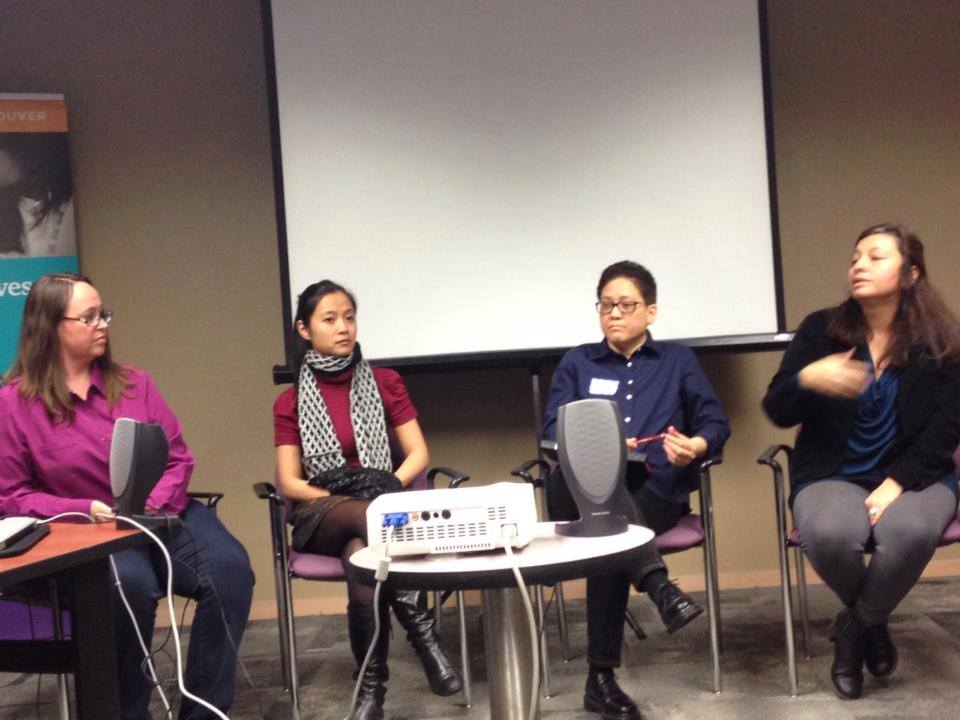
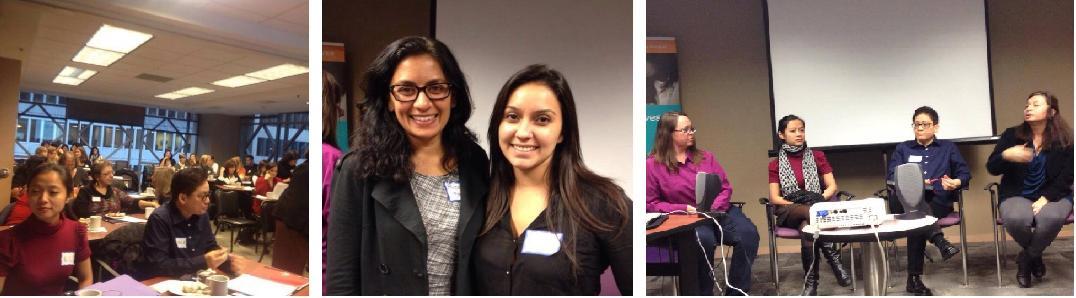
community forum Panelists Andrea Vollans, Legal Educator YWCA,  Metro Vancouver, Rupaleem Bhuyan, Assistant Professor Factor-Inwentash Faculty of Social Work, University of Toronto, Darla Tomeldan, Legal Advocate, West Coast Domestic Workers Association, Ai Li Lim, Executive Director and Staff Lawyer, West Coast Domestic Workers Association and Rosa Elena Arteaga, Manager of Direct Service and Clinical Practice, Battered Women’s Support Services discussed:

  • The many barriers that women and children with precarious immigration status face in Canada and how we can find safety and support for them
  • To learn how recent changes to immigration policy are impacting women and children
  • The growing number of mothers without legal status, many of whom have been victims of violence
  • How women’s and community organizations across the province are supporting migrant mothers by addressing the systemic oppression that women face

community forum

We were very excited to collaborate with the Migrant Mother’s Project, participatory action research project working with community based organizations in Toronto, Ontario to improve the lives of migrant women and their children. The Migrant Mothers Project explores how women with precarious immigration status in Canada seek safety and support from abuse for themselves and their children at times when accessing services is vital to their well-being.

With the aim of understanding women’s migration and gendered violence, first of all, we have to acknowledge that there is a war against girls and women all over the world. From the moment a woman is born and her gender is defined as female, she will be oppressed and discriminated against. Migrant women flee from their countries for many reasons and one of the main reasons is the dismantling of their land. “Women play a significant role in agriculture, the world over. About 70% of the agricultural workers, 80% of food producers, and 10% of those who process basic foodstuffs are women and they also undertake 60 to 90% of the rural marketing; thus making up more than two-third of the workforce in agricultural production.*” Colonization, globalization and the domination of natural resources have taken away women’s land ownership, access to and control over their own land.

Furthermore, force migration is prompted by women’s experiences of gender violence and a broad spectrum of violence that girls and women face through their lives, which includes gender oppression, gender persecution, political persecution, femicide, war, economic violence and the impacts of colonization and globalization.

Women are continually forced to leave their land and migrate to a foreign country where they will be discriminated against based on their social location. Racialized and marginalized migrant women face the most oppressive and unsafe alternatives to flee from their countries and they, are not just simply allowed to enter Canada, they are screened and chosen based on the immigration laws and the policies implemented by the current governmental administration.

Once a migrant woman makes it into Canada, she might have been trafficked-or she might have come as a refugee claimant, through sponsorship, on visitor’s visa, under temporary work permit or undocumented, among other alternatives.  Her immigration status will play a huge role on the level of barriers and oppression that she will face as well as the services available to her. Many migrant girls and women will continue experiencing all forms of violence such as physical, emotional, verbal, and sexual abuse from intimate partners, family members or extended family. The process of migration and a precarious immigration status makes girls and women more vulnerable to experience further violence, by the state, by employers, and within their relationships.

With this in mind, we, at Battered Women Support Services support migrant women with precarious immigration status, non-status, refugee claimants and permanent residents who have or are experiencing violence. We are strongly committed to understanding and recognizing that migrant women don’t “just come” to Canada, migrant women flee from their countries under extreme circumstances and with an immense need for support to overcome the impacts of gendered violence, the impact of migration and the complex process of adaptation.  We have taken many steps to ensure that we provide the appropriate support but also that we affect systemic change.

 Rosa Elena Arteaga

We provide support to all migrant girls and women who access our services. Through our feminist, intersectional and decolonizing approach, we recognize that migrant women deal with shared “cultural” as well as individual and unique experiences. This acknowledgment of the collective and individual needs requires caring and compassionate assistance and support. In our work supporting migrant women, we walk along side each woman with an understanding that migrant women face huge social isolation and many structural barriers related to their precarious status and social location.

Our specialized services include but are not limited to:

  1.  Assistance navigating the legal system,
  2.  Including education and information about the Canadian legal system,
  3.  Assistance to access legal support including referrals to lawyers from our selected list of lawyers,
  4. Accompaniment and support in order to attend refugee hearings,
  5. Assistance to access basic supports such as food/clothing/furniture, health services, shelters and transition houses, advocacy and support to obtain social assistance, education,
  6. Information and support about child protection and parenting,
  7. Language specific counselling and support groups, assistance and
  8. Advocacy to apply for social housing.

In our experience, migrant women have always faced structural barriers and we have taken action to address those barriers at systemic and individual level. In 2011, we responded to the Balanced Refugee Reform Act (Bill C-11) and exposed the impacts that those changes were going to have on refugee women. In Gender Persecution and Refugee Law in Canada written by Lobat Sadrehashemi, we expressed our concern about making more difficult for women fleeing gender-related persecution to be able to make their stories understood by decision-makers at the Immigration Refugee Board (IRB). We think that there will be many women who slip through the cracks, who do not have access to legal counsel. The current changes on the immigration policies have only increased the structural barriers. These barriers are putting migrant women at risk and depending on an immigration status; they are limited in their ability to access basic services such as health services, income assistance, legal support, and safe shelter. Furthermore, it will limit their right to protection because many migrant women would not call the police and expose the violence they are experiencing for fear of deportation.

We strongly believe that continued access to a full range of programs such as services offered by Battered Women’s Support Services and a strong collaboration among service providers, at municipal, provincial, national and international level, is vital to migrant women’s capacity to overcome the impact of gendered violence, forced migration and adaptation.

http://www.wikigender.org/index.php/Women_and_Agriculture


Last year, Battered Women’s Support Services responded to over 10,000 crisis calls from women and girls to get help and end violence. We could not provide this essential support without your contribution.
images

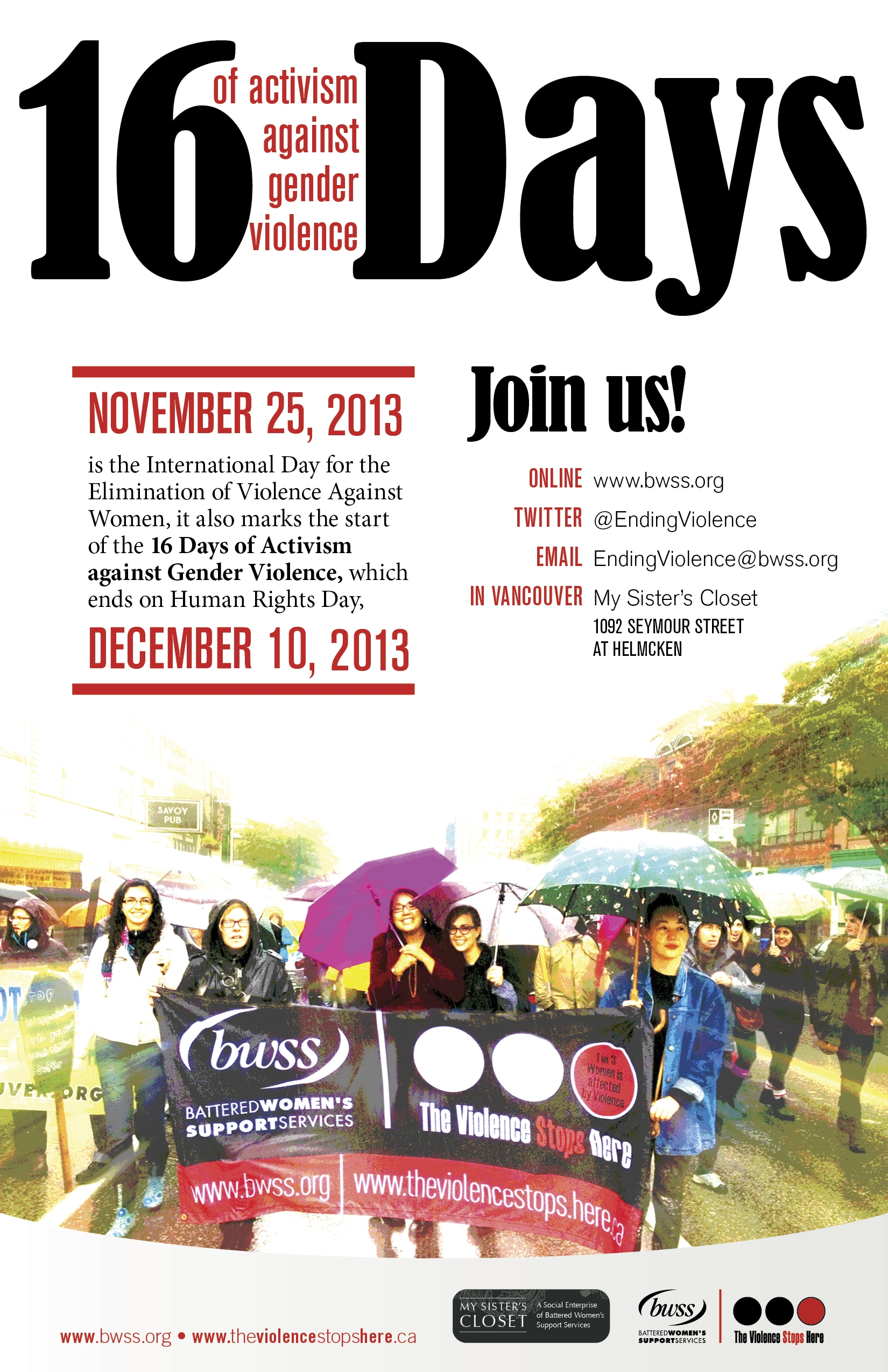
16 Days of Activism against Gender Violence

16 Days of Activism against Gender-Based Violence

Taking action in ending violence against girls and women

 November 25 – December 10, 2013

On Monday, November 25, 2013, Battered Women’s Support Services (BWSS) announces our second annual 16 Days of Activism Against Gender-Based Violence campaign. BWSS joins millions of activists from across Canada and around the world in a call for an end to gender-based violence and we seek to engage individuals, communities, governments and the larger society to increase our response, to act and prevent gender-based violence.  Over the next 16 Days we seek to demonstrate how social structures, historical underpinnings, violent masculinities, harmful traditions, and legal policies help normalize gender-based violence and impunity.  We will raise awareness about gender-based violence as a human rights issue at the local, national, regional and international level. We will also demonstrate how women, girls, boys and men are taking action, resisting violence, seeking safety, owning their role, teaching others, both here, in Canada, and around the world.

It may come as a surprise, but there is no country and no society which is not profoundly affected by gender-based violence.  So it continues to be the responsibility of all of us to bring an end to this serious human rights violation. From Canada to Afghanistan, from the UK to Zimbabwe, the 16 Days Campaign is a powerful platform to help us find authentic ways to advocate for an end to gender-based violence.

16 Days of Activism Against Violence Against Women begins on November 25th, continues through December 6th and concludes on December 10th.  Here’s more about the significance of these dates.

On November 25, 1960, three Mirabel sisters were brutally assassinated for opposing the Trujillo dictatorship in the Dominican Republic on the orders of the Dominican ruler Rafael Trujillo. Since 1981, the date 25 November has been marked as tribute to the Mirabel sisters and also as global recognition of gender violence by United Nations and activists. November 25, the International Day for the Elimination of Violence Against Women

December 6th is the National Day of Remembrance and Action on Violence Against Women, is a day commemorated in Canada each December 6, the anniversary of the 1989 École Polytechnique massacre, in which fourteen women were singled out for their gender and murdered. It is often marked by vigils, discussions and other reflections on violence against women.

Human Rights Day is celebrated annually across the world on 10 December.

The date was chosen to honor the United Nations General Assembly‘s adoption and proclamation, on 10 December 1948, of the Universal Declaration of Human Rights (UDHR), the first global enunciation of human rights and one of the first major achievements of the new United Nations.  As one of the most pressing human rights issues, violence against women is fused with Human Rights Day.

What to Do?

Join us!  Here’s how:

Online:  www.bwss.org is where you will find our new website, created by the amazing Jamie Leigh, filled with lots information and resources.  If you’re looking for something that is not there, email us at endingviolence@bwss.org.

Every day throughout the 16 Days, head to our Ending Violence Blog www.bwss.org/endingviolence to read articles from activists, front-line workers, advocates and inspirational stories written by women who courageously share their experiences of resistance, of survival.  Please participate in the conversation by leaving a comment, sharing with others through social  media or email.

We are always looking for articles to share with our amazing online community.  If you have an article or wish to write, please email us with your idea at endingviolence@bwss.org.

Twitter is a fast, dynamic and effective way to communicate, during the 16 Days (and beyond) join the conversation at @EndingViolence and follow the hashtag #16Days

If you’re in Vancouver, Coast Salish territory, stop by My Sister’s Closet located at 1092 Seymour Street (at Helmcken) in Yaletown and experience eco fashion, thrifting and artisan sensibility while contributing to the work to end gender violence.

Donate – Join the movement, our movement, your movement.

Take action and make a difference…

Join our Circle of Strength

The word is out and everyday at Battered Women’s Support Services we receive more crisis calls  from women who are living in fear and with dominance and are seeking safety,  We are receiving more and more requests from the community to provide our services. Join our Circle of Strength monthly giving program and become a vital partner in our chain of response… Your monthly donation is essential to deliver support services to women survivors of violence every day on our crisis lines, in counselling, and in support groups and to empower our community through training and education programs. With your contribution, together we are taking action to end gender violence.  Donate today to commemorate 16 Days.

Support My Sister’s Closet, a social enterprise of BWSS

As a community thrift boutique My Sister’s Closet is a safe and welcoming space for community to engage with us and/or join our efforts in ending violence against women and girls, through beautiful thrift fashion for men and women and artisan designs.

Volunteer

Volunteer to prevent violence against women. There are many ways to support women survivors of violence and contribute our ending violence work. Battered Women’s Support Services offers volunteer opportunities on our  Crisis and Intake Line, within our Women’s Safety and Outreach Program, at BWSS office, and at My Sister’s Closet, social enterprise of BWSS. Learn more about how you can volunteer your time.

Connect & Share

Social media has an empowering effect if you use it to voice your view. During 16 Days of Activism Against Gender Violence log onto BWSS Battered Women’s Support Services for information and tools for action, and spread the word to raise awareness about violence against women and shift the culture of violence.

Battered Womens’ Support Services:

rss-4-32 facebook-4-32  twitter-4-32

BWSS 16 days - POSTER final_NEW

You can download the poster here.