Assessing the Community Impacts of the Jordan Decision.

Assessing the Community Impacts of the Jordan Decision.
Assessing the Community Impacts of the Jordan Decision.

Share Your Experience and Win a $75 gift card!

Since 2016, there has been growing concern about the decision made by the Supreme court in R v Jordan impacting women who have and/or are experiencing violence. Battered Women’s Support Services (BWSS) and the Intersectional Feminist Justice Research and Organizing Collaborative (IFJROC) would like to explore the impact of the Jordan Decision on violence against women cases through a national online survey.

We expect that this survey will take no more than 15 minutes to complete. We humbly ask that you share the following with your organization’s members, and your personal networks. Thank you for your time and attention to this!

At the end of the survey, you may enter for a chance to win a $75 gift card to My Sister’s Closet Online Shop.

R v Jordan is a decision of the Supreme Court of Canada that changed the framework previously used to determine whether an accused was tried within a reasonable time under the Canadian Charter of Rights and Freedoms, sending a strong message condemning the complacency around lengthy pretrial delays. The nuts and bolts of the decision were to provide hard outer limits: 18 months for one-stage provincial court trials and 30 months for two-stage superior court trials, counted from the date of Crown Counsel charging until the completion of trial. If the process exceeds those time frames, accused persons are presumptively entitled to have their charges stayed for “unreasonable delay”. No exceptions, except where the Crown can demonstrate “exceptional circumstances” or “particularly complex” matters. The decision highlighted that chronic delay or lack of institutional resources such as courtrooms or staff will not amount to “exceptional circumstances.” Tough news for a system that is already deemed maxed and resource poor.

Should you have any questions regarding the consent process, survey participation and/or data collection, you may contact Bethel Lulie at ifrjo@bwss.org.

***
Led by BWSS and the IFJROC, this survey questionnaire will assess how the Jordan decision has influenced the choices made by police and the Crown with respect to carrying out investigations and pressing charges, and how this has impacted victims of gender-based violence offences.
16 Days of Activism Against Gender-based Violence

Battered Women’s Support Services releases new PSA on November 25 to mark the 16 Days of Activism Against Gender-based Violence

16 Days of Activism Against Gender-based Violence


Press release

Vancouver, BC – Battered Women’s Support Services (BWSS) releases a public service announcement (PSA) to highlight the COVID-19 Shadow Pandemic of the alarming increase in violence against women.

We are currently facing a double global pandemic health and social crisis. Prior to COVID-19, an estimated one woman was killed every three days by her intimate partner in Canada. According to the United Nations (UN), multiple forms of gender-based violence especially physical, psychological, sexual and economic forms of domestic abuse have spiked during COVID-19 due to existing power imbalances exacerbated by household economic and food insecurity, and confined living conditions. As COVID-19 continues to strain the health system, rising cases of domestic violence is putting women and their children in immediate danger. The UN reported that critical services to support women such as shelters, helplines and support centres have reached capacity as women are in dire risk.

 “Everyone is talking about the race for a COVID-19 vaccine, but we are at a critical moment in a race against time to help women and children get to safety from immediate danger at the hands of their partners,” says Angela Marie MacDougall, Executive Director, BWSS. “We all need to recognize the seriousness of this situation, which can mean life and death. BWSS is a lifeline for many women, quickly connecting them to crucial services during a crisis.”

The UN called governments around the world to make the prevention and redress of violence against women and girls a key part of the national response plans for COVID-19. They found that less than a quarter of the 206 countries analysed in a recent study treated violence against women as an integral part of its national and local COVID-19 response plans with very few adequately funding measures.

“Canada and British Columbia are among those that are not treating services for women experiencing violence as essential in response to COVID-19,” says MacDougall.

When COVID-19 lockdowns happened in March 2020, BWSS responded immediately by making its crisis line available 24 hours per day, seven days a week. There was a 300 per cent increase in calls, stretching to meet the demand of services extending beyond the crisis line. The Shadow Pandemic is spreading and we are in an urgent need to resource this societal crisis affecting millions of women and families.


Quick Facts
  • Globally, 35 per cent of women have experienced physical and/or sexual intimate partner violence or sexual violence by a non-partner.
  • According to the UN, calls to helplines have increased five-fold in some countries as rates of reported intimate partner violence increase because of COVID-19. BWSS has seen an unprecedented 300 per cent increase in calls since COVID-19.
  • By September 2020, the UN reported that 48 countries had integrated prevention and response to violence against women and girls into COVID-19 response plans. Canada has yet to launch a national plan to address violence against women as part of the COVID-19 response.
  • According to the Canadian Femicide Observatory for Justice and Accountability, a total of 118 women and girls were killed by violence in Canada in 2019. On average, every three days one woman or girl is killed in Canada.
  • The Canadian Femicide Observatory for Justice and Accountability reported that from 2016-2019, women and girls continue to be in the greatest danger in their homes with more than half (55 per cent) being killed in their own home or the home they shared with the accused. With the COVID-19 pandemic, this number is expected to increase.
  • Less than 40 per cent of women who experience violence seek help of any sort. According to available data, women who do seek help, most look to family and friends and few look to formal institutions with less than 10 per cent seek the help of police. Women-centred organizations like BWSS are positioned to provide community-based support that are unique to women’s needs. BWSS is equipped to handle emergency situations providing fast-acting service starting with a phone call and working towards a safety plan to remove women and children from violence that can be life-threatening and connecting to health and counselling services.

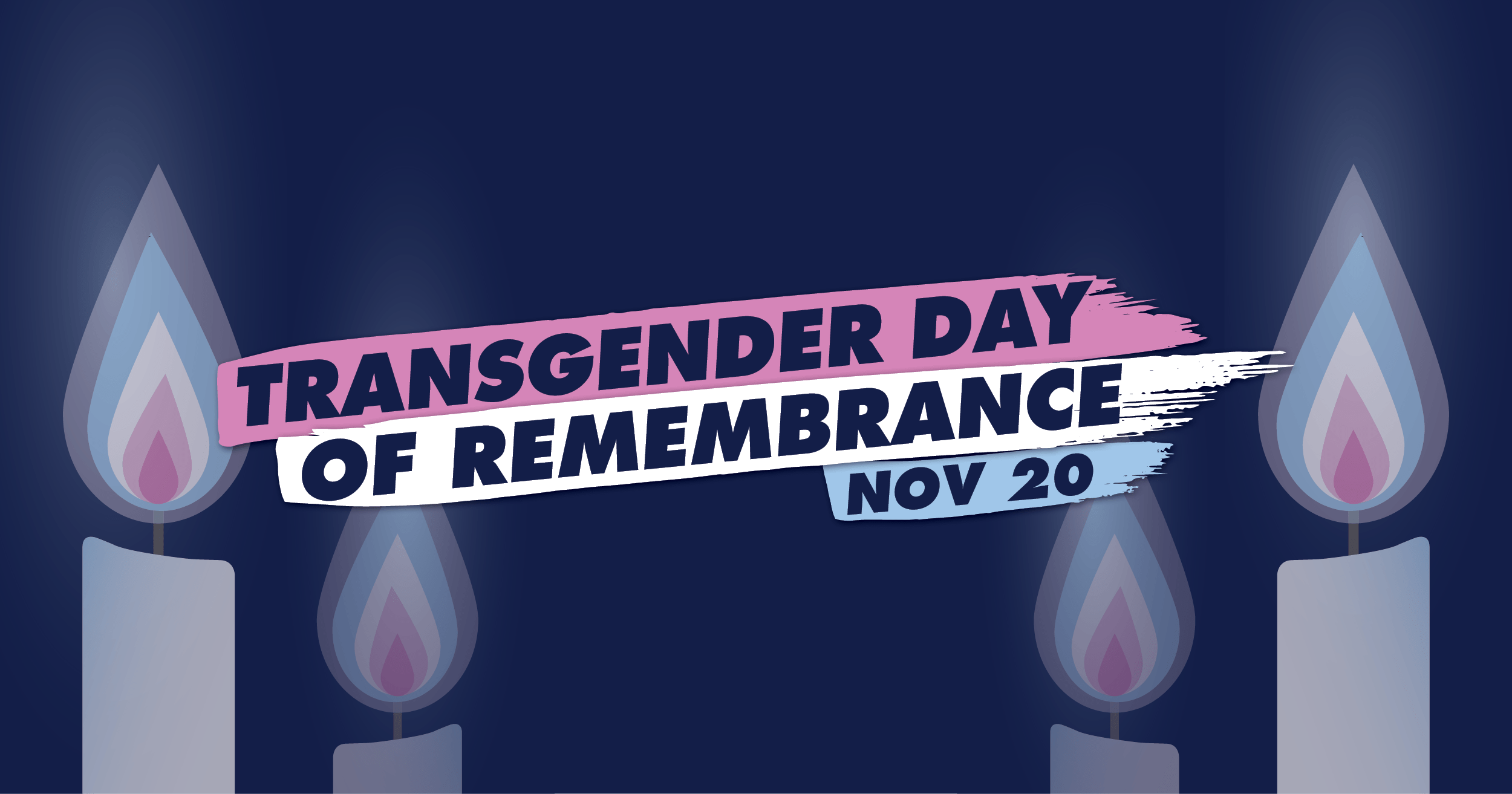
Transgender Day of Remembrance November 20th

Transgender Day of Remembrance  November 20th

Rita Hester, a Black transgender woman, was murdered in Allston, Massachusetts on November 28, 1998. In response to her murder, an outpouring of grief and anger led to a candlelight vigil. Transgender Day of Remembrance (TDOR) was started in 1999 by transgender advocate Gwendolyn Ann Smith as a vigil to honour the memory of Rita Hester. The vigil commemorated all the transgender people lost to violence since Rita Hester’s death, and began an important tradition that has become the annual Transgender Day of Remembrance.

“Transgender Day of Remembrance seeks to highlight the losses we face due to anti-transgender bigotry and violence. I am no stranger to the need to fight for our rights, and the right to simply exist is first and foremost. With so many seeking to erase transgender people — sometimes in the most brutal ways possible — it is vitally important that those we lose are remembered, and that we continue to fight for justice.” – Transgender Day of Remembrance founder Gwendolyn Ann Smith

If you’re in Vancouver, the Transgender Day of Remembrance will be commemorated during an event hosted by Vancouver Trans Day of Remembrance and Coalition Against Trans Antagonism on Friday, November 20th at 6 pm at Jim Deva Plaza. Facebook event and to live-stream.

 
Support our local trans community

UNYA’s Two Spirit collective – an organization that provides programs and services to Indigenous youth who identify as LGBTQ2S
Flamingo Market – an online artisan market with creations by and entrepreneurs who are LGBTQ2S
BoundAries Leather – a Vancouver-based queer & trans owned leather shop
Van Vogue Jam – a Vancouver-based organization that provides vogue classes

 
Recommended trans awareness reading
  1. ZOM-FAM by Kama La Mackerel
  2. it was never going to be okay by jaye simpson
  3. Little Blue Encyclopedia (for Vivian) by Hazel Jane Plante
  4. Fierce Femmes and Notorious Liars: A Dangerous Trans Girl’s Confabulous Memoir by Kai Cheng Thom
  5. The Subtweet by Vivek Shraya
  6. Disintegrate/Dissociate by Arielle Twist
  7. Beyond the Gender Binary by Alok Vaid-Menon
  8. Trans-Galactic Bike Ride edited by Lydia Rogue
  9. Troubling the Line: Trans and Genderqueer Poetry and Poetics by Trace Peterson and TC Tolbert
  10. Little Fish by Casey Plett
  11. Trans Power by Juno Roche

*compiled by Massy Books

 
Resources for trans people who are experiencing abuse

*If you are experiencing abuse, we can help. Call 604-687-1867 or email intake@bwss.org

International Day of the World’s Indigenous Peoples

Battered Women’s Support Services (BWSS) commemorates International Day of the World’s Indigenous Peoples, today, August 9, 2018.

The theme set by the UN this year is, Indigenous peoples’ migration and movement “as a result of loss of their lands, territories and resources due to development and other pressures, many Indigenous peoples migrate to urban areas in search of better prospects of life, education and employment. They also migrate between countries to escape conflict, persecution and climate change impacts”.

After a decade opposing the UN Declaration on the Rights of Indigenous Peoples (UNDRIP), Canada finally announced that it now supports UNDRIP.  It is not enough for Canada to say they support UNDRIP, there is a big gap between Canada’s constitutional requirements for the treatment of Indigenous people and the requirements of International law. When it comes to International law, it has to be implemented through Canadian laws which mean we have to legislate it into existence for it to be part of Canadian law.

Today, on International Day of the World’s Indigenous Peoples, we urge the Canadian government to pass Bill C-262, an Act to ensure that the laws of Canada are in harmony with the United Nations Declaration on the Rights of Indigenous Peoples.

Should it become law, Bill C-262 would require a process for the review of federal laws, to ensure consistency with the standards set out in UNDRIP. It would also require the government to work with Indigenous peoples to develop a national action plan to implement the declaration. Also part of the requirements would be provisions for an annual reporting to parliament on the progress made toward implementation.

At BWSS, we know that Indigenous women, trans, and two spirit people are particularly vulnerable to violence because of historical and ongoing systemic sexism, racism, and trans/misogyny. Article 22 in Bill C-262 states that particular attention shall be paid to the rights and special needs of Indigenous elders, women, youth, children and persons with disabilities in the implementation of this Declaration and that States shall take measures, in conjunction with Indigenous peoples.

The passing of this Bill will help ensure that Indigenous women, girls and LGBTQ2*S peoples can live safely in our communities. 

BWSS is asking for your support of Bill C-262 by writing to your MP today.

Electronic Art Tackles Sexual Assault & Harassment

Electronic Art Tackles Sexual Assault & Harassment

CURRENT Symposium: Dream of a New Future tackles sexual assault & harassment and brings together women and non-binary artists working in music and electronic art scene in Vancouver and beyond. This event is produced by local artists, Alexandra Chen, Ash Luk, Nancy Lee and Soledad Fatima Munoz.

Ultimately, producers of the event will create a report to share with the City of Vancouver with recommendations specifically on abuse of power in mixed media, and how to support survivors of gender-based violence, bridging the gap between cultural creators and the City. BWSS is thrilled to have been invited to be a part of this innovative event which creates space for women and non-binary artists to share their experiences, art and ideas.

The symposium takes place July 25th-29th in Vancouver and will feature music and art showcases as well as workshops, panels, and youth mentorships.

Sunday, July 29th BWSS Violence Prevention Coordinator, Rona Amiri, joins Stacey Forrester from Good Night Out (GNO) for a panel to discuss prevention and support post “Me Too”.

For victims and survivors of sexual assault who need support, we are here for you.

Call us at 604.687.1867 or toll-free at 1-855-687-1868 24 hours a day. If you’re unable to speak safely, please email intake@bwss.org.

Prevention of Violence against Women Week 2018

For thousands of women and their children across Canada there is no “Home Sweet Home”.

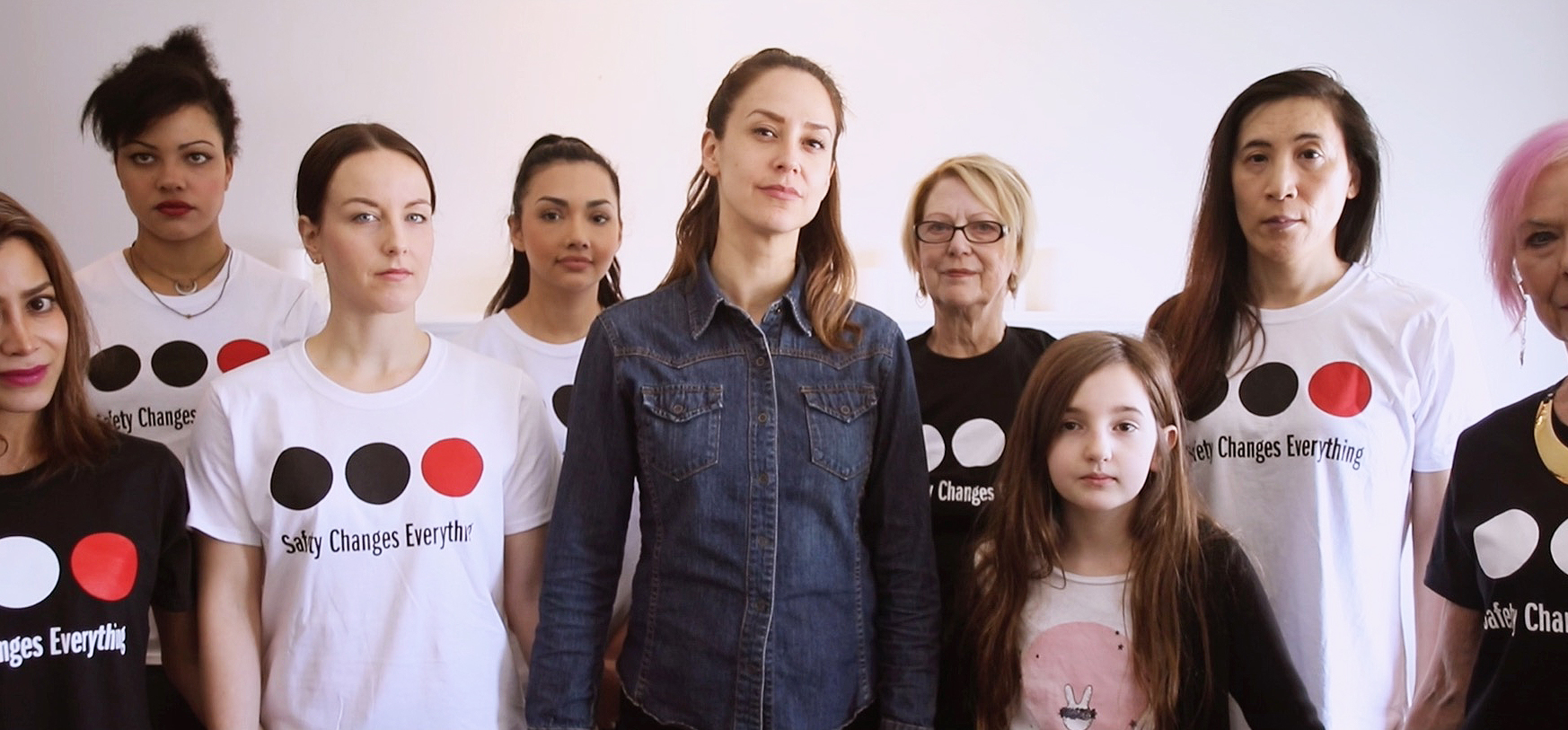
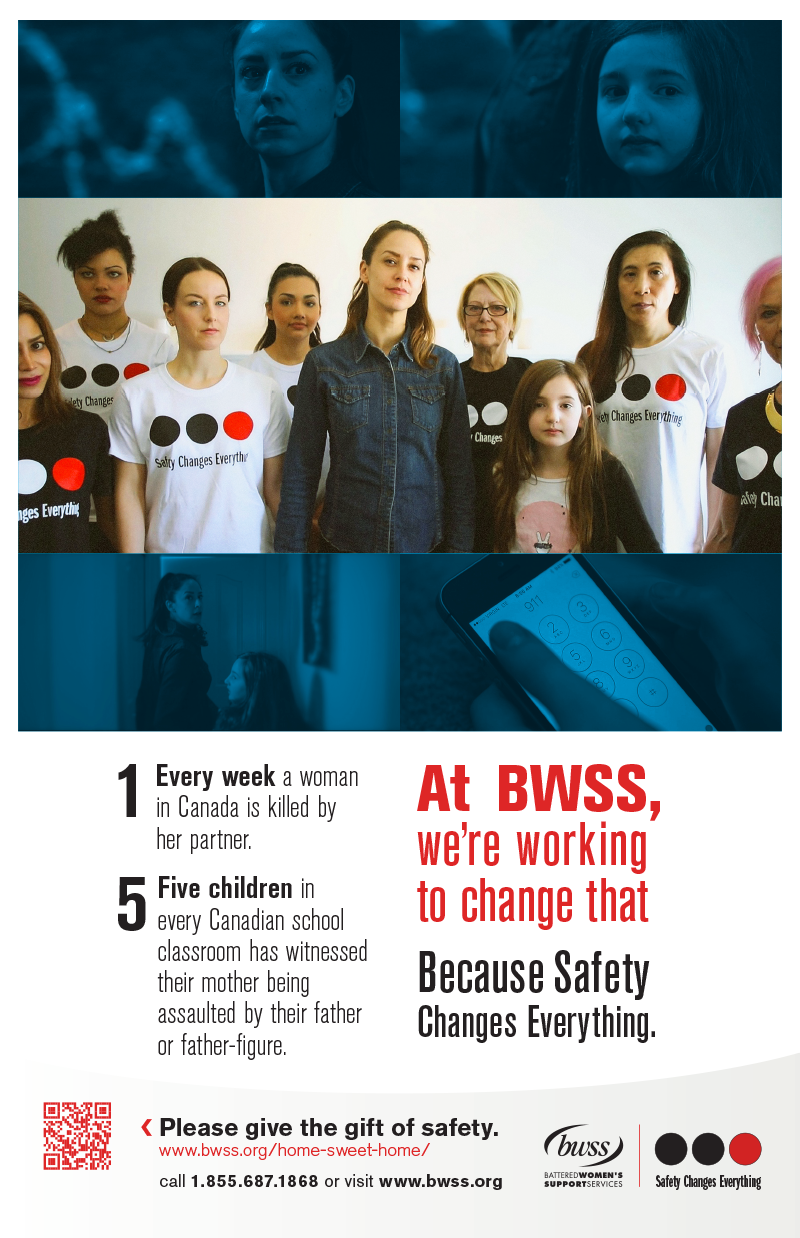
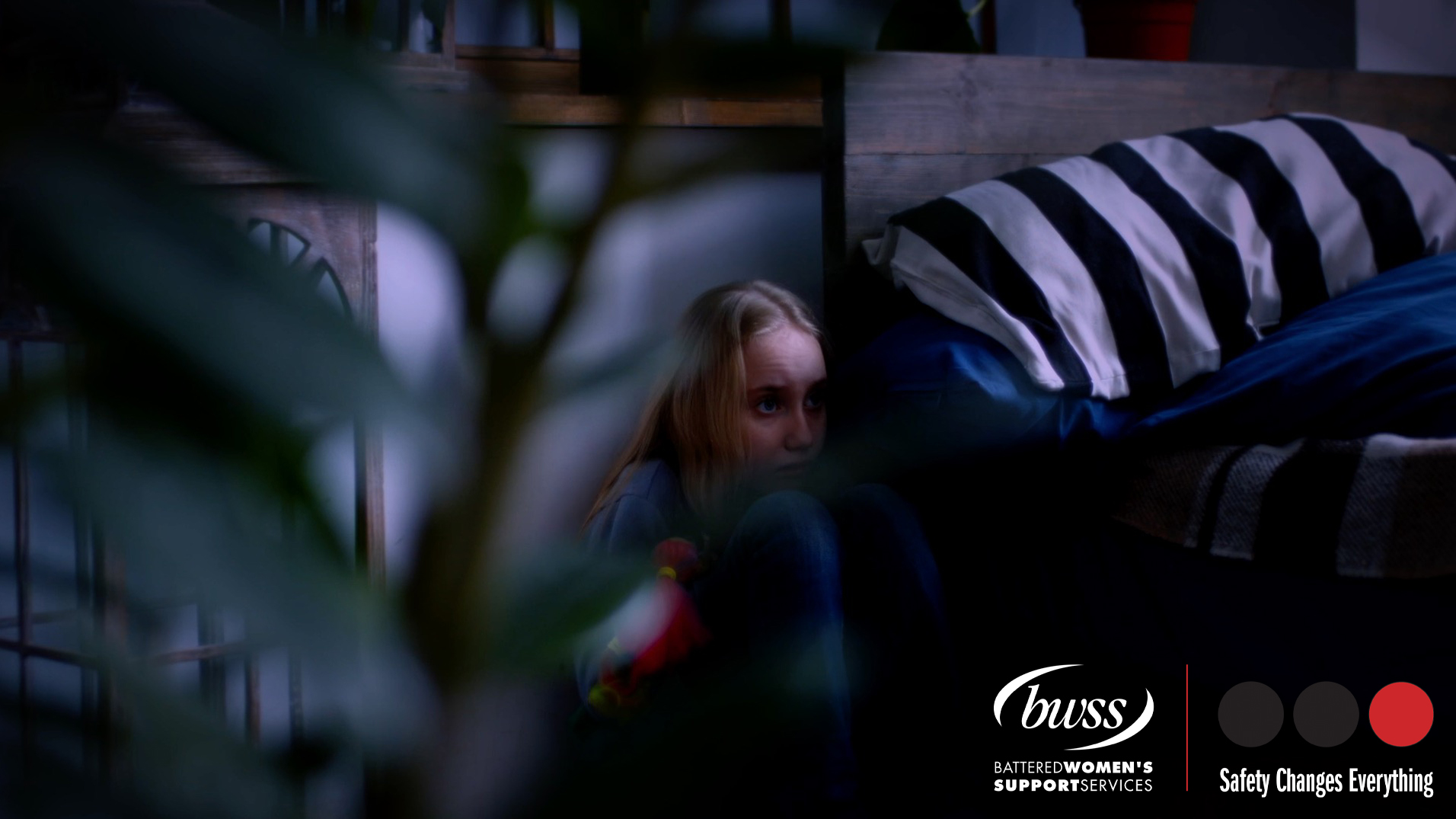
For Prevention of Violence against Women Week, April 15-21, 2018, Battered Women’s Support Services presents “Home Sweet Home”, a provocative video that poignantly confronts the public vs private experiences of gender violence.

Every week, a woman in Canada is killed by her intimate partner.

Five children in every Canadian school classroom have witnessed their mother’s abuse by either a father or father-figure.


At BWSS, we know, Safety Changes Everything.

Thank you for your ongoing support of this crucial work, this is your exclusive sneak peak of “Home Sweet Home” in advance of the national premiere.