31 Actions for Gender Justice

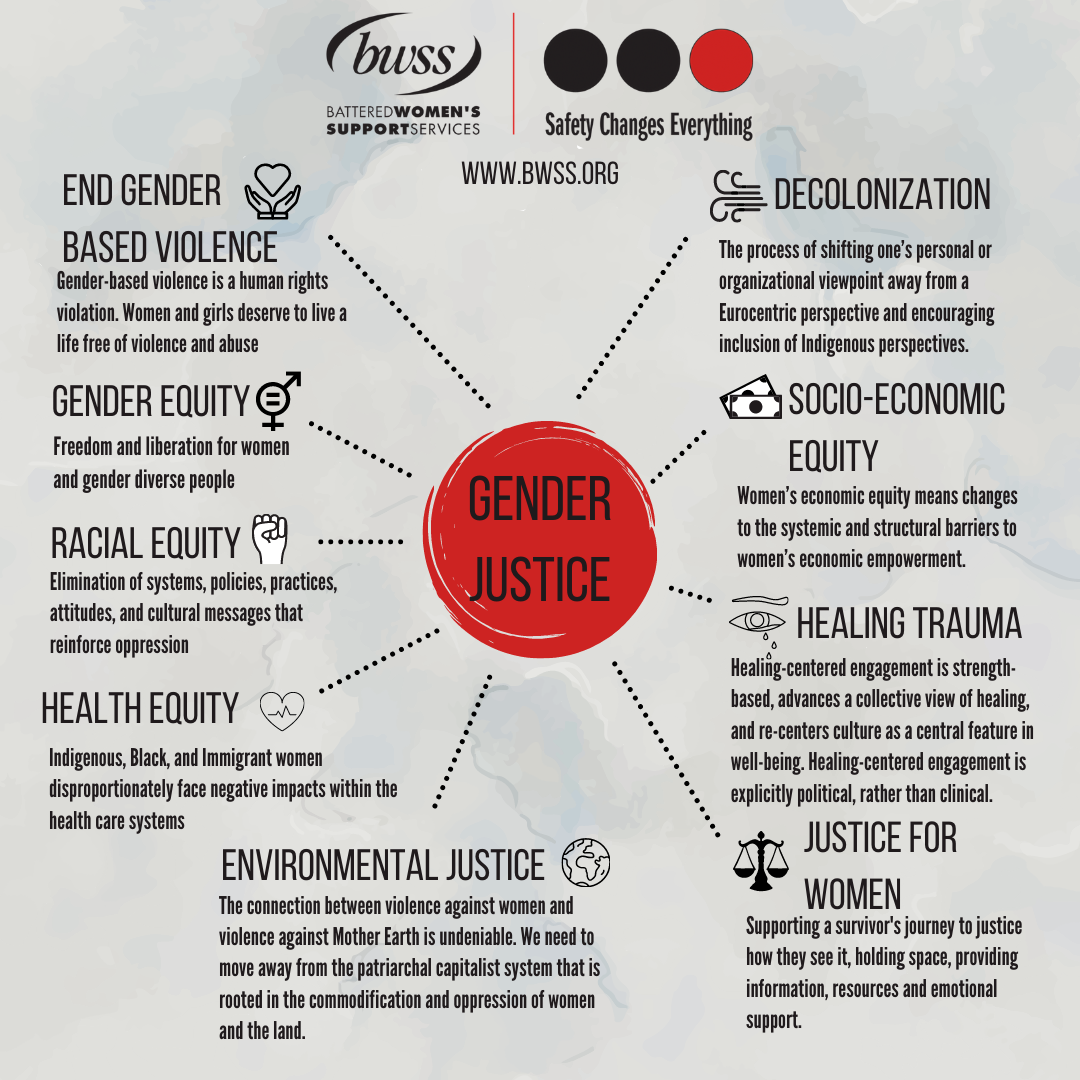
We’ve created 31 Actions for Gender Justice to raise awareness, spark conversations and take action that transforms gender and power relations, and the structures, norms and values that underpin them. Every day for the month of March we will highlight an action that advances gender equity and justice for International Women’s Day (IWD).

This is by no means an exhaustive list! There’s so much more that we can do to advocate for political, economic and social changes.

What is Gender Justice and why does it matter?

March 1st Action 1. Getting on the same page.

The Global Fund for Women defines Gender Justice as “systemic redistribution of power, opportunities, and access for people of all genders through the dismantling of harmful structures including patriarchy, homophobia, and transphobia.”

To add to this definition, we’d like to highlight the importance of eliminating gender inequities with a decolonial and intersectional, anti-oppression feminist approach.

Gender Justice is a transformative concept that reorients and re-energizes the conversation about equality. More fundamentally, it points towards new ways of liberating our thinking about ourselves and each other.

31 Actions for Gender Justice

Action 2. Learn about BWSS approach: decolonial and intersectional, anti-oppression feminist approach.

Action 3. Zero Tolerance: End Violence against Women

Action 4. Normalize a Culture of Consent 

Action 5. Support Youth Empowerment 

Action 6. Stand in Solidarity: October 4th and Beyond

Action 7. Know the Signs of Domestic Abuse

Action 8. IWD Action for Gender Justice

Action 9. Recommended Read

Action 10. Support BWSS

Action 11. Close the Gender Pay Gap

Action 12. Make Online Spaces Safer

Action 13. Understanding and addressing specific needs of LGBTQ2S and non-binary folks

Action 14. Help a Loved One

Action 15. Make prevention and intervention of end gender-based violence essential services

Action 16. Address sensitive topics

Action 17. Stop Violence against Asian Women

Action 18. Gender based Violence is Deadly. Prevention and Intervention are Crucial

Action 19. Support each other  

Action 20. Know the signs of financial abuse

Action 21. Stop street harassment

Action 22. Increase awareness about the pandemic within the COVID-19 pandemic 

Action 23. Recommended Reading  

Gender Justice

BC Housing Workshops

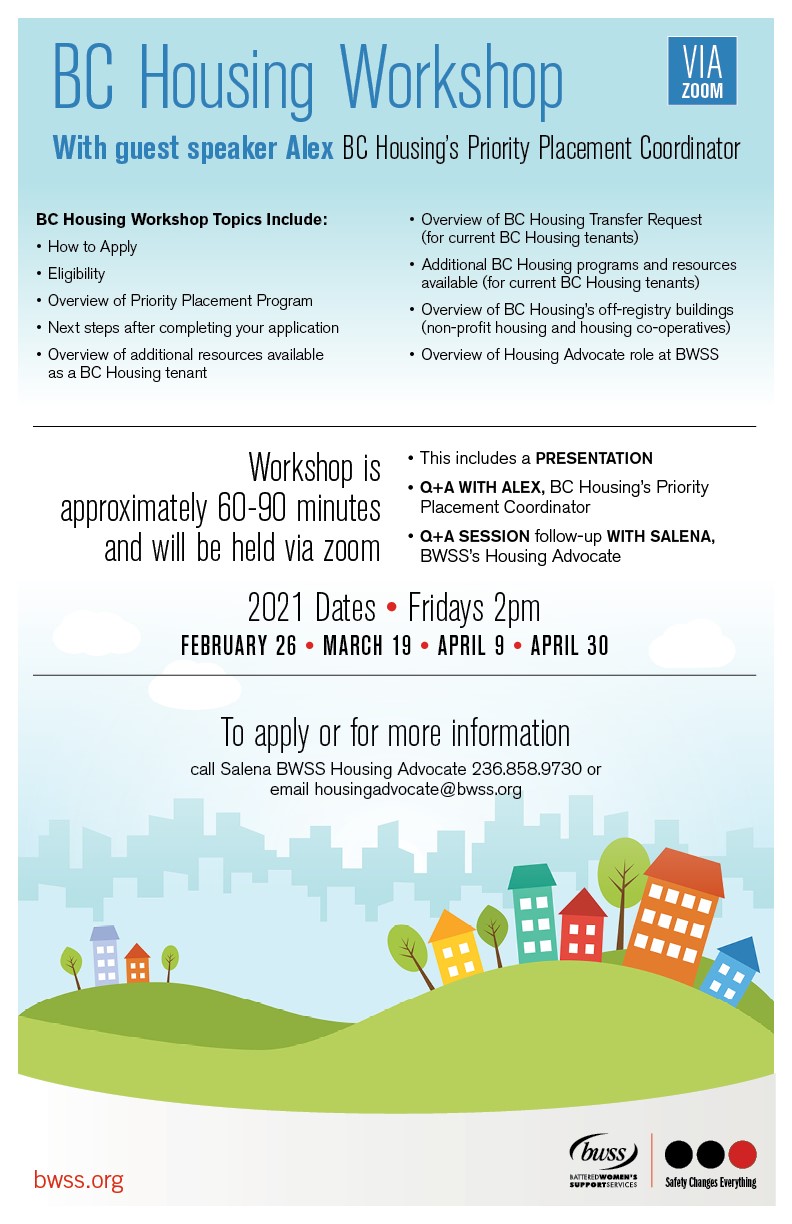
Join us for BC Housing Workshops presented by BWSS on Fridays at 2 pm where we will be joined by Alex, BC Housing’s Priority Placement Coordinator.

This 60 to 90-minute workshop will include a presentation and question and answer session for women who want to learn more about BC Housing and the Priority Placement Program which provides priority access for women in BC who have experienced violence or are at risk of violence.

Topics covered in the workshops include:

  • How to apply for BC Housing
  • BC Housing Priority Placement eligibility,
  • Overview of the Priority Placement Program,
  • Next steps after completing your application,
  • Additional programs and resources offered by BC Housing,
  • BC Housing Transfer requests (for current BC Housing tenants),
  • Overview of BC Housing’s off-registry buildings (non-profit housing and housing co-operatives), and 
  • Overview of the Housing Advocate role at BWSS.

The BC Housing workshops will conclude with an overview of BWSS’s Housing Advocate role and follow-up Q+A to answer any additional questions.

Each workshop is approximately 60-90 minutes and will be held online via Zoom.

To register or for more information call Salena (BWSS Housing Advocate) at 236-858-9730 or email housingadvocate@bwss.org


BC Housing Workshops at BWSS 2021

Black History Month Making the Invisible, Visible: An Open Invitation

By: Theresa Thomas MCP, RCC

Happy February Everyone! February is Black History Month.

As a Black Female Therapist, I am often left sitting within the disparity between the people who need mental and emotional health supports, and the elements that work as barriers to those people receiving them. We all know mental health services are woefully underfunded, undervalued, and rife with stigma. However, I am often plagued with navigating the invisible barrier that is seen by invisible people, and therefore, it is a barrier that is hard to bridge.

It is my belief that as a counsellor the burden is on me to make the invisible, visible. To shed a light on what often gets hidden or ignored. To the people who are often hidden or ignored. Generationally visible minorities, people of color…Black people, are often plagued with trauma and disenfranchisement. Socially, however, there is a dismissal of these traumas, and an unjust expectation is placed on these disenfranchised individuals to “rise above” the legacy that is generational trauma.  They, the disenfranchised, are expected to “rise” without a lever, without a boost, and without an acknowledgment of how far they have to climb to “rise” high. This conversation is not had, it’s left unspoken. So…if the people in question, can play this game and be “strong-Black-people” who walk around pretending as though they are not wounded by the cost of surviving, in a society that celebrates their survival, while dismissing what they’re surviving. They are rewarded by becoming visible, at the expense of the eraser of their individual identity and cultural realities. A terrible bind.

One of the first things I learned living in Vancouver, BC was how widely accepted it was to “not see colour.” I found it strange that this was somehow the standard of care, that by ignoring the most obvious information to what a person’s potential lived experiences maybe you were doing a “good thing.” As a southern American, with Black female, lived experience I was often left alone in the very real distress I experienced here. There was always a strong effort to talk me out of the possibility that the confusion, frustration, and discomfort I was feeling had anything to do with my Blackness because… “this is Canada!”

When we “don’t see color” it means we grant ourselves an allowance to ignore vital realities to a person’s lived experiences. We erase who they are, and what they battle, and what they’ve survived. We make them invisible. When we don’t see color, genderedness, ability, mental health limitations, cultural norms, or generational trauma people are ignored and left in their pain, alone. The most insidious part of this erasure is the shame involved when help is actually needed. To be left alone and full of shame, and anger, and distress without support; the only means of “curing it” is to keep moving forward with open wounds you’re forced to suppress, so you can achieve, succeed, “rise above,” and try to be accepted into the mainstream societal norm that has the benefit of blindness.

Deciding to do the work, to “see” what is uncomfortable is work we all have to do, not just therapists and mental health support workers. It’s Black History Month, and I can’t think of anything more worth my time than to write an open invitation to invite you to choose this month and decide on purpose to check your vision, and what it means for you to “see” those from whose invisibility you have benefited.

Even now as you sit and read this piece, note your discomfort. If you find yourself saying, “it’s not just Black people, all people have suffered.” I encourage you to question yourself.  Ask yourself, why you feel the need to minimize the experiences of disenfranchised people? Why you need to remove their unique experiences and make them the same as “all people?” Why you need to erase them and make them invisible?

The history of Black People is world history. Society as a whole has expanded and thrived from the oppression and exploitation of marginalized people…Black people. This is a fact; from which we are not immune. We do not live our lives separately from this truth but in response to it.

How have you responded?

Learning about our privileges doesn’t have to be a shame spiral in which we feel defensive and disengage; instead, it can be a learning opportunity we use to embrace new perspectives, engage with change, and connect on a deeper level. Offering acceptance to others’ limitations, distresses, and traumas make space for you to accept your own.

Fear creates hate with others, but also within ourselves. How far might you get on love? What could you offer others in their pain, if you had a tolerance for your own? I think it’s work a thought.

Happy Black History Month Everyone

Theresa Thomas; essay for Black History Month
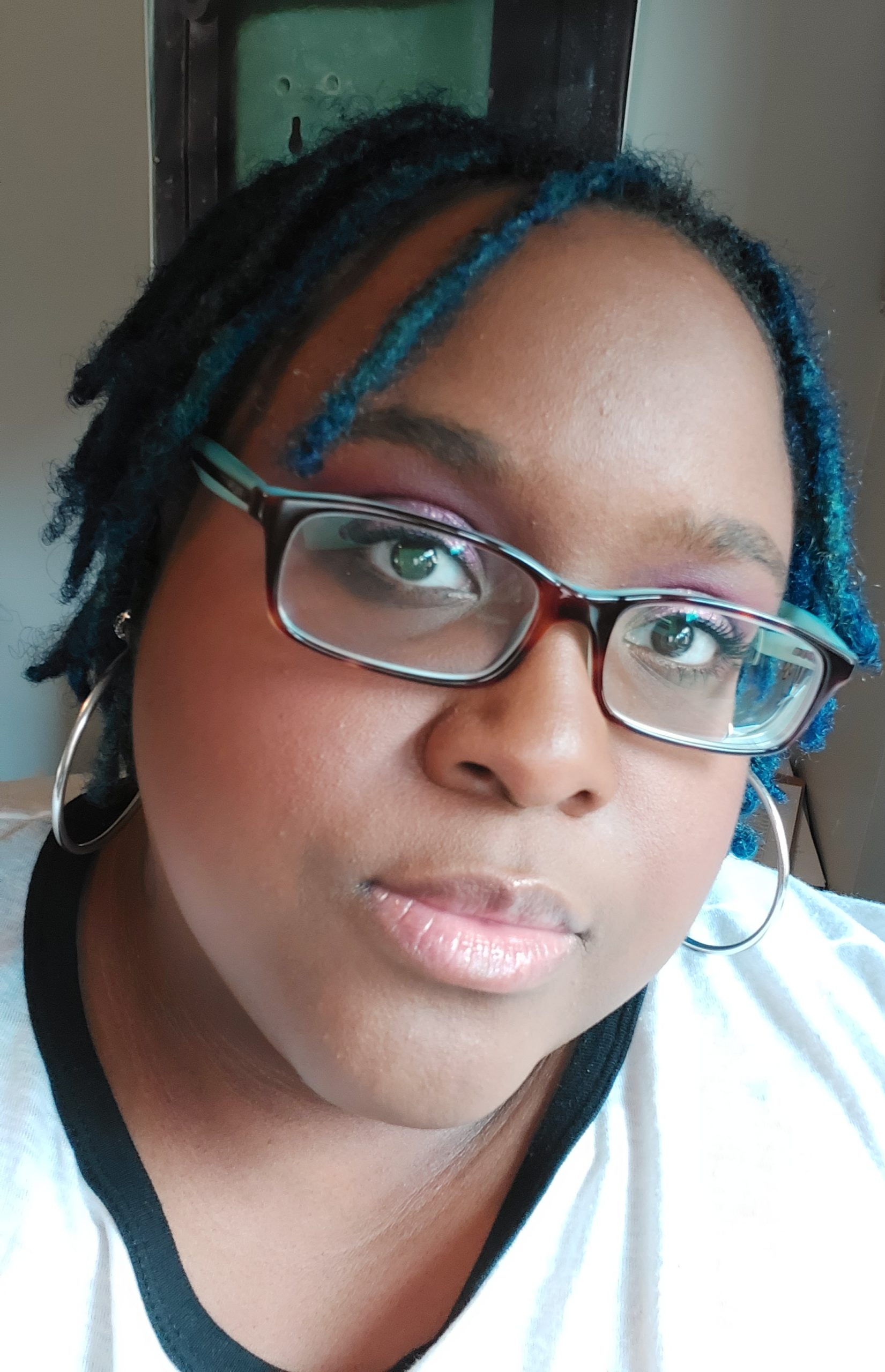
Theresa Thomas

Theresa is committed to helping people achieve freedom from systemic and societal oppression in every capacity. Since moving to Vancouver in 2012 Theresa has been focused on learning the origins and impacts of trauma.

Theresa’s therapeutic focus is on trauma intervention, freedom from abuse, substance misuse, and achieving empowerment using largely narrative therapeutic techniques.

Theresa has an MCP in Counselling Psychology and is currently an STV counsellor at Battered Women’s Support Services, and coordinates the BWSS Black Women’s Program. Theresa was born and raised in Houston, Texas.

Family Law Clinics 2021

Our Family Law Clinics are here to help women access justice


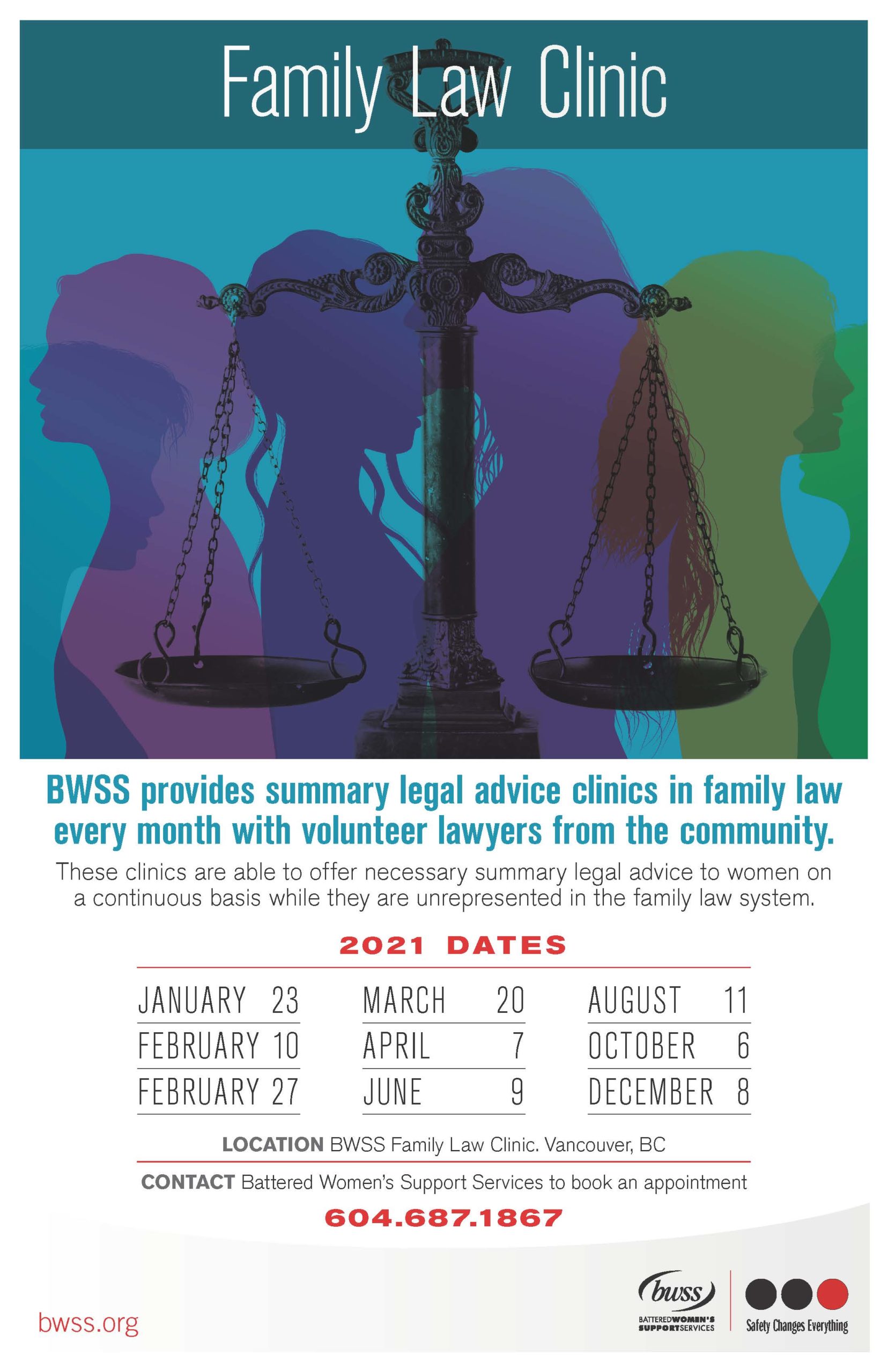
BWSS Family Law Clinics are staffed with volunteer pro-bono family law lawyers from the community who will give free legal advice to women who are low-income (including division of assets & debt), and help them prepare to go to court.

Please note that the pro-bono family law lawyers cannot prepare typed legal documentation or go into court on behalf of women.

 
Typically, the pro-bono family law lawyer advises women, and then, women will have to make a separate appointment with BWSS legal advocates to figure out their next steps. Appointments with the pro-bono family law lawyer will last approximately an hour, which will allow us to help three women per clinic.
 
Thank you so much to our pro–bono lawyers for their time and expertise in helping increase women’s access to justice.
 
All too often women are self-representing in their family law cases without the benefit of legal support, and these services are extraordinarily important in dealing with abusive partners who often have lawyers to represent them. These clinics are able to offer necessary summary legal advice to women on a continuous basis while they are unrepresented in the family law system.
 
The Family Law Clinics are available on:
  • Wednesday, February 10: 2:00- 5:00 PM
  • Saturday, February 27: 10:00 AM- 1:00 PM
  • Saturday, March 20: 10:00 AM- 1:00 PM
  • Wednesday, April 7: 2:00- 5:00 PM
  • Wednesday, June 9: 2:00- 5:00 PM
  • Wednesday, August 11: 2:00- 5:00 PM
  • Wednesday, October 6: 2:00- 5:00 PM
  • Wednesday, December 8: 2:00- 5:00 PM
All clinics are located at the Battered Women’s Support Services Family Law Clinic in Vancouver, BC.
 
 
If you are interested in attending a Family Law Clinic or have any other questions, please contact the BWSS Intake Line at 604-687-1867 or 1-855-687-1868 (toll-free) or email intake@bwss.org.
BWSS Family Law Clinics 2021

Room 2806: The Accusation

Room 2806: The Accusation

Yes, We Wanna Talk About the Sexual Assault Case Against French Politician Dominique Strauss-Kahn

By Angela Marie MacDougall

In early December 2020 during COVID-19 sanctioned isolation and work from home, I was speaking with my daughter, Leona sharing our watched and to watch list and she had just watched Room 2806: The Accusation suggesting I check it out. Room 2806: The Accusation, directed by Jalil Lespert, is a four-episode Netflix docuseries reprising the May 2011 sexualized violence incident involving Dominique Strauss-Kahn, then the managing director of the International Monetary Fund (IMF), perhaps the most powerful global financial institution, a prospective candidate for the French presidency and a Sofitel room attendant, Nafissatou Diallo a West African widow and mother of a 15-year-old girl. Leona wondered if I knew about the injustice surrounding the Sofitel event that had her “yelling at the TV.” Oh, I remembered this incident well and was glued to news reports leading up to his arrest, the textbook victim-blaming deployed by the high powered defence team facilitated by the news media that resulted in the eventual withdrawal of the criminal case by the prosecutor. Given the work of Battered Women’s Support Services (BWSS) in working from an intersectional and feminist decolonial perspective, I was deeply attuned to the race, class and gender dynamics in effect that makes it a steep hill to climb to see “justice” in any criminal legal sense in particular for a Black immigrant woman against a powerful white man. On a rainy Vancouver night in December 2020, I binged 2806:  The Accusation in one sitting to see for myself if this docuseries would do justice to the injustice of the Sofitel event.

Wanna Talk About it?

The opening credits include a link to Wanna Talk About It? Early in September 2020, a representative from Netflix Canada messaged me on LinkedIn about a website they were creating that would point their viewer to when film titles addressed topics like sexualized and intimate personal violence. Their goal is to be able to provide their viewers with resources on these matters and help them seek help if they are experiencing something similar. The site is global so they wanted to point viewers to local organizations in the countries where they live. I consulted with our team and we agreed for Netflix to link to the anti-violence centres page on the BWSS website. At BWSS, we are pleased to be part of any positive shift in entertainment media and as active participants in Me Too, Black Lives Matter and Idle No More we know the importance of social, news and entertainment media in driving social-cultural change profoundly impacting people while igniting the hard and necessary conversations and truth-telling on longstanding social issues. Social issues like sexualized violence of hotel room attendants in luxury hotels in global cities like New York, Toronto and Vancouver.

Room attendants perform the most physically demanding work necessary to operate a luxury hotel. Assigned 10 to 15 rooms a day on average, they strip beds, dump sheets down laundry chutes, remake beds, scrub bathroom floors, clean tubs and toilets, empty trash, polish mirrors, clean glasses, vacuum carpets. According to Unite Here a union representing hotel workers, in 2006, there were 1.3 million hotel workers in the United States and 280,000 in Canada, of whom, approximately one quarter are room attendants. In general, the hotel industry is dependent on cheap, racialized and gendered work; the result has meant profound vulnerability to sexualized violence for immigrant, Black and women of colour who are over-represented in this industry. The hotel industry and the allocation of “dirty work”, cleaning and laundry, is segmented along lines of race and gender. A staggering 93 percent of cleaning and laundry staff are Black and/or immigrants, 82 percent are racialized people and 80 percent are women.

Historically, slavery and indentured labour existed because there was a social and economic system that justified race as a necessary means of procuring free and cheap labour. Racial domination under colonialism to current day capitalism is the source of the racialized division of labour and the equation is simple: the cheaper the labour inputs equals the higher the profits. This is reflective in the low wages and lack of benefits earned by room attendants. Given the gendered power relations and the isolated nature of women hotel room attendants’ working environments, guest‐initiated sexualized violence experienced by room attendants is a significant, under‐examined problem. Sexualized violence is a continuum, ranging from unwanted verbal comments, jokes, nudity and sexual gestures including masturbation, to actions encompassing touching, coercive attempts to establish a sexual interaction and rape. In a broad sense, sexualized violence is a mechanism for maintaining male dominance over women and people of marginalized genders.
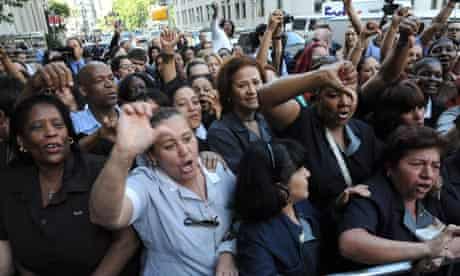
Room 2806: The Accusation Photograph: Andrew Gomberts/EPA

Photograph: Andrew Gomberts/EPA

Power is a Central Component of Sexualized Violence

BWSS is based in the ancestral and unceded territories of the xʷməθkʷəy̓əm (Musqueam), Sḵwx̱wú7mesh (Squamish) and səlilwətaɬ (Tsleil-Waututh) nations also known as Vancouver. Hotel workers who access our services have described sexualized violence as systemic throughout various parts of the hotel industry from working the front desk to cleaning rooms. Power is a central component of sexualized violence. The occupation of room attendant has low social status in society, in the workplace compared to the power held by hotel guests making it unsurprising that sexualized violence in hotels is so entrenched.

Room attendants fill a racialized/gendered job where they are expected to be pleasant, accommodating, caring and unobtrusive. Behaviours that fit the “feminine” stereotype and femininity and gender is coded by their dress-style uniform. Women who have accessed BWSS, have described a large contributing factor of their experiences of sexualized violence is because their work takes place in bedrooms, spaces the hotel industry markets as “home away from home”, and for the guests, are considered intimate, personal and potentially eroticized. As with the Room 2806 incident, guests could still be present while rooms were being attended, or might return to their rooms while the attendant was there. Critically, the hotel bedroom offers the abuser a context that is usually devoid of witnesses. As with the Room 2806 incident that despite evidence to the contrary the criminal legal system typically leans on the side of “he said, she said.”

The Power of Solidarity Movements and a Community-Based Response

I had already lamented the social and legal outcome and yelled at the TV so kept expectations low while watching Room 2806. Given the limits and the context, it made sense that Nafissatou Diallo took action toward a resolution that worked for her. Ms. Diallo has experienced persistent, hateful judgements and victim-blaming. While we continue working to hold police and legal systems accountable for their failures across Canada, it should come as no surprise that the gender-based violence sector is moving away from traditional legal and police systems toward a call for strengthening and increased financial investment in community-based responses.

As in 2011,  watching Room 2806 I was once again inspired by the images of the room attendant protests outside the court when Dominique Strauss-Kahn appeared surrounded by bodyguards and flanked by his billionaire French wife who after one too many humiliations eventually left him. It warmed my heart to see hundreds of mostly women dressed in their uniforms, black and white or crisp blue gathered there as a demonstration of support and solidarity and resistance and to listen as they roared their disapproval, shouting: “Shame on you.”

Angela Marie MacDougall
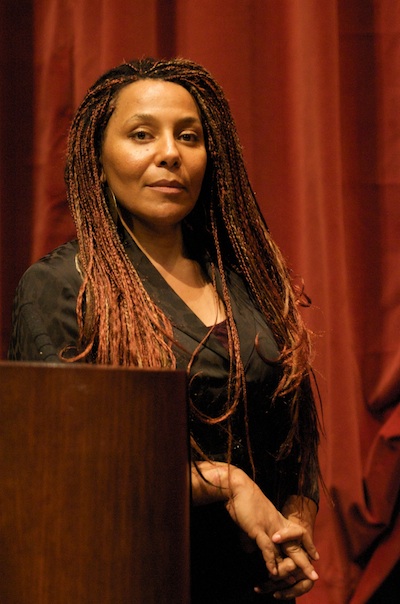
Through her community-based organizing, frontline work and activism over three decades, Angela Marie MacDougall has been deeply involved in movements for social justice. Since the nineties, Angela has developed training curricula from an intersectional and anti-oppression framework while her work as a trainer with community-based organizations, systems players, universities and in the larger public sphere has always emphasized the influence of a community-based response toward gender, racial, economic justice. Angela’s impact includes development of empowerment and advocacy-based program and service delivery models that address gender-based violence and violence against women that are grounded in strong theoretical frameworks that include feminist trauma-informed analysis that integrate the role substance use and mental wellness.

Angela Marie MacDougall has edited and/or written ten manuals on addressing gender-based violence and violence against women from an intersectional anti-oppression feminist framework and has spoken to hundreds of groups throughout Canada, the United States and in China. An ever present theme and focus of her work has been the range of social inequities and environmental problems associated with colonialization and the generalized criminalization of communities of colour that are most affected by poverty and racial discrimination. Her parents met in the Black community known as Hogan’s Alley that in the seventies was razed by Vancouver City Hall, so her work grows directly from her own experiences as a bi-racial Black woman who grew up amongst violent racist misogyny both at home, at school and in the larger community while and she became politicized to end violence against women after her high school friend was raped and murdered while on a date. She also has conducted extensive participatory action research on numerous aspects relating to gender, race and violence.

Angela Marie MacDougall is a founding member of Feminists Deliver a provincial organization dedicated to shedding a light on the urgent issues facing marginalized communities in British Columbia and the grassroots struggles leading the way for transformative change while build transnational connections between grassroots intersectional feminist movements; and re-envisioning the global women’s agenda as one that centers a diversity of grassroots intersectional feminist voices. She is a long standing member of Vancouver’s February 14th Women’s Memorial March, the first women’s memorial march was held in 1992 in response to the murder of a woman in the Vancouver neighbourhood named the Downtown Eastside. Angela is founding member of Intersectional Feminist Justice Research and Organizing Collaborative that brings together researchers, academics, data and policy analysts, students and community organizers to provide critical research, data, policy and strategic support for the ending violence, gender equity and social justice movements. Ms. MacDougall was named a Remarkable Woman by the City of Vancouver and Vancouver Magazine named her one of Vancouver’s most powerful people.

You can find Angela on Twitter @_AngelaMarieMac
Choose the Gift of Safety This Holiday Season

Choose the Gift of Safety This Holiday Season

GIVE THE GIFT OF SAFETY 

This year gave us plenty of things we didn’t expect. But we get to choose how it ends.

So we are choosing radical hope! And safety. Along with generosity, resilience, resistance, strength, and action.

Even in the midst of a difficult year, with a shadow pandemic, you have continued to show your commitment and generosity to support the women and children in our community. 

Your commitment to ending gender based violence is admirable and necessary.

As an essential service, our impact includes:

  • Increased crisis line training sessions from 2 to 3 
  • 6 hospital accompaniments for women after sexual assault by a friend, boyfriend or husband
  • 25 women and children provided temporary shelter at hotel in Vancouver – when other services were unavailable
  • 84 TV, radio, podcast appearances to raise awareness on the shadow pandemic and ways people can take action
  • 6,283 calls to our crisis line (March 18 to June 30, 2020)
  • 31,959 requests for service  (April 1, 2019 to March 31, 2020)
  • 1 million people engaged and raised awareness through social media campaigns

And we:

  • Joined provincial and nationwide efforts to address gender-based violence during the pandemic
  • Advocated for provincial health offices to include specific language that physical safety was more important than physical distancing
  • Raised the alarm of the necessity of core funding for gender-based violence services – across the board

This work does not stop when the calendar changes from 2020 to 2021. In fact it continues unabated right now with an average of 50 calls a day to our crisis line

So let’s choose to end the year on a strong note, one that has the potential to change everything.

When you choose to give the gift of safety, your gift will fund our direct services and programs—and we know that staying connected saves women’s lives.

Make your year-end gift today and keep the giving going.


With much love and gratitude,
BWSS Volunteers, Staff and Board of Directors